Har kuni ishlatish uchun 8 ta eng yaxshi yapon quyosh kremi (2026 reyting)
Butun internet suradigan suvli essensiyadan plyaj kunlariga chidaydigan oltin flakon klassikasigacha — bu yil chindan ham buyurtma qilishga arziydigan sakkizta yapon quyosh kremi.
Yapon quyosh kremlarining obro' muammosi bor — eng yaxshi ma'noda. Serumdek g'oyib bo'ladigan, pardoz ostida dumaloqlanmasdan yotadigan va sport zalida ko'zni achitmasdigan formulani bir marta kiysangiz, qalin G'arb SPF iga qaytish jazoga aylanadi. Aynan shu obro' tufayli "yapon quyosh kremi" dunyodagi eng ko'p qidiriladigan go'zallik importlaridan biri.
Sababi bozor bosimida. Yaponiya quyoshdan himoyani plyaj mahsuloti emas, kunlik mahsulot deb hisoblaydi. Millionlab odam SPF ni har kuni ertalab — pardoz ostiga, yo'lga chiqishdan oldin, 90% namlikda — surganda, tekstura "yaxshi bo'lsa yaxshi" bo'lishdan chiqib, mahsulotning o'ziga aylanadi. Yapon laboratoriyalari o'ttiz yildan beri aynan shu ustida raqobatlashadi va natijalar shunchaki bir avlod oldinda.
Ammo peshtaxta gavjum, flakonlar kichik, internetdagi sharhlarning yarmi esa ikki mavsum oldin qayta formulalangan mahsulotlar haqida. Ushbu reyting Yaponiyaning o'zi qayta-qayta sotib oladigan — mamlakatning shafqatsiz, nam yozlaridan yildan-yilga omon qoladigan formulalar asosida tuzilgan. Har biri katalogimiz orqali to'g'ridan-to'g'ri Tokiodan yetkaziladi.
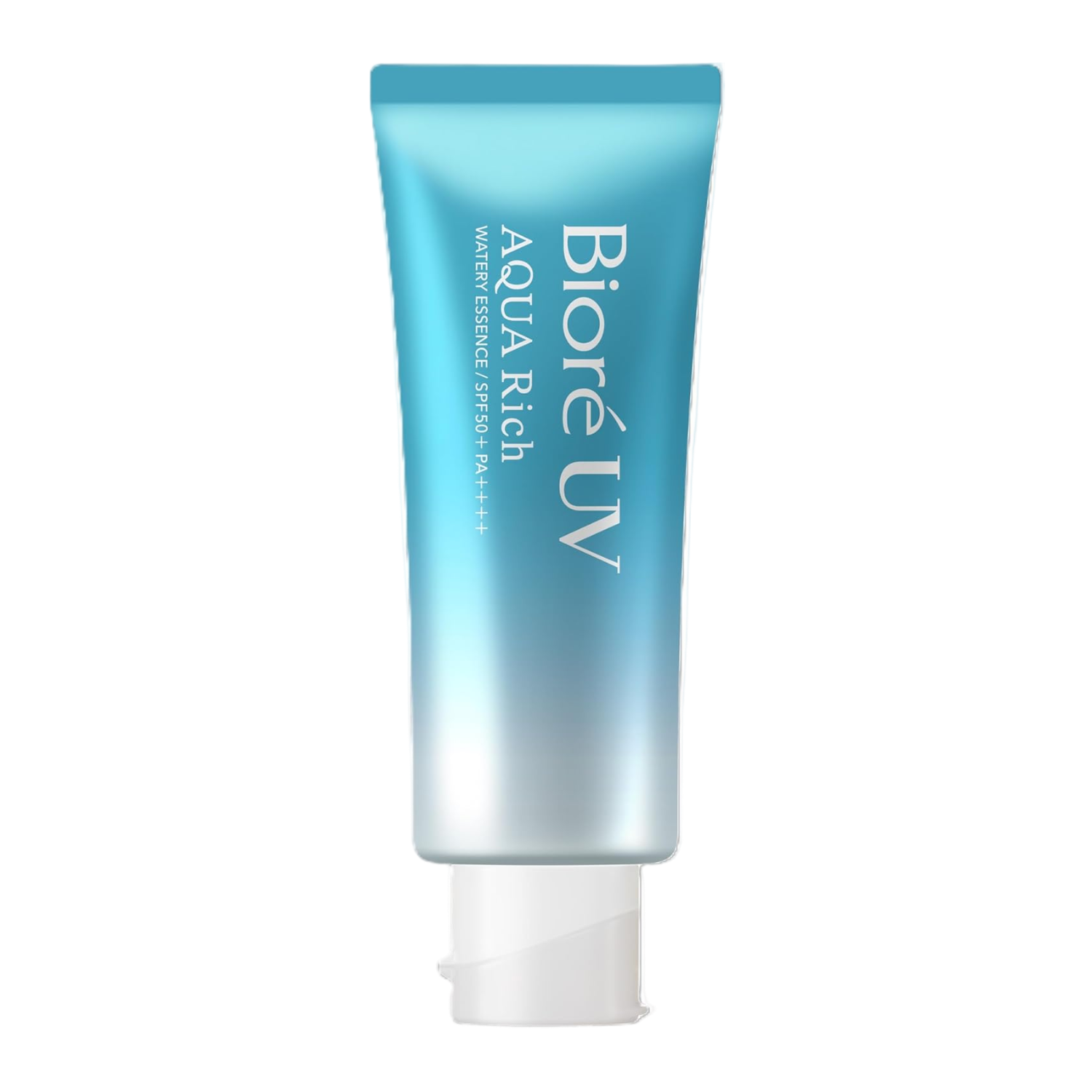
1. Biore UV Aqua Rich Watery Essence
Yapon quyosh kremini mashhur qilgan mahsulot. Kao kompaniyasining suvli essensiyasi o'n yildan ortiq yapon reytinglarining tepasida turibdi, siri esa teri parvarishidek his qilinadigan teksturada: sovutilgan gel-serum bir surishda butun yuzga tarqaladi va har qanday teri rangida butunlay ko'rinmas bo'lib quriydi.
Oq iz yo'q, yog'li parda yo'q, to'qson soniyadan keyin fond surtilsa dumaloqlanish yo'q — ko'pchilik uni praymer sifatida ham ishlatadi.
Kimga: har kimning birinchi yapon quyosh kremi, kunlik yo'l, pardoz ostiga. Ro'yxat ko'zingizni qamashtirsa — shuni oling va o'qishni to'xtating.
2. Anessa Perfect UV Skincare Milk
Shiseido'ning oltin flakoni — qarama-qarshi falsafa: joyida qolish uchun yaratilgan sut. Anessa'ning imzo texnologiyasi issiqlik, ter va suvga javoban himoya qatlamini kuchaytiradi — formula sharoit yomonlashgani sari yaxshiroq ishlaydi. Shu bois u har yozda yapon reytinglarining cho'qqisini egallaydi va plyaj, marafon, golf hamda bolalar bilan kunlar uchun standart tanlov.
Chidamlilik muhandisligiga qaramay formulaning yarmiga yaqini parvarish ingredientlari — shuning uchun sport qurol-aslahasi emas, yengil losondek kiyiladi.
Kimga: ochiq havo kunlari, sport, suzish, quyosh kremi odatda tushgacha "oqib ketadiganlar".
3. Anessa Perfect UV Skincare Gel
Xuddi shu Anessa chidamliligi, boshqa idishda: bankadagi to'q gel. Sut maksimal ushlashni tanlagan joyda, gel ozgina chidamlilikni namlovchidek yumshoq surtishga almashtiradi — va banka yetarli miqdor surishni tabiiy qiladi, bu esa ko'pchilik yiqiladigan qadam.
Kimga: quruq-normal teri, saxiy miqdor suradiganlar, Anessa himoyasini namlovchi qulayligida xohlaydiganlar.
4. Skin Aqua Tone Up UV Essence (Lavanda)
Teri filtri vazifasini ham bajaradigan quyosh kremi. Rohto'ning tone-up essensiyasi nozik lavanda tusi bilan xiralik va sariq tuslarni optik neytrallaydi, ichdan yoritilgandek tovlanish qoldiradi — suratlarda ajoyib chiqadi. Pardozsiz kunlarni ataylab qilingandek ko'rsatgani uchun butun Osiyoda hodisaga aylandi.
Yakuni mat emas, nam — yog'li teri T-zonani upa bilan mahkamlashi mumkin.
Kimga: pardozsiz pardoz, video qo'ng'iroqlar, xira yoki notekis ko'rinadigan teri.
5. Suncut Perfect UV Gel (Cool)
Kose'ning yozgi sevimlisi hech kim so'ramagan savolga javob beradi: quyosh kremi konditsionerdek his qilinsa-chi? Cool gel chinakam muzdek sezgi bilan suriladi — 35 daraja issiqdagi birinchi kungacha bu o'yinchoq bo'lib tuyuladi, keyin esa qo'l tegizgingiz keladigan yagona quyosh kremiga aylanadi.
Nam iqlimlar uchun sovutish o'yinchoq emas — odat saqlanib qolishining sababi.
Kimga: issiq ob-havo, yog'li teri, quyosh kremining o'zidan ko'ra hissiyotini yomon ko'radiganlar.
6. Suncut Protect UV Spray
Qayta surtish muammosining yechimi. Dermatologlar kunduzgi qayta surtish brend tanlashdan muhimroq ekaniga qo'shiladi, spreylar esa uni real qiladi: pardoz ustidan, soch farqi va bosh terisiga, festivalda bo'yin orqasiga, tinch turmaydigan bolalarga.
Sumkada saqlang va uni to'g'ri ertalabki asosga qo'shimcha sifatida ishlating — o'rnini bosuvchi emas.
Kimga: soat 14:00 dagi yangilash, soch chiziqlari va quloqlar, pardozli kunlar, sayohat.
7. Sekkisei Skincare UV Essence Gel
Parvarish-birinchi tanlov. Sekkisei o'zining sharqona o'simlik ekstraktlari merosini quyosh kremidan ko'ra namlovchi serumga yaqinroq his qilinadigan UV gelga joylaydi — SPF dan quruqlik yoki taranglik sezadiganlar uchun chinakam qulay kiyim.
Kimga: quruq yoki yetuk teri, uzun ofis kunlari, quyosh kremi parvarish bosqichidek bo'lishini xohlaydiganlar.
8. Curel Intensive Moisture UV Serum
Sezgir teri tanlovi. Curel'ning keramid parvarishi liniyasi reaktiv teri uchun standart yapon tavsiyasi, uning UV serumi esa xuddi shu muloyimlikni quyosh himoyasiga olib keladi: atirsiz, achitmaydigan, teri to'sig'ini stress emas, tayanch bilan ta'minlaydigan.
Quyosh kremlari yuzingizni doim qizdirsa, qichitsa yoki tarangalsa — shu yerdan boshlang.
Kimga: sezgir va quruq teri, qizarishga moyil yuzlar.
O'n soniyada qanday tanlash
- Birinchi yapon quyosh kremi: Biore UV Aqua Rich
- Plyaj, sport, ter: Anessa Milk
- Namlovchi qulayligi: Anessa Gel yoki Sekkisei
- Tovlanish / pardoz asosi: Skin Aqua Tone Up
- Issiq, nam ob-havo: Suncut Cool Gel
- Pardoz ustidan yangilash: Suncut Spray
- Sezgir teri: Curel UV Serum
Brenddan muhimroq ikki odat
Yetarli suring. Sinovdan o'tgan himoya yuz va bo'yin uchun taxminan bir choy qoshiq miqdorni nazarda tutadi — ko'pchilik umrida surganidan ko'p. Yapon teksturalari to'liq dozani og'riqsiz qiladi; ularni sotib olishning butun ma'nosi ham aynan shu.
Bir marta yangilang. Ertalabki surtish plyus bitta kunduzgi yangilash (sprey ham hisob) soat 7 dagi bitta mukammal qatlamdan har doim yaxshi. Ikki odat, o'ttiz soniyadan — har qanday formula yangilanishidan ko'proq ish qiladi.
Ko'p beriladigan savollar
Yapon quyosh kremlari xavfsiz va tartibga solinganmi? Yaponiya quyosh kremlarini qattiq sinov standartlariga ega maxsus toifada tasniflaydi va UV filtrlarini tasdiqlashda dunyodagi eng zamonaviylardan — bir qancha yangi avlod filtrlari boshqa joylardan yillar oldin Yaponiyada mavjud edi.
SPF 50+ va PA++++ nimani anglatadi? SPF — UVB (kuyish) himoyasi; PA — UVA (qarish) himoyasi, to'rt plyusli shkalada. Ro'yxatdagi deyarli hamma narsa SPF 50+ / PA++++ — yapon tizimining shifti. Mahsulotlar orasidagi farq himoya raqamlarida emas, tekstura va chidamlilikda.
To'q teri ranglarida oq iz qoldiradimi? Essensiya va gellar (Biore, Suncut, Skin Aqua) eng xavfsiz tanlov — ular butunlay g'oyib bo'lish uchun formulalangan. Sutlar dastlab yengil tovlanish qoldirishi mumkin, u daqiqalarda o'tib ketadi.
Bitta flakon qancha yetadi? To'g'ri yuz-bo'yin dozasida 70–90 grammli tyubik taxminan olti-sakkiz haftalik kunlik foydalanish. Ikkitadan olish — tajribalilar yo'li.
Sakkizalasi ham to'g'ridan-to'g'ri Tokiodan yetkaziladi — yapon dorixonalarida sotiladigan joriy formulalar, eski eksport versiyalari emas. Kuningizga mosini tanlang va Yaponiyadek kiying: har kuni ertalab, ikkilanmasdan.