The 7 Best Japanese Hair Care Products: Shampoos & Treatments Ranked (2026)
Camellia oil heritage, salon-grade masks for pocket money, and the yuzu oil cult favorite — seven Japanese hair products that earn their shelf space.
Japanese hair care solved a specific problem: hair that faces daily heat styling, frequent coloring, and hard city water, on a population that expects it to still look glass-smooth every morning. The result is a drugstore aisle where deep-repair masks cost less than a sandwich, camellia-oil traditions from the Edo period sit next to modern lab formulas, and "salon quality" is an entry-level expectation rather than a marketing flourish.
The philosophy differs from Western hair care in one important way: Japanese routines treat the scalp and the lengths as two different clients. Shampoo exists to clean the scalp; treatments and oils exist to dress the lengths. Once you shop with that split in mind, the aisle organizes itself — and the seven products below cover every seat at the table.
All of them ship direct from Tokyo through our catalog, current Japanese-market formulas at live prices.
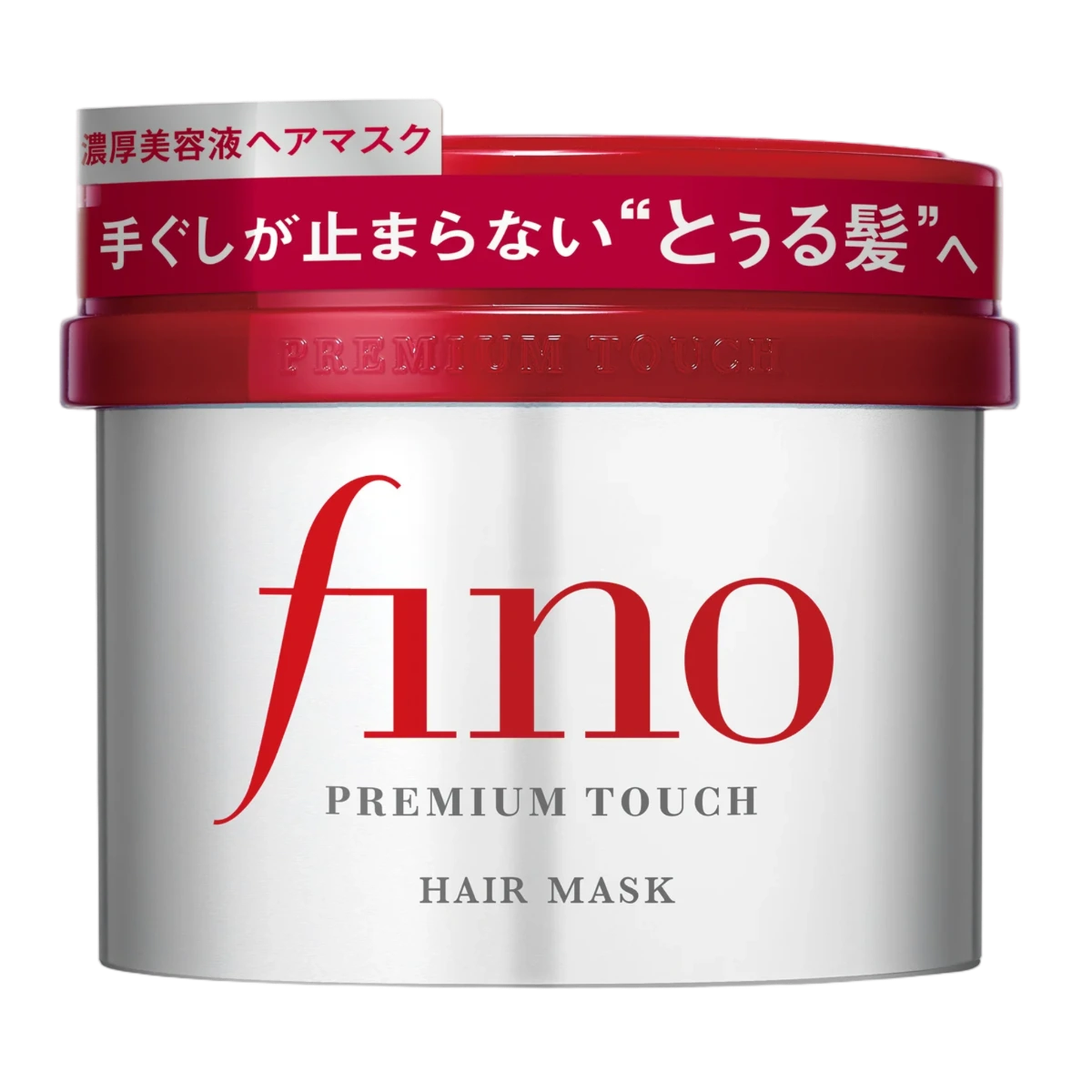
1. Fino Premium Touch Hair Mask
The worst-kept secret in global hair care. Shiseido's jar mask delivers salon-treatment smoothness in a single five-minute use, thanks to a concentrated blend built around the brand's repair-serum research. The price-to-result ratio is so absurd that hairstylists recommend it under their breath, and empty-jar posts are their own social media genre.
Use it once or twice a week in place of conditioner: apply to towel-squeezed mid-lengths and ends, leave it five minutes, rinse thoroughly. Bleached, permed, or chronically dry hair sees the difference on the first wash — softer slip, sealed-looking ends, and a shine that survives air-drying.
Best for: damaged, colored, or dry hair; anyone who wants the single biggest upgrade per yen in this article.
2. TSUBAKI Premium Moist & Repair
The camellia flagship. Tsubaki launched in 2006 with one of the largest beauty marketing campaigns in Japanese history, built on a simple bet: bottle the tsubaki (camellia) oil that has dressed Japanese hair since the Edo period, and make it a modern daily line. The bet paid off — the red bottle never left the shelves.
Premium Moist & Repair is the current standard-bearer: a shampoo-and-treatment pair that leaves thick, coarse, or dry hair glossy and weightless, with the line's signature floral-fruity scent. It's daily-driver hair care with heritage in the formula.
Best for: dry, coarse, or frizz-prone hair; anyone who wants the classic "Japanese hair commercial" finish.
3. Diane Perfect Beauty Extra Damage Repair
The keratin-and-oils repair line in the palm-print bottle. Diane's formula leans harder into reconstruction than Tsubaki — hydrolyzed keratin plus a blend of plant oils aimed squarely at bleach and heat damage — and its floral-berry scent made it a social-media staple across Asia.
Where Fino is the weekly intensive, Diane is the daily maintenance that keeps repaired hair from backsliding. The pairing is the classic damaged-hair protocol.
Best for: bleached and heat-styled hair, daily repair maintenance, scent lovers.
4. Yuzu-yu Hair Oil
Utena's additive-free yuzu oil — one ingredient story, endless uses. Pressed around a citrus grown in Kochi prefecture, it's the minimalist pick for people suspicious of twenty-ingredient serums: no silicones, no fragrance beyond the yuzu itself, nothing to build up.
A few drops on damp ends before drying tames frizz and seals moisture; a single drop on dry hair works as a natural-finish polish. The bright, real-citrus scent is the quiet luxury of the whole routine.
Best for: minimalists, fine-to-medium hair, silicone avoiders, scent purists.
5. Macherie Hair Oil EX
The glossy-finish specialist. Where Yuzu-yu is understated, Shiseido's Macherie is unapologetically cosmetic: a styling oil engineered for shine and slip, the final-step polish that makes straightened or blow-dried hair look finished in the Tokyo street-style sense. Sweet scent, city-girl energy, mirror-gloss results.
Warm one or two pumps between palms and smooth over dry, styled hair — ends first, then whatever's left over the surface.
Best for: style finishing, gloss addicts, anyone whose hair looks "done" but never "polished."
6. Octo Shampoo & Rinse Set
The scalp-first workhorse, and a Japanese bathroom staple for decades. Octo's entire identity is a genuinely clean, fresh-feeling scalp — the pick when the problem is the head rather than the lengths. The no-nonsense formula and mild herbal scent have kept multiple generations loyal.
If your hair looks fine but your scalp never feels quite clean, start here before spending on anything fancier.
Best for: oily or congested scalps, daily washers, back-to-basics resets.
7. Success Shampoo
The men's deep-cleanse standard: Kao's micro-foam formula clears heavy sebum and styling product in one wash, engineered for short hair washed daily. It's brisk, functional, and exactly as no-nonsense as its audience wants — more on the men's shelf in our Japanese men's grooming guide.
Best for: short hair, daily washing, wax and pomade users.
Match the product to the problem
- Bleach/heat damage: Fino mask weekly + Diane daily
- Dry, coarse, or frizzy hair: Tsubaki wash + Yuzu-yu on ends
- Fine hair that goes flat: light hands — oil on tips only, mask once weekly
- Oily scalp / daily wash: Octo or Success
- Style polish: Macherie as the last step
The Japanese hair routine, step by step
- Shampoo the scalp, not the lengths. Lather at the roots with fingertips; the runoff cleans the rest on the rinse.
- Condition the lengths, not the scalp. Mid-length to ends only — conditioner at the roots is where flatness comes from.
- Once a week, upgrade to the mask. Five minutes of Fino on towel-squeezed hair replaces conditioner that day.
- Oil on damp, not soaked, hair. Two drops before drying protects; one drop after drying polishes.
- Dry it. Air-dried wet hair is fragile hair; even a rough blow-dry to 80% makes every product above work better.
Frequently asked questions
Are Japanese shampoos different from Western ones? The big difference is intent: gentler scalp-focused cleansing bases and a culture of separate treatment steps, rather than all-in-one promises. Hair is washed daily in Japan, so formulas assume frequency.
Will these work on curly or textured hair? The masks and oils, absolutely — Fino and Yuzu-yu are texture-agnostic moisture and seal products. The shampoos are geared to straight-to-wavy Japanese hair; curl-specific cleansing may still be your better wash step.
How long does a jar of Fino last? At once-weekly use on shoulder-length hair, roughly three to four months. It's the rare product that's both the best and among the cheapest per use.
Every product above ships direct from Tokyo. Start with the mask — it's the fastest proof of what the Japanese aisle can do — and build the rest of the routine around what your hair tells you next.