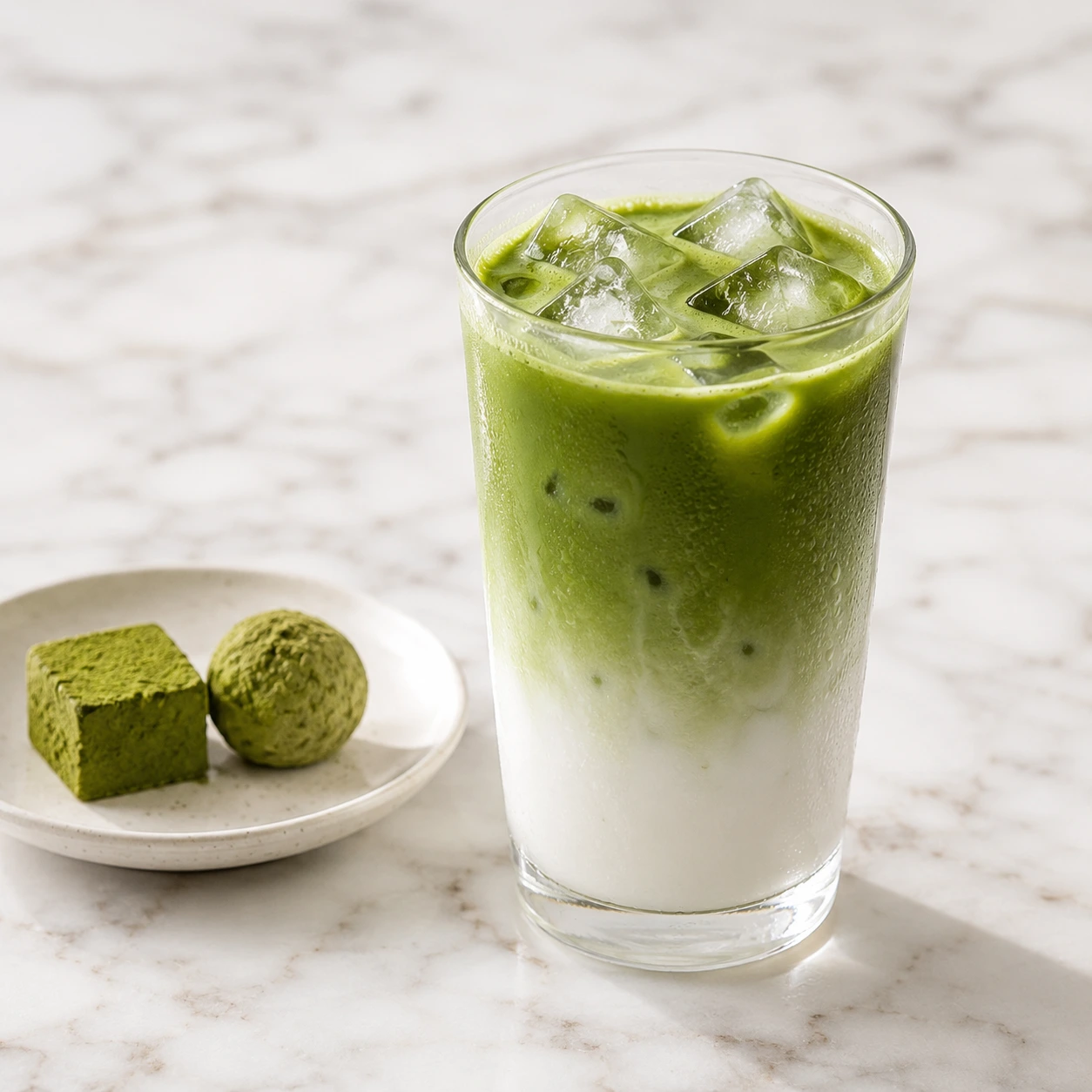
Matcha Without the Whisk: Japan's Ready-Made Lattes, Pastes and Sweets
Not every matcha needs a bamboo whisk. Here is the ready-made side of Japan's matcha shelf — instant lattes, sweetened powders, pastes and confectionery — and how to tell the good from the green-coloured.
There is a certain purism around matcha that gets in the way of enjoying it. Ceremonial grade, a bamboo whisk, water at exactly 75°C, a wide flat bowl — all of it is real and all of it is worth doing, and none of it is how most matcha is actually consumed in Japan.
Japanese households drink an enormous amount of matcha that never meets a whisk. Sweetened stick powders that dissolve in cold milk. Instant lattes. Concentrated pastes for baking. And a confectionery aisle where matcha is not a novelty flavour but a permanent, year-round staple treated with the same seriousness as chocolate.
This is a guide to that side of the shelf — the useful part, the part that fits in a work bag.
Sweetened matcha powders and sticks
The workhorse of Japanese matcha drinking. These are matcha blended with sugar and sometimes milk powder, ground fine enough to dissolve without a whisk. Pour into hot or cold milk, stir, done.
Individual sticks are the format that makes this a habit — pre-portioned, no scale, and they survive a bag or a desk drawer. A stick in cold milk over ice is a genuinely good iced matcha latte in about twenty seconds.
The larger tins are better value if you drink it daily:
What to check on the label: the position of matcha in the ingredient list. If sugar is first and matcha is fourth, you are buying green sugar. The better products put matcha first or second, and taste noticeably more bitter and more tea-like as a result.
Matcha milk: the koicha distinction
There is a meaningful split within sweetened matcha powders, and it maps onto the traditional thin-tea/thick-tea distinction. Standard matcha milk is mild and sweet. Koicha-style (お濃い茶仕立て) versions use substantially more matcha per serving, and taste of tea first and sugar second.
Tsujiri, from Uji, has been in the tea business since 1860, and the koicha version is the one to buy if you have found other matcha lattes disappointingly sweet. It is closer to what a Kyoto tea house serves.
Capsule and instant lattes
For anyone with a pod machine, matcha latte capsules are a legitimate shortcut. The category exists because Japanese cafés put matcha lattes on the menu decades before Western ones did, and the domestic instant versions have had a long time to get good.
These are sweeter than a whisked bowl by design. Treat them as the matcha equivalent of a flavoured latte rather than as tea, and they are good at what they are.
Matcha paste, for cooking
A less exported format that solves a real problem: matcha powder does not disperse well into cold batters, creams or doughs, and it clumps. Concentrated matcha paste — matcha pre-dissolved into a syrup base — folds straight into whipped cream, ice cream base, cheesecake, panna cotta or buttercream with no lumps and no separate blooming step.
For anyone who has tried making matcha desserts with drinking-grade powder and got a gritty, faintly bitter result, this is the fix. It is also the format most Japanese home bakers actually use.
Matcha confectionery
Matcha is a year-round permanent flavour in Japan, not a seasonal one, and the domestic confectionery aisle reflects that. The important quality signal is bitterness: good matcha confectionery tastes of tea, with a real astringent edge. Green-coloured sweet things that taste only of sugar and vanilla are using colouring and a token amount of powder.
The dark matcha KitKat is the most famous example and deserves its reputation — it uses genuine Uji matcha and is bitter enough to read as tea rather than as a green dessert. It is also one of the few Japan-domestic confectionery items that consistently converts people who thought they disliked matcha.
On the traditional side, matcha appears throughout wagashi — Japanese confectionery built on rice flour, kinako (roasted soybean flour) and sweet bean paste rather than butter and cream.
Kinako and matcha is a classic pairing: the roasted soybean flour is nutty and dry, which balances matcha's vegetal bitterness in a way dairy does not.
Three things to make with any of the above
Iced matcha latte. One stick or 2 teaspoons of sweetened powder, 50ml of hot water to dissolve, then 150ml of cold milk over ice. Dissolving in hot water first is the step people skip, and it is why their matcha ends up with sediment at the bottom.
Matcha affogato. A shot of thick, hot, unsweetened matcha poured over vanilla ice cream. The bitterness against the cold sweetness is the whole point, and it is the easiest impressive dessert on this list.
Matcha whipped cream. Matcha paste folded into softly whipped cream, sweetened lightly. Good on almost anything; excellent on toast, which is a genuinely Japanese thing to do.
Ready-made vs whisked: when each makes sense
| Situation | Buy |
|---|---|
| Morning bowl, tasting the tea | Ceremonial grade + chasen |
| Iced latte at your desk | Sweetened sticks |
| Baking or desserts | Matcha paste, or culinary grade |
| Pod machine at home | Latte capsules |
| Gift or first taste | Matcha confectionery |
If you want the whisked route, the grades, tools and technique are covered in how to choose and whisk matcha at home. Neither approach makes the other pointless — most Japanese matcha drinkers do both, depending on the hour.
Frequently asked questions
Do sweetened matcha powders still have health benefits? Some, proportionally. They contain real matcha and therefore real catechins and L-theanine, but far less per serving than a whisked bowl, plus sugar. Drink them because they taste good, not as a supplement.
How much caffeine is in a matcha latte stick? Considerably less than a whisked bowl — typically under 30mg, versus 60–70mg for 2g of straight matcha. Enough to notice, not enough to keep most people up.
Why does my matcha latte separate? You added powder directly to cold liquid. Dissolve in a small amount of hot water first, always.
Does matcha confectionery contain caffeine? Yes, a small amount. A single matcha chocolate bar is negligible; a whole box is not nothing.
How should I store matcha paste and sweetened powders? Paste refrigerates after opening and keeps for a few weeks. Sweetened powders and sticks are shelf-stable but should stay sealed and dry — sugar draws moisture, and a clumped stick will not dissolve properly.