Gel, Milk, Essence, or Spray? Japanese Sunscreen Formats Compared (2026)
Japan makes sunscreen in more textures than anywhere on earth. What each format is actually for, and which one fits your skin, climate, and routine.
Walk the UV aisle of a Japanese drugstore and the real question isn't which brand — it's which format. Milk, gel, essence, spray, tone-up: each texture is engineered for a different life. Western sunscreen asks "what SPF?"; Japanese sunscreen asks "how do you live?"
This format diversity isn't marketing segmentation — it's the product of a market where SPF is worn 365 days a year by people with wildly different routines. The office worker reapplying over makeup, the cyclist sweating through August, the parent chasing a toddler through a park, and the minimalist who resents every second of routine each need genuinely different physics from their sunscreen. Japanese labs obliged, and the result is the most texturally sophisticated UV category in the world.
This guide decodes the formats using products from our catalog. For the ratings system itself (SPF, PA++++, water resistance), start with our Japanese sunscreen explainer; for a straight best-of ranking, the top 8 list has you covered. Here, we're choosing a shape, not a name.
Milk (乳液タイプ) — the endurance format
Milks are thin, shake-before-use emulsions that set into a light, grippy film. The shake redistributes the UV filters through a volatile base; once applied, the base flashes off and leaves the protective layer anchored to skin. That anchoring is the point: milks are the most water- and sweat-resistant format on the shelf — the one lifeguards, golfers, and festival veterans wear — at the cost of a slightly more "present" feel than a gel and, occasionally, a faint initial sheen.
Application ritual matters here: shake hard, dot generously across all five zones of the face, and spread before it sets. Once a milk grips, it does not want to move — which is exactly the deal you signed.
Wear it for: beach days, sports, long outdoor events, oily skin that sheds other formats by lunch.
Gel — the comfort format
Gels are plush, bouncy, and spread like a moisturizer — the format that made daily SPF feel like skincare instead of a chore. They trade a little of the milk's endurance for a lot of comfort, and comfort is what actually gets a sunscreen worn 300 days a year. Jar gels have a second advantage: scooping naturally encourages a full dose, which quietly fixes the most common sunscreen mistake of all (using a third of the tested amount).
Wear it for: daily commutes, dry-to-normal skin, anyone who has ever said "I hate sunscreen."
Kose's cool-touch version adds a genuine chill on application — summer's favorite party trick, and a surprisingly effective habit-builder in humid climates:
Essence — the skincare format
The lightest of all: watery serums with UV protection folded in. Essences disappear completely — no cast, no film, no reminder they exist — and layer under makeup like a primer. They're the format that blurs the line between skincare and sun care so thoroughly that the morning routine loses a step.
The trade-off is endurance: essences are engineered for the built environment (offices, trains, errands), not for open water. That's not a flaw; it's a specification. Most lives are mostly indoors.
Wear it for: office days, under-makeup wear, reapplication-friendly routines.
Kose's "zero-gravity" take pushes the weightless idea to its logical end — the closest sunscreen comes to not being there:
Tone-up — the complexion format
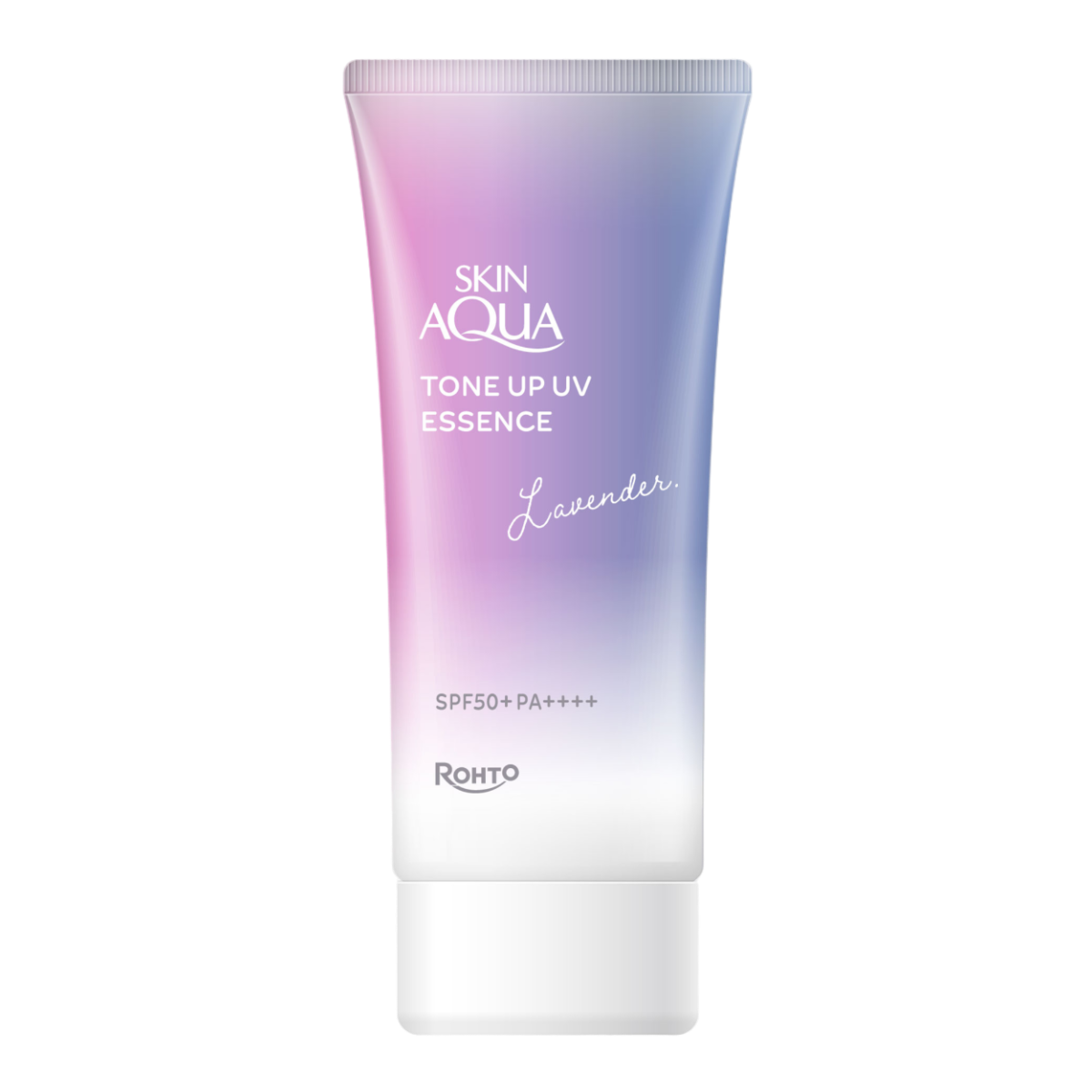
Tone-up sunscreens add a subtle optical tint — lavender to neutralize dullness and yellow tones, pink to add warmth — so protection doubles as a skin filter. The effect is deliberately sheer: not coverage, just correction, like good lighting in bottle form. Bare-face days look intentional, and video calls look suspiciously well-rested.
One practical note: the dewy, luminous finish is part of the design. Oily skin types can set the T-zone with powder and keep the glow where it flatters.
Wear it for: no-makeup makeup, video calls, dull or uneven-looking skin.
Spray — the reapplication format
Sprays exist for hour six. Dermatology's least-followed advice is the afternoon reapplication, and sprays are the only format that makes it realistic: over makeup without destroying it, on scalps and part lines (the most commonly burned spot on any head), down the back of the neck at a festival, on children who will not stand still.
Technique: hold a hand-width away, spray in overlapping passes, and pat in where you can. And treat it honestly — a spray is a supplement to a proper morning base, not a replacement for one. Morning coverage should come from one of the formats above.
Wear it for: the 2pm top-up, hairlines and ears, makeup days, travel.
The honest decision table
| Your life | Format | Grab |
|---|---|---|
| Outdoors, sweat, water | Milk | Anessa Milk |
| Daily wear, wants comfort | Gel | Anessa Gel / Suncut Cool |
| Under makeup, minimalist | Essence | Biore Aqua Rich |
| Bare face, wants glow | Tone-up | Skin Aqua Lavender |
| Reapplying on the go | Spray | Suncut Spray |
One-format people vs. two-format people
Most of Japan runs a two-format system: a milk or gel as the morning base, a spray in the bag for afternoons. If you buy one product, match the table to your typical day. If you buy two, base + spray covers essentially every situation a year can throw at you — and turns the dermatologist's reapplication advice from theory into a ten-second habit.
Frequently asked questions
Is one format more protective than another? At the label level, no — nearly everything here is SPF 50+ / PA++++. The real-world difference is endurance (milks hold longest under sweat and water) and dose (formats you enjoy get applied properly and reapplied at all).
Can I layer formats? Yes, and Japan does: essence or gel as the base, spray as the top-up. Tone-up over a plain essence is also a common trick for adjustable glow.
Which format for children? Milks for endurance or dedicated kids' formulas; sprays are for quick top-ups on older kids, not the primary layer for small ones.
Do these expire? Opened sunscreen is best used within the season. A good rule for any format: if it changed smell or separated beyond a quick shake, replace it.
Every product above ships direct from Tokyo — current Japanese-market formulas at live prices. Choose the shape that fits your day, and the habit takes care of itself.