Japanese Curry Explained: How to Choose a Roux Block and Cook It Properly
Japanese curry is a British stew that went to Japan and became a national dish. Here is how the roux blocks work, which heat level to buy, and the three steps that separate good curry from great.
Japanese curry is not Indian curry, and the confusion causes a lot of disappointment. It arrived via the British Royal Navy in the Meiji era — a thickened, mild, flour-based stew rather than anything from the subcontinent — and Japan then spent 150 years making it entirely its own. Today it is one of the most-eaten dishes in the country, served in school canteens, on naval ships every Friday, and in the average household several times a month.
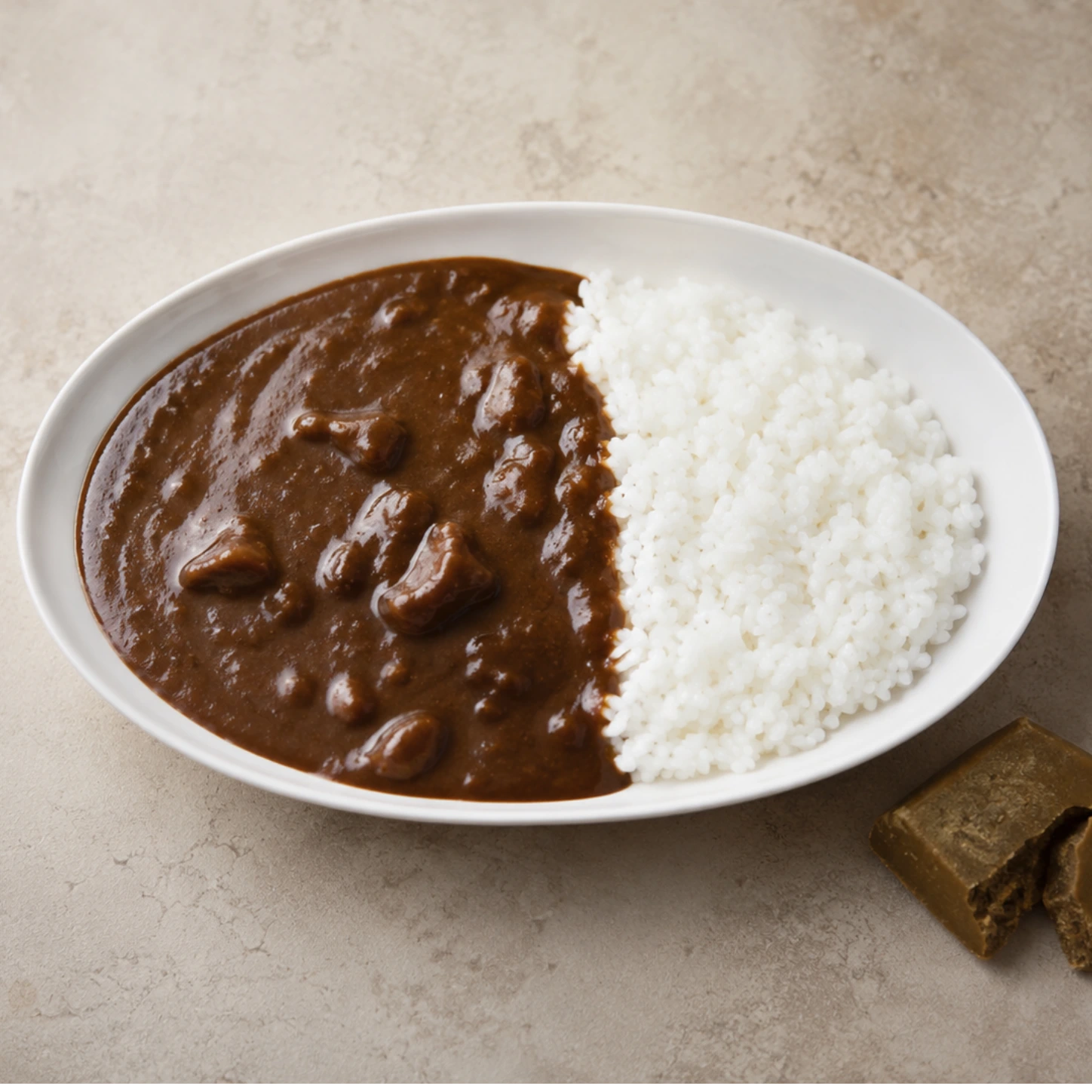
The taste is sweet, deeply savoury, faintly fruity and only lightly spiced. It is thick enough to sit on rice without running. And crucially, it is made from a roux block — a slab that looks like a bar of chocolate and contains flour, fat, curry spices, and a great deal of engineered umami.
That block is why Japanese curry is one of the easiest genuinely satisfying meals you can cook. It is also why the results vary so much: most people use the block correctly and still miss the three steps that make it excellent.
How to read the box
Every Japanese curry box carries a heat rating, and it is the single most important thing on the packaging:
| Japanese | Reading | Level |
|---|---|---|
| 甘口 | amakuchi | Mild |
| 中辛 | chukara | Medium |
| 辛口 | karakuchi | Hot |
| 大辛 / バリ辛 | okara / barikara | Extra hot |
Calibrate expectations downward. Japanese "hot" is roughly a mild-to-medium by Indian or Thai standards — the spice is aromatic rather than burning. Medium (中辛) is the default for adults and the one to buy if you are guessing. Mild is genuinely sweet and is what children eat.
Golden Curry is the export standard and the most widely recognised Japanese roux abroad — a clean, spice-forward profile that leans savoury rather than sweet.
For a household with children, or if you simply prefer the sweeter, fruitier side of Japanese curry:
And if the medium block has ever struck you as tame:
Brands taste genuinely different
This is not marketing. The two major roux families have distinct profiles, and people hold strong opinions.
Golden Curry (S&B) is the spicier, more aromatic line — more turmeric and cumin forward, less sweet, closer to what a Western palate expects from the word "curry."
Java Curry (House) is darker and deeper, built on caramelised onion and roasted spices, with a smoky edge and noticeably more heat at the same stated level.
There is also a powder roux format — the same seasoning without the pressed block, which dissolves faster and lets you control thickness precisely. It is the format to use if you want curry-flavoured fried rice, curry udon broth, or a thinner sauce.
And a spice-forward premium tier exists for people who find the standard block too sweet:
The basic method
Serves four, roughly 40 minutes.
- Brown 400g of cubed meat in a heavy pot. Beef, pork or chicken thigh all work — Japan uses all three regionally.
- Add the vegetables: two onions in thick wedges, two carrots in rough chunks, two potatoes quartered. Cut everything large. This is a stew, not a stir-fry, and small pieces disintegrate.
- Add 800ml of water, bring to a boil, skim the foam, then simmer covered for 20 minutes until the potato yields to a knife.
- Turn the heat off. Break the roux block into squares and stir them in until fully dissolved.
- Return to a low heat for 5–10 minutes, stirring, until it thickens. Serve over short-grain rice.
Step 4 is where most curry goes wrong. Adding the block to boiling liquid makes it clump, and clumps do not dissolve — they just sit there as lumps of flour and fat. Heat off, dissolve, heat back on.
The three upgrades that actually matter
Japanese home cooks have a well-known set of "secret ingredients" (kakushiaji, hidden flavours). Most are marginal. These three are not.
Caramelise the onions properly. Ten to fifteen minutes over medium heat before anything else goes in the pot, until they are genuinely brown and sweet. This is the biggest single improvement available, and it costs nothing but time.
Add one fruit or dairy element. A grated apple, a tablespoon of honey, or 50ml of milk stirred in near the end. Japanese roux is built to be rounded out this way — several major brands literally advertise apple and honey in the block. A square of dark chocolate does a similar job on the savoury side.
Rest it overnight. Japanese curry is famously better on day two. The starches finish swelling, the spices bloom into the fat, and the whole thing goes from good to noticeably deeper. Make it the night before if you can, and always make extra.
Beyond curry rice
The roux block is more versatile than the box suggests:
- Curry udon — thin the curry with dashi until pourable, pour over hot udon. A national comfort food.
- Katsu curry — the same sauce with a panko-crumbed pork or chicken cutlet on top. Arguably the definitive version.
- Curry bread (kare pan) — leftover thick curry sealed in dough, crumbed, and fried.
- Dry curry — minced meat, finely chopped vegetables, powder roux and no water, stirred through rice.
Frequently asked questions
Is Japanese curry spicy? Not by the standards of most other curry traditions. Even 辛口 (hot) is aromatic rather than fiery. If you want real heat, add chilli separately — the roux is not designed to deliver it.
Can I make it vegetarian or vegan? The vegetables and method work perfectly without meat. Check the box, though: many roux blocks contain beef or chicken extract and some contain dairy. Vegan-specific blocks exist in Japan and are worth seeking out if this matters.
Does it contain gluten? Yes — roux blocks are flour-based. Gluten-free versions exist but are a specialist product, not the standard box.
How long does the curry keep? Three to four days refrigerated, and it improves for the first two. It freezes well, though potatoes go slightly grainy — leave them out if you plan to freeze.
What rice should I serve it with? Japanese short-grain, cooked plain. The stickiness is functional here: it holds together under the sauce instead of washing away.
One box, one pot, forty minutes. It is the most reliable weeknight return on anything in the Japanese pantry.