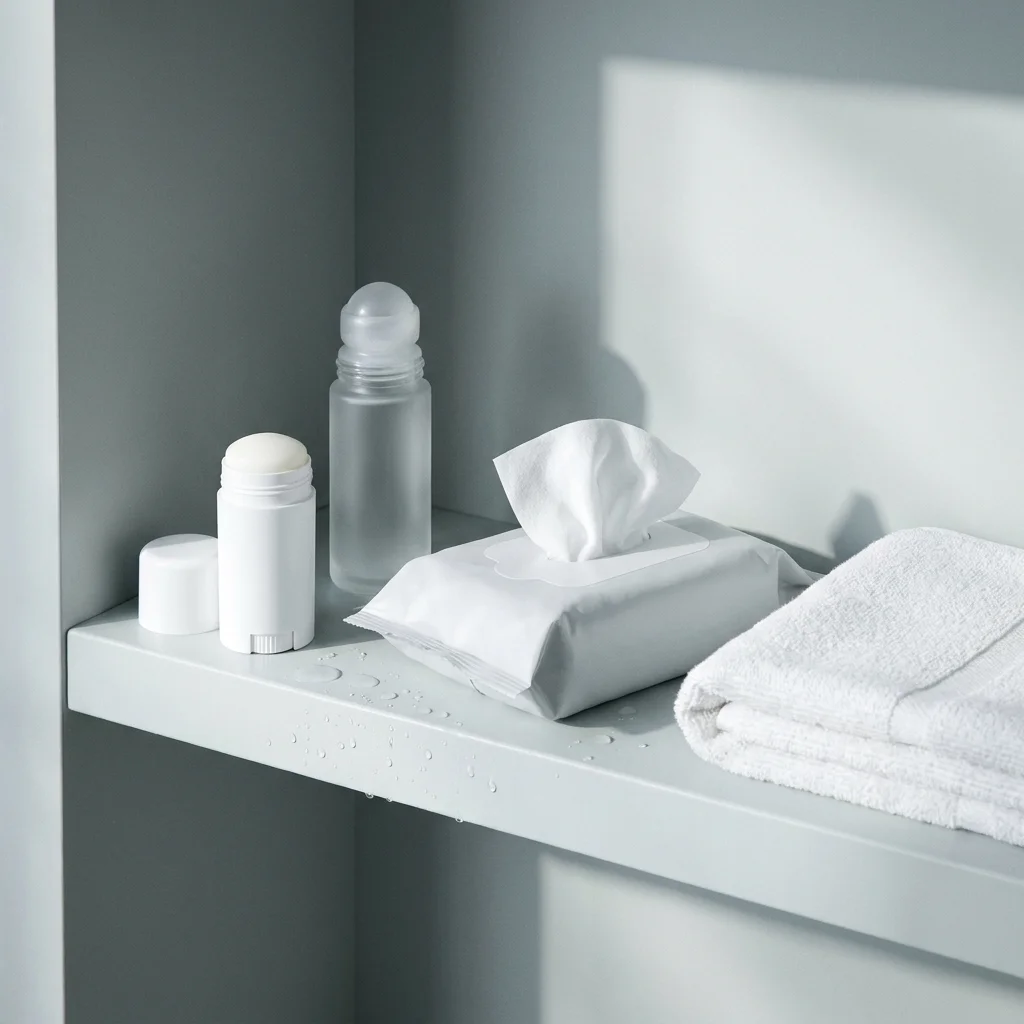
Japanese Deodorant: The Quiet Science of Not Smelling of Anything
Japanese deodorant is built for a culture where smelling of nothing is the goal. Deonatulle Soft Stone, the roll-ons, body wipes, and how to read the labels.
Japanese deodorant is built on a cultural expectation most visitors notice within a day: on a packed rush-hour train in August, Japan mostly smells of nothing at all. Not of perfume, not of sweat — nothing.
Part of that is biology, part is etiquette, and part is a drugstore aisle full of products designed to keep it that way. This guide explains why, what the labels mean, and which Japanese deodorants are worth trying: Deonatulle Soft Stone, the everyday roll-ons, and the body wipes that get the country through summer.
Why Japan takes body odour so seriously
Start with genetics. A variant of a gene called ABCC11 is linked to dry, flaky earwax and noticeably less underarm odour, because it changes what the sweat glands release for skin bacteria to break down. The variant is common across East Asia, and a majority of people in Japan carry it. It is well documented, but not universal: plenty of people in Japan do not have it.
Then add etiquette. Japanese has a word, sumehara (スメハラ, "smell harassment"), for subjecting others to strong odours — and that includes heavy perfume. Fragrance is used lightly, if at all, and the expectation in offices and on trains is neutrality.
There is even a word for the change in body odour with age: kareishū (加齢臭). Japanese researchers identified a compound called 2-nonenal as part of it around the turn of the millennium, and a whole subcategory of soaps and deodorants followed.
Deodorant vs antiperspirant: reading Japanese labels
The two do different jobs.
- Deodorants target odour, usually with antibacterial ingredients and sometimes fragrance.
- Antiperspirants reduce the amount of sweat, usually with aluminium-based ingredients such as alum.
Japanese products often do both. The words to look for:
- 制汗 (seikan) — antiperspirant; reduces sweat.
- 薬用 (yakuyō) — medicated. A quasi-drug (医薬部外品) with approved active ingredients and limited claims, such as preventing sweat and odour.
- 無香料 (mukōryō) — unscented. Very common, and the safest choice if you dislike perfume.
- デオドラント — deodorant, written phonetically.
Deonatulle Soft Stone: the cult stick
Deonatulle Soft Stone looks like a small, flat lipstick, and it has a following out of all proportion to its size. It is a medicated, alum-based formula: you rub it onto clean, dry underarms, where it leaves a thin, almost invisible film rather than a wet layer or white marks.
The appeal is in what it leaves out. It is unscented, it dries instantly, and it is designed not to mark clothes the way some antiperspirants do. One application in the morning is intended to see you through the day.
The same brand also makes versions for men and for feet, all following the same no-fragrance logic.
Roll-ons: Ban, 8x4 and Ag Deo 24
Roll-ons are the everyday format in Japan, and three names dominate the shelf.
- Ban (Lion) — a roll-on focused on sweat control, with a light, quick-drying formula.
- 8x4 (Kao) — a long-running brand with roll-ons in unscented and lightly scented versions, plus the body wipes below.
- Ag Deo 24 — built around silver ions for odour control, sold in roll-on and other formats.
Roll-ons work best on skin that is completely dry. Apply after a shower and give them a minute before you get dressed.
Body wipes: Japan's summer survival kit
Walk past any office building in July and you will see them: body sheets (ボディシート), large pre-moistened wipes, often with a cooling agent, used to freshen up after the commute or before a meeting.
Kao's 8x4 body wipes are one of the standards, in unscented and cooling versions. They are not a replacement for deodorant, but they reset things halfway through a hot day, after which a stick or roll-on works better on clean, dry skin.
For the rest of the routine, see our guide to Japanese body lotion and body wash.
Which format to choose
| Format | How it feels | Best for | Notes |
|---|---|---|---|
| Solid stick (Soft Stone) | Dry, near-invisible film | All-day wear, no white marks | Apply to dry skin |
| Roll-on | Wet, then dries | Daily use after showering | Wait a minute before dressing |
| Cream | Soft, absorbs | Feet and targeted areas | A small amount goes far |
| Body wipes | Cool, refreshing | A midday reset in summer | Freshens; doesn't replace deodorant |
| Aerosol spray | Instant, cooling | Quick application | Generally can't be shipped by air |
That last row matters if you are ordering from abroad. Aerosols are usually excluded from air shipping, which is why this guide sticks to sticks, roll-ons, creams and wipes. Our delivery information covers what can be sent to your country.
How to apply deodorant properly
- Apply to clean, completely dry skin. Moisture dilutes the formula and stops it setting.
- Try the evening. Antiperspirants are often recommended at night, when sweat glands are less active, giving the ingredients time to settle before the next day.
- Skip freshly shaved or broken skin. Wait a few hours after shaving, or apply the night before instead.
- Patch test if your skin is sensitive. Stop using anything that stings or itches; our gentle routine for sensitive skin follows the same principle for the face.
- Don't layer fragrance on top. In Japan, that rather defeats the point.
Frequently asked questions
What is the best Japanese deodorant? For all-day wear without marks, Deonatulle Soft Stone is the cult pick. For roll-ons, Ban, 8x4 and Ag Deo 24 are the everyday standards.
Why do Japanese people smell less? Partly genetics — a common gene variant linked to less underarm odour — and partly a strong cultural norm against noticeable smells, perfume included.
Is Deonatulle Soft Stone an antiperspirant? It is an alum-based medicated product designed to address both sweat and odour.
Are Japanese deodorants aluminium-free? Not usually. Many use alum or other aluminium-based ingredients for sweat control. If you want aluminium-free, look for products sold as deodorants only and check the ingredient list.
Can I buy Japanese deodorant spray online? Aerosol sprays are generally restricted for air shipping, so sticks, roll-ons, creams and wipes are the practical choice from abroad.
Start with a solid stick for workdays and a pack of wipes for summer. Browse the full deodorant range by format.