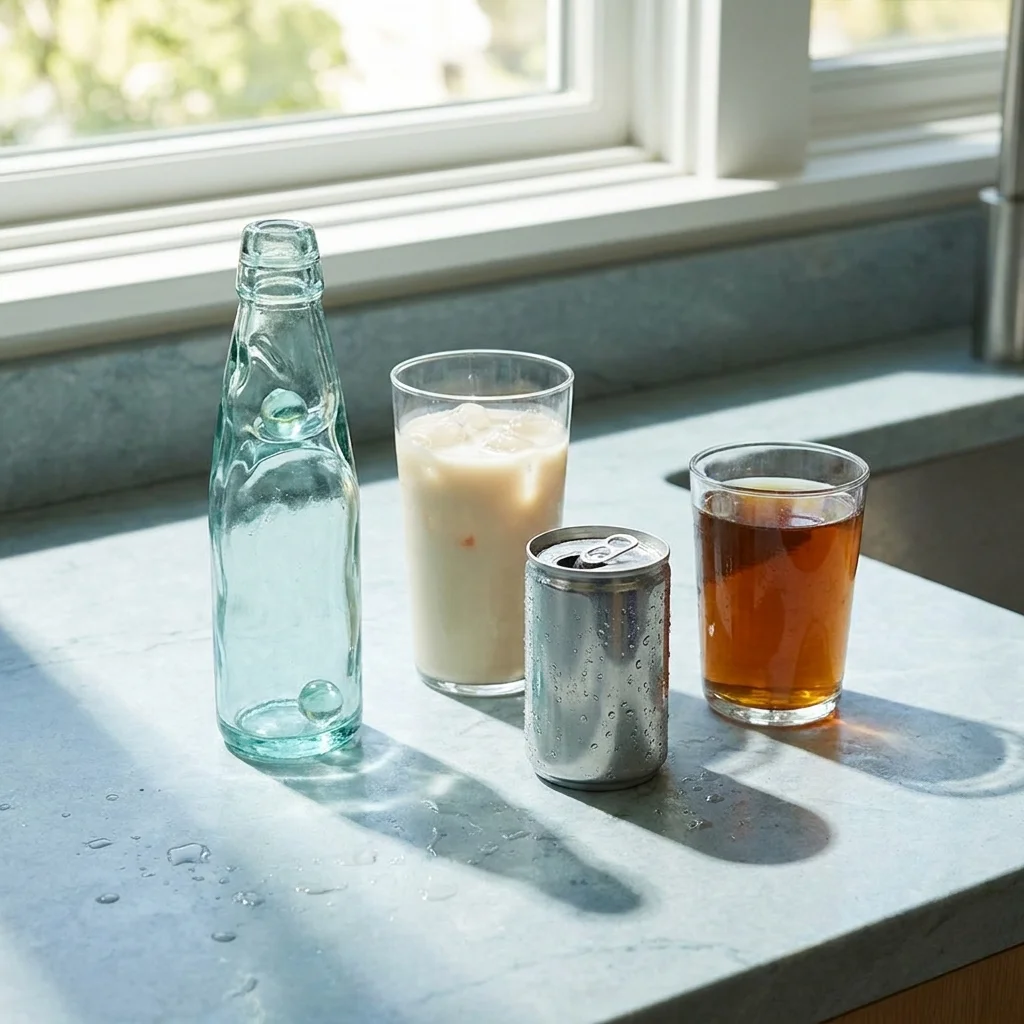
Japanese Drinks Explained: Ramune, Calpis, Pocari and More
A guide to Japanese drinks beyond green tea: why Ramune has a marble, what Calpis actually is, why Japanese cider isn't apple, and which ones travel well.
Stand in front of a Japanese vending machine and the drinks aisle of your local supermarket starts to look thin. There are fizzy drinks with marbles in the neck, milky drinks that are neither milk nor yoghurt, sports drinks named after sweat, and hot coffee in cans, all in the same machine.
This guide to Japanese drinks covers the ones worth knowing beyond green tea: what they are, what they taste like, and which formats make sense to buy from abroad.
Ramune: the soda with a marble
Ramune (ラムネ) is a lightly sweet, lemon-lime soda sold in a distinctive glass bottle with a pinched neck and a glass marble inside. The bottle is a Codd-neck design: the pressure of the carbonation pushes the marble up against a rubber seal, closing the bottle from the inside. The drink is popularly traced to Kobe in the 1880s, and the name is generally said to come from "lemonade".
To open it, take the plastic plunger from the cap, place it on the marble and press down firmly until the marble drops into the neck with a hiss. When drinking, turn the bottle so the marble rests in the two small dents in the glass. Otherwise it rolls back and blocks the flow.
Ramune is the drink of summer festivals, and the flavour list has grown well beyond the original. The bottle remains the point.
Calpis: the cultured-milk concentrate
Calpis (カルピス) is a sweet, tangy concentrate made from milk fermented with lactic acid bacteria. It was launched in 1919 and is one of Japan's most recognisable drinks; in some countries it is sold as Calpico.
It tastes somewhere between yoghurt, lemonade and a milkshake, without being heavy. The concentrate is diluted with water, roughly one part Calpis to four or five parts water, or with soda water for a fizzy version. Many Japanese households also drink it with hot water in winter.
Ready-to-drink Calpis is the easy introduction. Once you are hooked, the concentrate is the better buy: one bottle makes a great many glasses.
Pocari Sweat and Japanese sports drinks
Pocari Sweat (ポカリスエット) is a mild, slightly sweet sports drink made by Otsuka and launched in 1980. The name puzzles visitors, but the idea was always simple: replace the water and salts lost through sweating. It has a faint citrus note and is noticeably less sweet than many Western sports drinks.
In Japan it is a household staple for hot days, long walks and after exercise. Powder sachets, mixed with water, are the practical way to keep it in the cupboard.
Mitsuya Cider, C.C. Lemon and the "cider" confusion
In Japan, saidā (サイダー, "cider") means a clear, sweet, lemon-lime soda. There is no apple and no alcohol. Mitsuya Cider is the classic brand and one of the oldest soft drinks on Japanese shelves.
C.C. Lemon, from Suntory, is a sparkling lemon soda marketed on its vitamin C content. Melon soda, bright green and sweet, is the café classic, usually served with a scoop of vanilla ice cream floating on top.
Then there is Oronamin C, the small brown bottle of carbonated tonic drink sold at every convenience-store counter. It is a pick-me-up in the Japanese sense: one quick bottle in the afternoon.
Canned coffee and the hot-can machine
Japan took coffee in cans further than anywhere else. UCC is widely credited with popularising ready-to-drink canned coffee, and brands such as Boss and Georgia now fill every vending machine.
The machines themselves are part of the story. In colder months, many sell hot and cold drinks side by side: a red label under the sample means hot (atatakai), a blue one means cold (tsumetai). A hot can of coffee in a gloved hand on a winter platform is one of Japan's small everyday pleasures.
Labels to know: ブラック is black and unsweetened, 微糖 (bitō) means low sugar, and カフェオレ is café au lait.
For brewing at home instead, see our Japanese coffee at home guide.
Barley tea and the everyday drinks
The drink most Japanese families actually get through in summer is not soda at all. Mugicha (麦茶) is roasted barley tea, brewed by the jug and kept in the fridge. It is caffeine-free, nutty and lightly toasty, and children drink it as freely as water. Our guide to caffeine-free Japanese teas covers it alongside hojicha and other evening options.
Which Japanese drinks to buy from abroad
| Drink | What it is | Taste | Best format to buy |
|---|---|---|---|
| Ramune | Marble-sealed soda | Light lemon-lime | Bottle (fragile, heavy) |
| Calpis | Cultured-milk concentrate | Tangy, sweet, creamy | Concentrate |
| Pocari Sweat | Sports drink | Mild, lightly citrus | Powder sachets |
| Mitsuya Cider | Clear soda | Sweet lemon-lime | Cans |
| Canned coffee | Ready-to-drink coffee | Black to very sweet | Cans |
| Mugicha | Roasted barley tea | Nutty, toasty | Tea bags |
The practical rule: liquids are heavy, and glass is both heavy and fragile. Concentrates, powders and tea bags give you far more drinks per kilo, and they survive the journey better. Before ordering bottles or cans, check our delivery information. You will find the full range in our Japanese drinks section.
Frequently asked questions
How do you open a Ramune bottle? Press the plunger from the cap firmly onto the marble until it drops into the neck. Hold it down for a few seconds so the fizz settles before you let go.
Is Calpis dairy? Yes. It is made from fermented milk, so it is not suitable for anyone avoiding dairy.
Is Japanese cider alcoholic? No. In Japan, "cider" means a clear lemon-lime soft drink. Apple cider is a different product.
What does Pocari Sweat taste like? Mild and lightly sweet, with a faint citrus note. It contains sugar, so it is a sports drink rather than a replacement for water.
What do Japanese people drink every day? Mostly green tea, barley tea and coffee. Sodas and sports drinks are treats or for hot days.
Start with a bottle of Calpis concentrate and a box of barley tea bags, the two that earn their place in a cupboard. For the tea side of the shelf, see caffeine-free Japanese teas.