Fermented Beauty: Why Japanese Skincare Loves Rice, Sake, and Koji
From sake brewers' famously soft hands to modern essence empires — how fermentation became Japanese skincare's signature idea, and the products that carry it today.
Every great skincare tradition has an origin story. Japan's begins in a sake brewery: toji brewers whose faces aged normally while their hands — plunged daily into fermenting rice mash — stayed inexplicably smooth. That observation launched decades of research into fermentation, and eventually an entire philosophy of skincare built on rice, koji mold, and the transformative patience of brewing.
It's worth pausing on how unusual that origin is. Most skincare stories start in a lab looking for a molecule; Japan's started with craftsmen and a five-hundred-year-old fermentation culture that already touched everything — sake, miso, soy sauce, pickles. When beauty science went looking for the mechanism behind the brewers' hands, it wasn't inventing something new. It was translating something Japan already knew into a jar.
Here's what fermentation actually brings to a bottle, and the products in our catalog that carry the tradition.
Why ferment an ingredient at all?
Fermentation is nature's refinement process. As microorganisms work on rice or yeast, three useful things happen at once.
Molecules get smaller. Fermentation breaks large proteins and starches into amino acids, peptides, and sugars — smaller structures in forms skin can more readily use. Raw rice protein is a locked pantry; the ferment is the meal, plated.
New compounds appear. Microbes are chemists. As they metabolize, they generate substances that never existed in the raw ingredient — organic acids, enzymes, vitamins. The famous sake-brewery ferment is prized precisely for this metabolite richness.
Harshness mellows. Fermentation tends to smooth an ingredient's rough edges, which is why ferment-based formulas have a reputation for gentleness disproportionate to their activity.
The cultural fit matters too. Fermentation rewards patience, precision, and repetition — the same virtues that define the Japanese routine itself, as our traditional ingredients guide explores. It is slow beauty in the most literal sense: results brewed, not blitzed.
Rice: the foundation grain
Rice appears in Japanese beauty at every level of refinement, and it always has. Edo-period geisha washed their faces with the water left over from rinsing rice; rice-bran bags (nuka-bukuro) were the exfoliating washcloth of their day; and rice bran oil remains a quiet staple of traditional routines. The grain that fed the country also polished it.
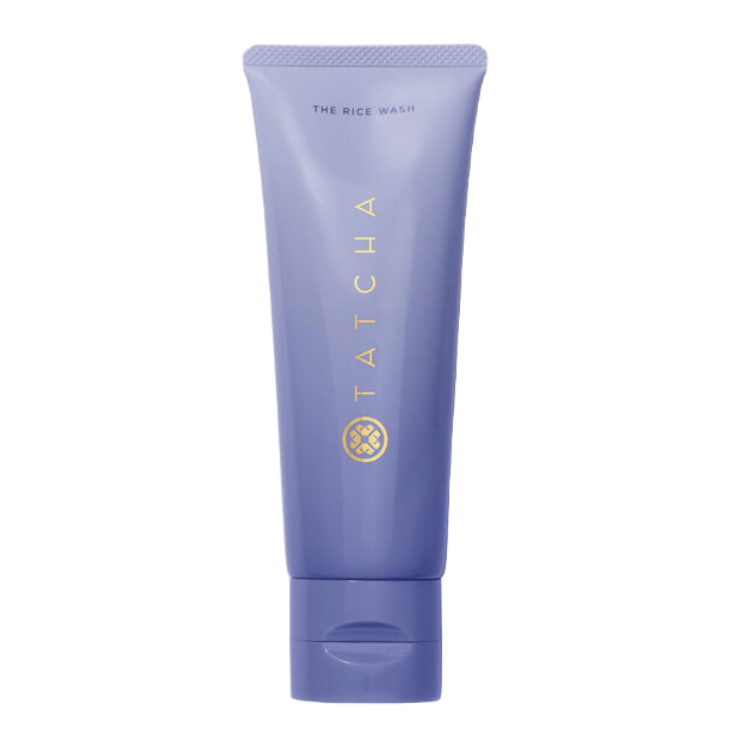
Tatcha's Rice Wash is the category's luxury translation — a cream cleanser built around rice that washes skin soft instead of squeaky, from a brand that famously mined geisha beauty manuals for its formulas. It's the gentlest possible entry point into the tradition: rice care, morning and night, in the least demanding step of any routine.
Pitera: the ferment that built an empire
SK-II's pitera — a yeast ferment filtrate discovered through that sake-brewery observation — is the most famous fermented ingredient in beauty, full stop. One strain, cultivated under conditions the company has guarded for decades, produced a clear liquid rich in the amino acids, minerals, and organic acids that fermentation does best. An entire luxury house was built on it, and has stayed built on it for over forty years.
The Clear Lotion delivers pitera as a gentle exfoliating-toner step — the wipe-and-prep that readies skin for everything after:
The SkinPower essence is the modern flagship: the same ferment heritage layered into a bouncier, richer treatment that anchors the routine's treatment step:
The grain family's quiet cousin
Not fermented, but philosophically inseparable: hatomugi (Job's tears), the humble grain Japan has splashed on for generations. It shares the tradition's core idea — one simple botanical, used generously and daily, trusted across decades rather than seasons. If the ferment empire is the tradition's cathedral, the big plastic hatomugi bottle is its neighborhood shrine.
How to build fermented steps into a routine
- Cleanse: a rice wash keeps the theme from step one (Tatcha). Massage, rinse lukewarm, no stripping.
- Prep: the ferment toner on a cotton pad or pressed in by hand (SK-II Clear Lotion) — the classic Japanese "wipe lotion" step.
- Treat: the ferment essence as the centerpiece (SkinPower). Pat onto damp skin; give it thirty seconds before the next layer.
- Flood: hatomugi or any watery lotion in generous layers — the hydration layering guide covers the pressing technique.
- Seal: your usual cream. Ferments play well under everything.
Fermented products reward the Japanese habit pattern: modest daily amounts, applied consistently, judged over months. It's skincare on brewing time.
Frequently asked questions
Is fermented skincare the same as probiotic skincare? They're cousins, not twins. Japanese ferment skincare uses the products of fermentation — the filtrates and metabolites — rather than live cultures. You get the chemistry without the biology.
Is it suitable for sensitive skin? Ferment filtrates are generally considered gentle, and their reputation was built partly on that mellowness. As with any active tradition, patch-test first and introduce one product at a time; our sensitive-skin guide pairs well here.
Why is SK-II so much more expensive than the rest of the tradition? Scarcity and story: a proprietary strain, a guarded process, and four decades of brand equity. The tradition itself, though, scales to every budget — rice washes and grain lotions deliver the philosophy for pocket change.
How long until fermented products show results? Think in brewing time: weeks of daily use, not days. The tradition's entire premise is patience — which, as the brewers' hands proved, is time well spent.
Everything above ships direct from Tokyo through our catalog. Start with one ferment step, keep it for a season, and you'll understand why Japan never stopped brewing.