
A Guide to Japanese Hyaluronic Acid Supplements for Skin Hydration
An editorial, carefully hedged look at Japan's oral hyaluronic acid: what it is, why molecular weight matters, the forms it takes, and what to realistically expect.
In Japan, beauty has long been understood as something that begins beneath the surface. The idea of inner care — tending to your appearance from the inside out — sits comfortably alongside the more familiar rituals of cleansing, layering lotions and moisturising. Walk through a Tokyo drugstore or a department-store beauty floor and you will find an entire aisle devoted to what is often labelled inner beauty: sachets of powder, slim tablets in blister packs, and little glass bottles of drinkable formulas, many of them built around hyaluronic acid. It is a quietly optimistic category, one that treats hydration less as a single product and more as a daily habit.
This guide covers what hyaluronic acid actually is and the role it plays in the body, the much-debated question of ingesting it versus applying it, why molecular weight comes up so often, the companion ingredients you will see alongside it, the forms it is sold in, and how people tend to take it. It also sets out what you might realistically expect. None of this is medical advice, and a supplement is a complement to a balanced diet and a sensible skincare routine, never a replacement for either. Individual results vary, and much of the research is still developing.
What hyaluronic acid is and what it does
Hyaluronic acid, sometimes written as hyaluronan, is a molecule your body already makes. It belongs to a family of substances called glycosaminoglycans, and it is remarkable mostly for its relationship with water: a single gram can, in theory, bind a striking quantity of moisture, which is why it turns up in everything from joint fluid to the deeper layers of the skin.
- It is naturally occurring: roughly half of the body's hyaluronic acid is thought to reside in the skin, where it helps tissues stay plump; it is also concentrated in the joints and the eyes.
- It is a humectant: its defining trick is attracting and holding water, which is why it is associated with the language of hydration and suppleness.
- It declines over time: current understanding is that the body's own production tends to decrease with age, which is part of why interest in supporting it grows later in life.
- It is not a single fixed thing: what is sold as hyaluronic acid varies considerably in size, and that variation matters more than the marketing usually admits.
Because the body produces and recycles hyaluronic acid continuously, no supplement introduces something wholly foreign. The open question is not whether the molecule is relevant to skin — it plainly is — but whether taking it by mouth meaningfully influences the amount available where you would like it. Ageing skin is shaped by genetics, sun exposure and lifestyle, so no single ingredient is a solution.
Ingesting versus applying: two different propositions
Topical hyaluronic acid and oral hyaluronic acid are often spoken of in the same breath, yet they work along entirely different routes and should not be assumed to do the same job.
- Applied to the skin, hyaluronic acid mostly acts at or near the surface, drawing moisture into the upper layers and improving the immediate feel of the skin. Its effects are relatively direct but also relatively shallow.
- Taken by mouth, it is broken down during digestion, and the question becomes what happens next. Some research suggests the resulting fragments may be absorbed and could influence the body's own production of hyaluronic acid, though the mechanisms are not fully settled.
- They are complementary, not interchangeable: many people who use inner-care supplements also continue with topical products, treating them as different tools.
It is worth being honest that the evidence for oral hyaluronic acid, while encouraging in places, is more limited and more mixed than the confident tone of some packaging implies. A measured reading is that it may help some people and is generally regarded as low-risk, not that it is guaranteed to work.
Molecular weight and companion ingredients
If you read Japanese inner-beauty labels closely, two themes recur: the size of the molecule, and the other ingredients bundled alongside it.
Molecular weight, explained
Hyaluronic acid is sold in high-molecular-weight and low-molecular-weight forms, and you may also see hyaluronan oligosaccharides — very small fragments — mentioned by brands that want to emphasise absorbability. The intuitive theory is that smaller molecules are easier for the body to take up. The honest position is that the relationship between molecular weight and any real-world benefit is still being studied, and a lower number on the label is not automatically better. Treat molecular-weight claims as a point of interest rather than proof of superiority.
- Collagen: perhaps the most common partner, collagen peptides are frequently paired with hyaluronic acid in the same tablet or drink, reflecting the Japanese habit of combining "structure" and "moisture" ingredients.
- Ceramides: often derived from rice or konjac, ceramides are associated with the skin's barrier and reinforce the hydration theme from a different angle.
- Vitamin C: included as an antioxidant and because it is involved in the body's normal collagen synthesis; a logical, well-understood companion.
- Elastin, placenta extract and botanical extracts: these appear too, particularly in premium drinkable formulas, though the evidence behind each varies and some are more tradition than science.
None of these additions changes the fundamental caution: a well-formulated supplement supports a diet already rich in whole foods, and cannot compensate for one that is not. A shorter, well-explained ingredient list is often preferable to a long one full of trace amounts.
The forms it comes in
Part of what makes the Japanese category distinctive is the range of formats, each with its own rhythm and appeal.
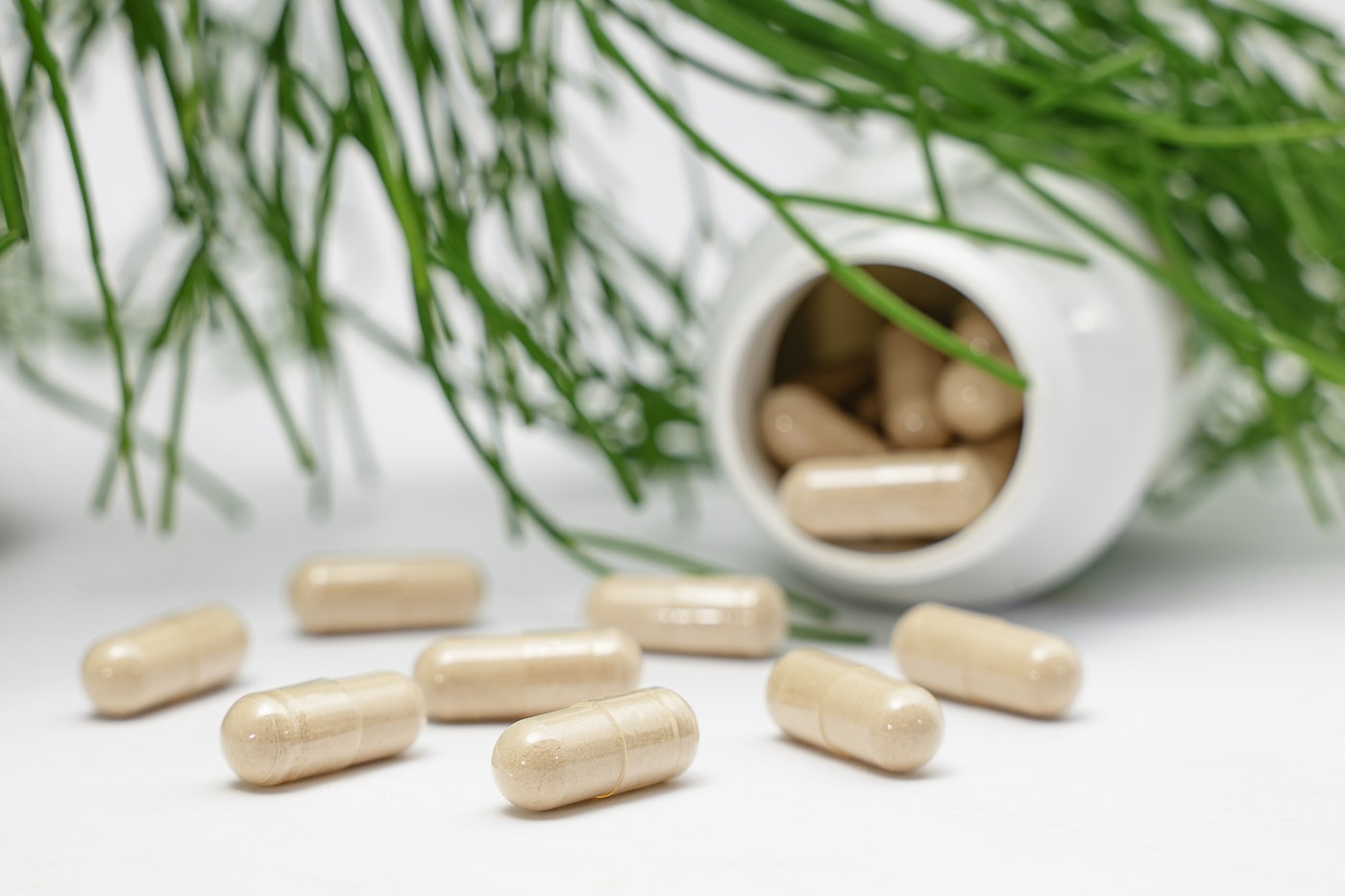
- Tablets and capsules: the most convenient option, easy to dose and to travel with, and usually the most affordable per day.
- Powders and sachets: stirred into water, tea or a smoothie, and often combined with collagen. They allow flexible dosing and frequently carry higher amounts per serving.
- Ready-to-drink bottles: the so-called beauty drinks, positioned as a treat as much as a supplement. They tend to be the most expensive per serving and are often bought for a special stretch, such as the dry winter months.
- Jellies and gummies: a softer entry point, pleasant to take, though usually lower in active content and higher in sugar.
How people tend to take it
There is no single official dose for oral hyaluronic acid, and amounts vary between products, so the manufacturer's guidance should always come first. A few sensible principles show up again and again.
- Read the label and follow the stated serving. Studies commonly involve modest daily amounts taken consistently; more is not reliably better.
- Pick a form you will genuinely keep up with. A tablet you take every day will serve you better than a drink you buy once and forget.
- Anchor it to an existing habit. Many people take it with breakfast or alongside their evening skincare, using an established routine as the reminder.
- Give it a fair, patient trial. Skin renews over weeks, not days, so a realistic assessment period is longer than most expect.
- Keep the rest of your routine steady while you judge it. If you change your diet, skincare and sleep all at once, you will never know what, if anything, the supplement contributed.
Whether it is best taken with food or on an empty stomach is not firmly established, so take it whenever suits you.
If you are pregnant, nursing, taking medication or living with a health condition, please consult a qualified healthcare professional before starting any supplement, including hyaluronic acid. This article is educational and is not medical advice, nor a diagnosis or treatment plan. Supplements are not a substitute for a balanced diet, and individual results vary.
Realistic expectations and timeframes
This is the section most worth reading slowly, because expectation is where inner-care supplements most often disappoint. Hyaluronic acid taken by mouth is best thought of as a gentle, cumulative habit, not a dramatic intervention.
- Timeframe: where benefits are reported, they typically emerge gradually over several weeks, with some studies running for eight to twelve weeks or more. This is not an overnight change.
- The kind of change: reported effects tend to cluster around skin moisture and comfort — a sense of suppleness or reduced dryness — rather than sweeping transformation.
- Variability: age, baseline skin condition, diet, climate and genetics all plausibly influence the outcome, which is one reason results differ so widely.
- It is one lever among many: sleep, sun protection, overall nutrition and adequate water intake all shape how skin looks and feels, and no capsule outranks the fundamentals.
Approached this way — as a small, low-risk addition to an already sensible routine, judged patiently — oral hyaluronic acid can be a reasonable thing to try. Approached as a shortcut, it is likely to underwhelm. It may suit those drawn to a hydration-focused routine, or people in dry climates and seasons; anyone managing a medical condition, or unsure about interactions with medication, is better served checking with a professional first.
Frequently asked questions
Does oral hyaluronic acid actually work?
The honest answer is that it may help some people, and the evidence is promising but not conclusive. Several small studies have reported modest improvements in skin moisture and comfort, while others are less clear-cut. Treat any single strong claim with healthy scepticism.
How long until I notice anything?
Longer than most people hope. Where benefits are reported, they usually build gradually over several weeks, with many studies running eight to twelve weeks. A patient, consistent trial gives a far fairer sense of whether it suits you than a few days ever could.
Powder, tablet or drink?
The best format is the one you will actually take every day, as no format is inherently superior. Tablets are the most portable and affordable, powders allow flexible dosing and often pair with collagen, and bottles offer a ritual at a higher cost. Compare the amount per serving rather than the packaging.
Can I take it with collagen?
Yes, and in Japanese formulas the two are very frequently combined, often with vitamin C, and there is no established reason they cannot be taken together. Still follow each product's stated serving and, if in doubt, ask a healthcare professional about your circumstances.
Is it safe to take daily?
For most healthy adults, hyaluronic acid supplements taken at the recommended dose are generally regarded as well tolerated, and daily use is the usual pattern. Even so, this is not a universal guarantee. If you are pregnant, nursing, on medication or have a health condition, seek professional advice first.
Related reading: building a daily supplement routine and the inner beauty collagen guide.