A Guide to Japanese Instant Noodles: Cup, Bag, Yakisoba and the Real Ramen Kits
Japan invented instant ramen and never stopped refining it. Here is how cup, bag, yakisoba and restaurant kits differ — and which one to buy for what you actually want.
Instant ramen was invented in Osaka in 1958, and the cup version followed in 1971. In a 2000 national poll, Japanese respondents named instant noodles the country's most significant twentieth-century invention — ahead of karaoke, the Walkman and the bullet train. That is not a joke answer. Japan eats around 6 billion servings a year, and the category has been iterated on for six decades with an intensity that no other market has matched.
The consequence is that "instant noodles" in Japan describes at least four genuinely different products, and buying the wrong format is the most common way to end up disappointed. Here is what separates them.
The four formats
Cup noodles. Everything in one container: block, dried toppings, powdered soup. Add boiling water, wait three minutes. The most convenient, the least adjustable, and the format with the most inventive flavours.
Bag noodles (袋麺). A noodle block and separate soup sachets, cooked in a pan. You supply the bowl and any toppings. Almost always better noodles than cup for the same price, because the block is not compressed to fit a cup and rehydrates more evenly.
Yakisoba. Not soup at all — stir-fried noodles with a thick, sweet-savoury Worcestershire-style sauce. The cup version drains through a lid and is a different eating experience entirely.
Restaurant kits (生麺). Semi-fresh, non-fried noodles with liquid concentrated broth, sold by actual ramen chains. The closest you can get to a shop bowl at home, and priced accordingly.
Cup noodles: convenience and invention
Nissin's Cup Noodle is the original and still the benchmark. The seafood variant is a Japanese domestic favourite that many people rank above the original — a pork-and-seafood broth that is milkier and rounder than the standard.
Japan's cup market is also where the experimentation happens. Regional and international flavours rotate constantly, and many are genuinely good rather than novelty:
There is a smaller format worth knowing: owan de taberu ("eat in a bowl") multipacks, which are cup noodles without the cup — half-size portions you tip into your own bowl. They are the standard Japanese answer to wanting noodles as a side dish rather than a meal, and they travel far better in a suitcase.
Bag noodles: the better noodle
If you only ever buy cup, you are missing the format Japanese households actually keep in the cupboard. Sapporo Ichiban's salt ramen is one of the great bag noodles — a clear, clean shio broth that has been in production since 1966 and remains a fixture of Japanese kitchens.
How to cook bag noodles properly — this takes two minutes longer than the packet method and makes a disproportionate difference:
- Boil the noodles in plain water, not the soup water. Fried noodle blocks release oil and starch; cooking them in your broth makes it greasy and cloudy.
- Meanwhile, put the soup sachet in your serving bowl and add 400ml of fresh boiling water.
- Lift the noodles out with tongs, straight into the bowl.
- Cook the noodles 20 seconds under the stated time. They keep softening in hot broth.
That single change — separate water for the noodles — is what home cooks in Japan do without thinking, and it is the difference between "instant noodles" and "a decent bowl of ramen."
Yakisoba: sauce, not soup
Nissin's U.F.O. is the defining cup yakisoba: thick noodles, a sweet-savoury sauce heavy on Worcestershire and fruit, and a lid you drain through before mixing. It has been in production since 1976 and is a genuinely different eating experience from any soup noodle.
The one thing to know: drain thoroughly. Leftover water dilutes the sauce and is the only way to ruin it. Tilt the cup, wait longer than feels necessary, then sauce and mix.
Udon and soba: the other half of the aisle
Ramen dominates the conversation, but instant udon and soba are enormous in Japan and taste nothing like it. The broth is dashi-based — kombu and katsuobushi rather than pork bone — so it is clear, light and savoury rather than rich.
Kitsune udon (thick wheat noodles with sweet fried tofu on top) is the classic, and Nissin's Donbei has been the category leader since 1976. Regional formulations differ: the eastern (東) version uses a darker, soy-forward broth, the western (西) a lighter kombu-led one. The packaging genuinely tells you which you have.
If dashi-based broth is new to you, dashi explained covers why it tastes the way it does.
Restaurant kits: the closest thing to a real bowl
At the top of the category are kits from actual ramen chains — non-fried noodles with concentrated liquid broth, sold to be cooked at home. Ichiran's tonkotsu kit is the best-known export: the Fukuoka chain's pork-bone broth, its signature chilli-based sauce, and the thin, firm Hakata-style noodles the shop is famous for.
These are not instant food in the convenience sense — expect to boil noodles and heat broth separately, and to spend ten minutes. What you get back is a bowl that is recognisably the restaurant's.
Three toppings that upgrade any bowl
You do not need chashu. In order of effort-to-payoff:
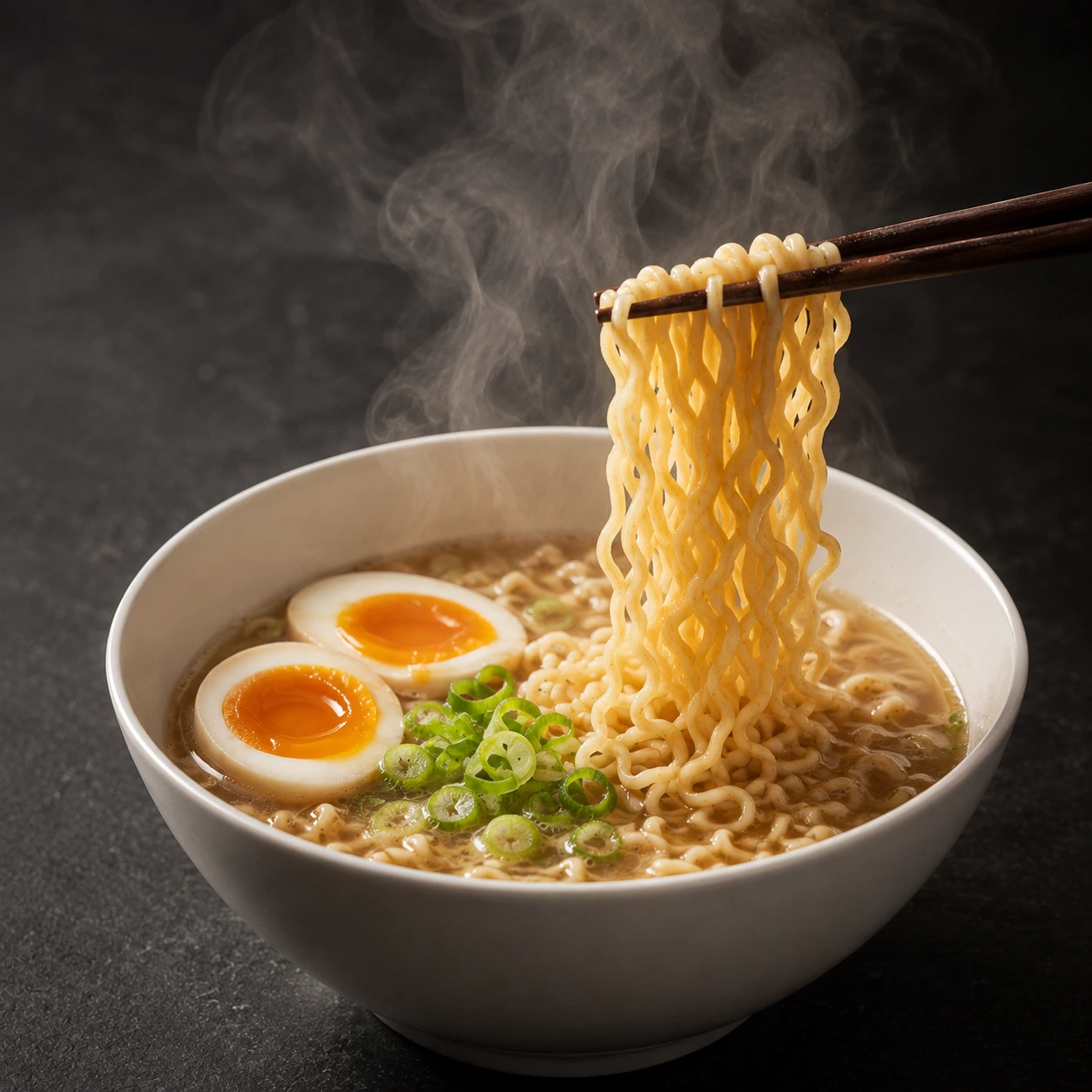
- A soft egg. Six and a half minutes in boiling water, then ice. If you want it marinated: soy sauce, mirin and water in equal parts, overnight.
- Spring onion, sliced thin. Adds the fresh, sharp note that every instant broth lacks.
- Toasted sesame oil, half a teaspoon, off the heat. Instantly makes a packet broth smell home-made.
Sweetcorn, butter (the Sapporo tradition), bean sprouts and nori all work. What matters is adding something fresh — instant noodles are overwhelmingly dried, and one fresh element resets the whole bowl.
Frequently asked questions
Are Japanese instant noodles different from Korean ones? Substantially. Korean instant ramyeon is generally spicier, chewier and heavier; Japanese instant ramen is milder, more broth-focused, and covers a much wider range of styles including soy, salt, miso and pork bone.
How long do they keep? Typically six to eight months from manufacture. The failure mode is the fried noodle block going rancid rather than anything microbial — store cool and away from light.
Are the cups microwaveable? Most Japanese cup noodles are not. They are designed for boiling water poured in, lid closed, three minutes. Check for a microwave symbol; the default is no.
Which should I buy first? A bag multipack. It is the cheapest way to find out whether you like a broth style, and cooked properly it beats the cup version of the same flavour.