A Japanese Winter Skincare Routine for Dry, Tight Skin
Heated rooms, cold wind, flaky cheeks — Japan's answer is a layered moisture routine built for exactly this season. Here's the full winter lineup.
Japanese winters are a masterclass in dry-skin misery: freezing dry air outside, over-heated trains and offices inside, and skin that spends December through February feeling one size too small. Tokyo's winter humidity regularly drops below 30% — desert territory — while indoor heating pushes the gap between skin and air even wider. Every trip through a train door is a forty-degree humidity swing, a dozen times a day.
Which is precisely why the Japanese drugstore is so good at this problem. An entire product ecosystem exists for the season — including a brand literally named for it (Kansosan, "Dry-Skin-San," roughly "Mr./Ms. Dry Skin") — and a seasonal routine logic that treats winter as its own skincare discipline rather than a colder version of summer.
Here is that routine, layer by layer, from our catalog.
The philosophy: add layers, not richness
The Western instinct is to swap everything for the heaviest cream in the store and call it a season. The Japanese approach keeps textures light and adds steps instead — more thin layers of moisture, each absorbed fully, sealed once at the end. Lighter layers penetrate instead of sitting; the seal keeps them where they landed. Skin gets depth of hydration rather than a greasy surface film that transfers to scarves and does nothing underneath.
It's the same layering system from our hyaluronic layering guide — winter just adds a heavier lid and more discipline about timing: every liquid step lands within a minute of washing, while skin is still damp.
Step 1 — Cleanse without stripping
Winter cleansing should remove the day, not the barrier. Morning: a creamy, low-foam wash — or for very dry skin, lukewarm water alone, a perfectly respectable Japanese answer. Evening: oil-then-foam only if you wore sunscreen or makeup; foam alone otherwise.
Two rules carry the season: lukewarm water (hot showers are the hidden villain of winter skin), and a towel that presses rather than rubs. If your current cleanser leaves a squeak, it's a winter liability — retire it until spring.
Step 2 — The moisture liquid
Meet the season's namesake. Kansosan's all-in-one moist liquid is a lotion, serum, and milk in one bottle — flood hydration as a single generous step, formulated for skin that's already announcing its displeasure. Apply it to damp skin in two pressed layers, palms flat, no rubbing.
Step 3 — The all-in-one safety net
On the tightest days — the ones where everything feels like sandpaper and patience is gone — Rohto's Hepasoft face lotion is the "everything hurts, one pump please" option: a moisture-focused all-in-one for skin that flakes and pulls, applied in seconds.
Keep it beside the bed as the backstop. A one-step night that happens beats a five-step night that doesn't, and winter consistency is the entire game.
Step 4 — Seal it
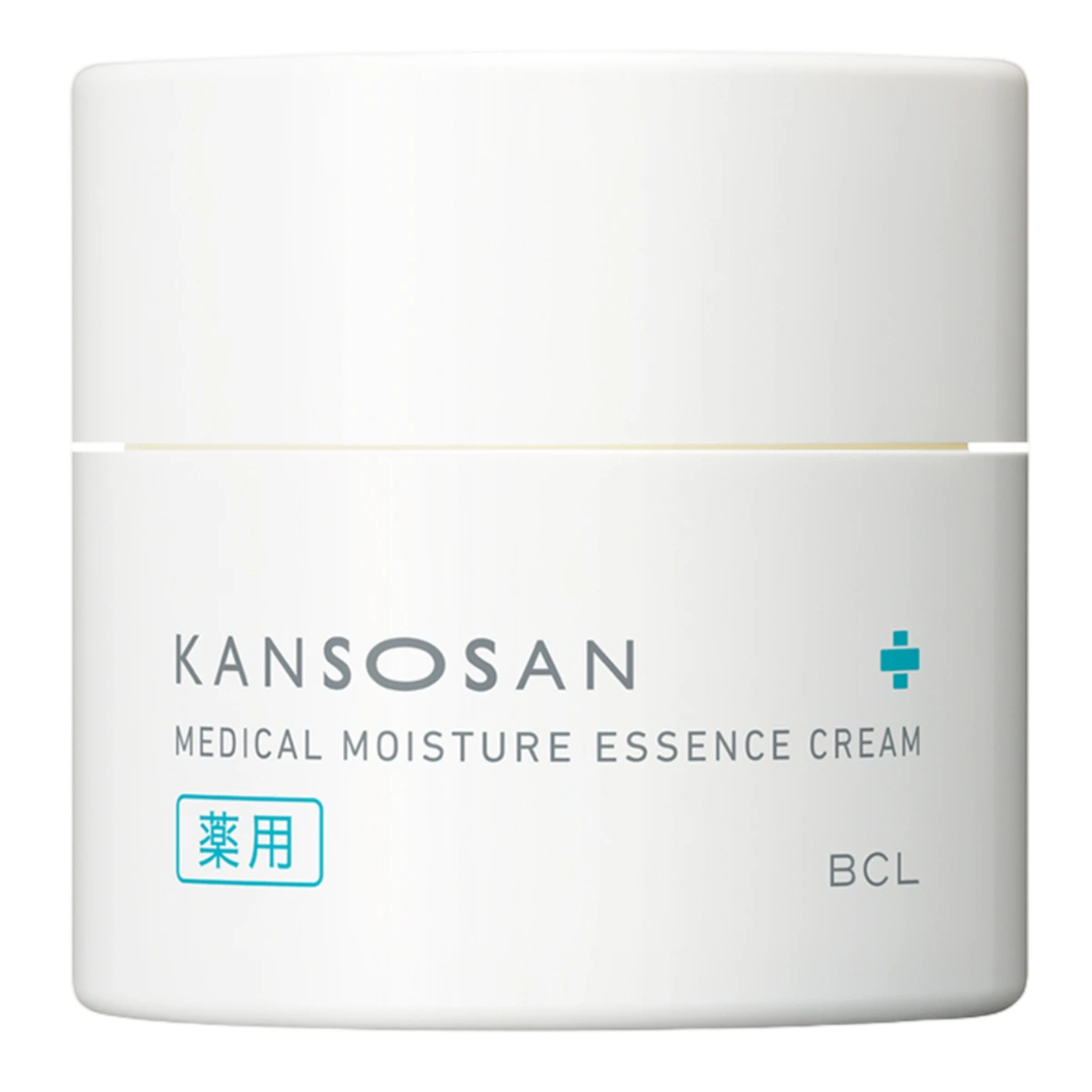
Kansosan's moist cream is the winter lid: a 3-in-1 (serum, milk, cream) with real occlusive weight that locks the liquid layers in for the commute. It's rich without being greasy — the difference between a sealed routine and a shiny face is exactly this texture calibration.
For sensitive skin, Curel's ceramide face cream is the gentler seal — the standard Japanese pharmacy recommendation when winter makes everything sting. Ceramide care supports the barrier that winter is actively dismantling, which makes it as much strategy as comfort.
Step 5 — The detail work
Eyes and lips dry out first and show it most — the skin there is a fraction of the thickness of your cheeks, with fewer oil glands to defend it. A dedicated point cream for the thin-skin zones is a very Japanese touch worth copying: a rice-grain amount, patted along the orbital bone and lip edges, morning and night.
Don't forget below the neck
Shins, elbows, and hands lose the winter war quietly — they just lose it where you don't look until the itching starts. The Japanese answer is friction-free convenience: a pump-bottle body milk by the bathroom door, applied to still-damp skin in the thirty seconds after the shower. Make it geography instead of discipline and it actually happens.
The full winter routine
Morning: gentle wash or lukewarm rinse → Kansosan liquid, two pressed layers → cream, thin → sunscreen. Yes, still — winter UV is real, and the sunscreen guide explains why the habit doesn't hibernate.
Night: cleanse → Kansosan liquid, two layers → point cream on eyes and lips → Kansosan or Curel cream, generous.
Weekly: one extra-generous lotion night — three layers, the thick cream, early bed. Consider it the skin equivalent of a hot-spring trip.
Emergency protocol (flaking, tightness, general despair): Hepasoft after every wash, cream on top, no actives, no experiments, three days. Boring rebuilds barriers.
Winter habits that outwork any product
- Shorter, cooler showers. The single highest-impact change on this page, and the least popular.
- A humidifier by the bed. Eight hours a night of 50% humidity is a skincare product you sleep through.
- Press, don't rub — towels included. Friction is a tax every dry-skin routine pays twice.
- Liquid within a minute of washing. Damp skin drinks; dry skin resists.
- Hydrate from inside. Warm drinks count; the office heater's revenge does not.
Frequently asked questions
Why not just use a heavier cleanser-to-cream Western routine? Because thickness without layering hydrates the surface and abandons the depths. The Japanese system gets water in first, then seals — richer isn't deeper.
Can oily skin use this routine? Yes — winter dehydration hits oily skin too, it just hides behind the shine. Keep the liquid layers, choose the lighter seal, and skip nothing.
When should I switch to the winter routine? When the first tight-after-washing day arrives — usually weeks before you'd otherwise surrender. Switching early is cheaper than repairing late.
The products above ship direct from Tokyo, from the country that turned this season into a specialty. Winter skin isn't a mystery; it's a checklist — and now you have it.