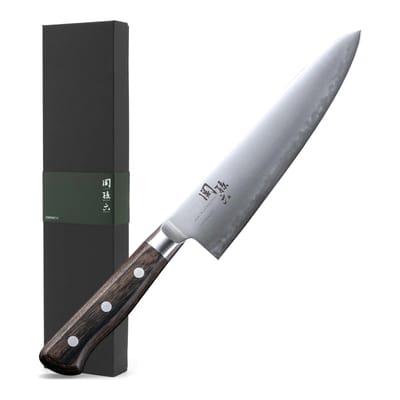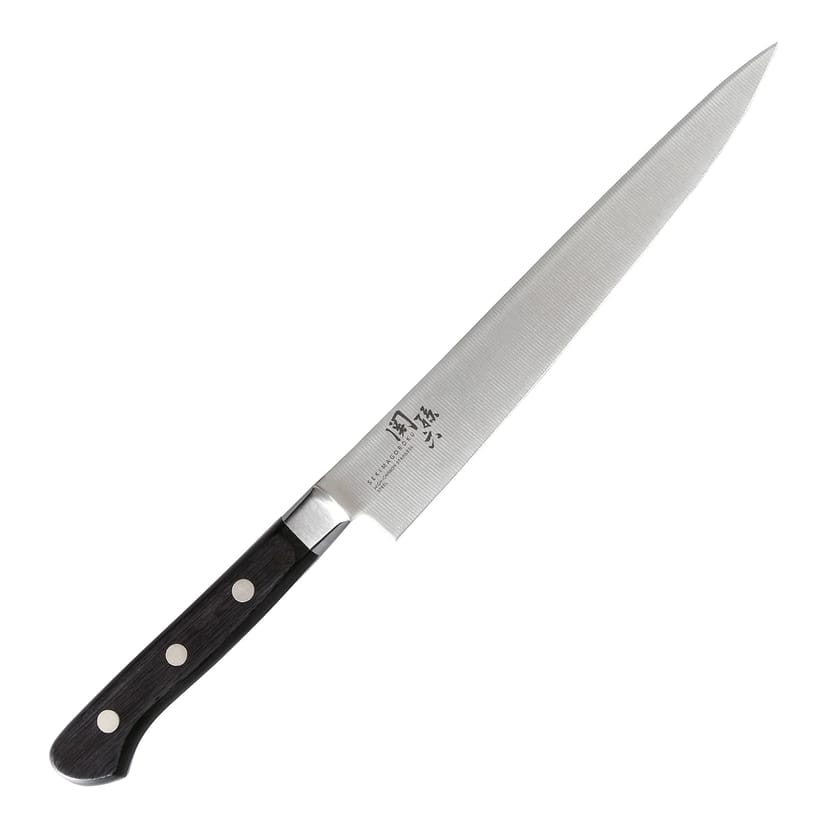
Kai Seki Magoroku Flexible Knife 000AB-5118
5,300 KGS 5,900 KGS−10%
In stock
Free shipping unlocked on this order
Express · Est. arrival Dec 1 – Dec 3 (4–6 days)
Standard · Est. arrival Dec 8 – Dec 16 (11–19 days)
| Japanese name | 貝印 関孫六 フレキシブルナイフ 000AB-5118 |
|---|---|
| Brand | KAI Seki Magoroku |
| Maker | Kai Corporation |
| Made in | JapanCountry of origin: Japan |
| Weight with packaging | 200 g |
| Package size | 362 × 71 × 24 mm |
| JAN | 4901601375299 |
A Japan-made flexible kitchen knife from Kai's Seki Magoroku line. Its slim blade suits filleting fish and peeling vegetables and fruit.
This Seki Magoroku flexible knife is made in Japan. The slim blade is used for cutting fish into three fillets and for peeling vegetables and fruit. It is a double-edged knife that can be used in either the right or the left hand. Overall length is about 362 mm and the knife weighs about 130 g.
Origin: Japan. Overall length: about 362 mm. Weight: about 130 g. Model number: 000AB-5118.
Tracked shipping from Japan to Kyrgyzstan. Duties may be due on delivery. Shipping & customs · Returns & refunds
About this product
The Kai Sekimagoroku Flexible Knife is a double-bevel knife (sharpened on both sides) designed to be used with the flex of its blade. The same Sekimagoroku Kai Sekimagoroku Migaki Gyuto uses a stainless composite in its blade, while this one has a blade of stainless blade steel that flexes moderately.
When to use it
The flex makes it easy to run the blade along a bone and cut smoothly around it. Besides filleting fish into 3 pieces, it suits preparing bone-in meat and cutting up meat. It is also designed for peeling vegetables and fruit.
Features
Because the edge is sharpened on both sides (double bevel), right-handed and left-handed people can use it in the same way. The material is stainless blade steel, and it is made in Japan. The Sekimagoroku name comes from Magoroku Kaneko, a swordsmith who is the 27th Kanemoto. The series carries on the tradition of Seki in the former Mino Province, today's Seki City in Gifu Prefecture, where sword making arrived in the Kamakura period.
Storage and care
After use, wipe off dirt and moisture promptly and dry the knife well before putting it away. Leaving dirt or water on it can cause rust and discoloration.
You may also like