Japanese Gummies, Soft Candy and Konjac Jelly: A Guide to the Sweet Aisle
Why Japanese gummies feel different, what Kanro Pure, Kororo and Hi-Chew each do, where konjac jelly and yokan fit, and what to check about gelatin before you order.
The Japanese sweet aisle is mostly gummies, and they are not the gummies you grew up with. A bag of Kanro Pure is sour-dusted and soft-hearted; a Kororo bursts; a Hi-Chew is a soft candy that chews like gum and then disappears. Texture, not sugar, is what the category competes on.
Around the gummies sit the things Japan eats instead of a chocolate bar: squeezable konjac jelly, salted-plum hard candy, milk sweets in a wrapper unchanged since the 1950s, and traditional wagashi that outlast everything else in the cupboard.
This guide covers each shelf, explains the textures, and flags the gelatin question for anyone halal or vegetarian.
The gummy scene
Japan came late to gummies (Meiji's Kola-Up in 1980 was the first) and then made them its own: firmer than a European bear, juicier, and sold in 40–60 g bags meant to be finished in one sitting.
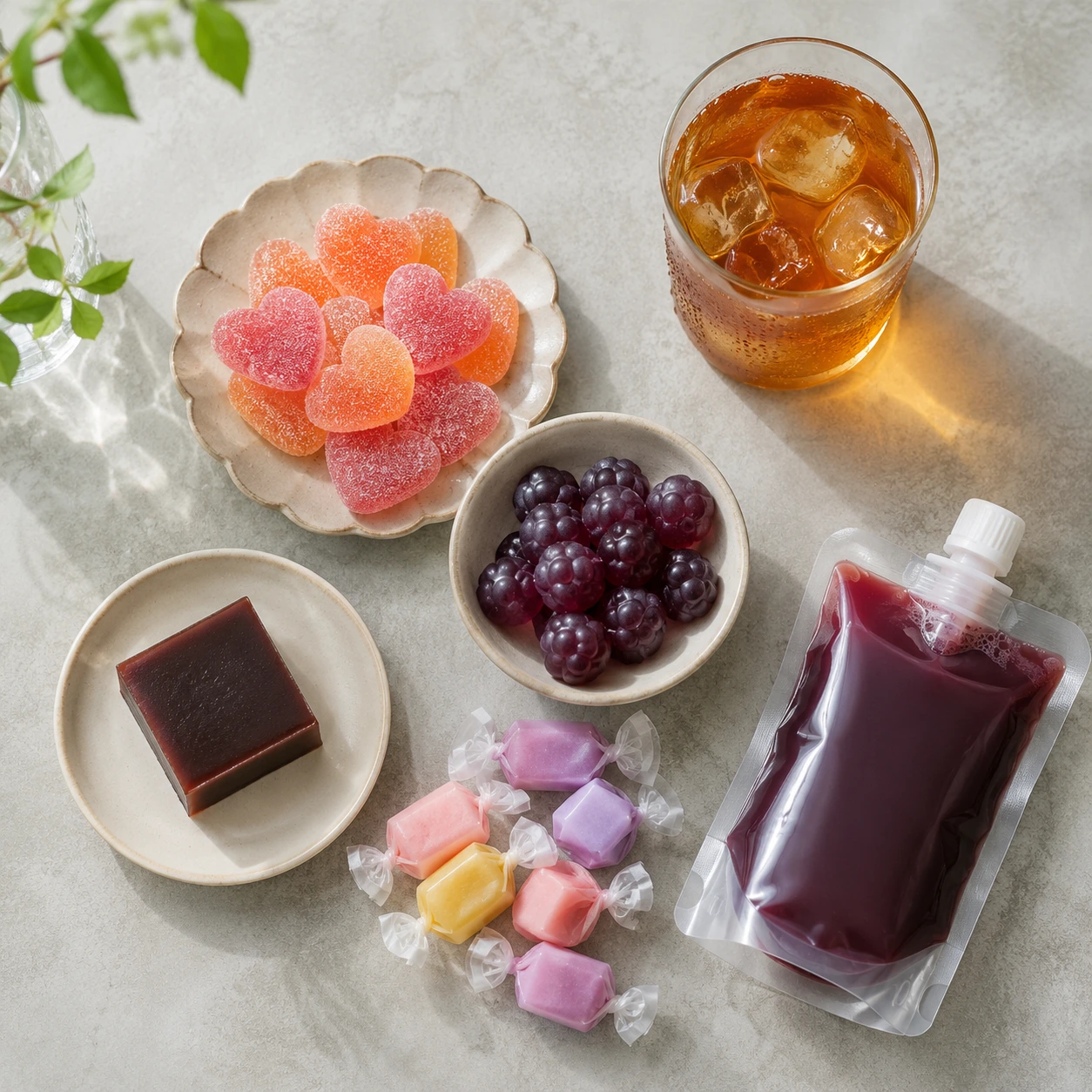
Kanro Pure is the reference: heart-shaped, coated in sour sugar, soft inside, and grape is the flavour most people start with.
Kororo is the other camp: a thin collagen skin around a liquid-soft centre of Kyoho grape juice, so it pops rather than chews, closer to a peeled grape than a sweet.
The other name to know is Bourbon's Fettuccine, a flat, chewy ribbon gummy with a hard sour coating and the firmest bite of the three.
Texture is the whole point
| Type | Feel | Set with | Example |
|---|---|---|---|
| Hard gummy | Firm, long chew | Gelatin, high ratio | Fettuccine, Cola-Up |
| Juicy gummy | Soft, coated, sour-dusted | Gelatin, lower ratio | Kanro Pure |
| Popping gummy | Skin that bursts, liquid centre | Collagen casing | Kororo |
| Soft candy | Chews like taffy, dissolves | Cooked sugar and fat | Hi-Chew |
| Konjac jelly | Springy, wobbly, cool | Glucomannan fibre | Orihiro pouch |
Hi-Chew is not a gummy. Gummies are set with gelatin or pectin and hold their shape; soft candy is a cooked sugar-and-fat mass that yields as you chew and then melts.
The assorted bag of grape, strawberry and green apple is the one to buy first; the fruit flavours are unusually true, and the texture is why it became Japan's biggest candy export.
Seasonal and limited flavours
Japanese confectioners run on a calendar: sakura and strawberry in spring, ramune and salt-lemon in summer, sweet potato and chestnut in autumn, yuzu in winter. Limited editions (期間限定, kikan gentei) last a few months and are usually a standard product in a new flavour. Treat them as fun; the permanent grape, peach and muscat versions are permanent because they sell.
Functional candies
A large part of the gummy shelf carries a benefit: collagen, vitamin C, iron, or throat-soothing herbs. Some are registered as 栄養機能食品 (eiyō kinō shokuhin, foods with nutrient function claims), which requires a set level of a named vitamin or mineral.
Read them as sweets that happen to contain vitamin C, not as a supplement plan. Two or three pieces cover the stated dose; a whole bag adds only sugar. Collagen gummies hold a few hundred milligrams of peptide, far below the 5–10 g the supplement studies use.
Konjac jelly and pudding
こんにゃくゼリー (konnyaku zerī) is fruit jelly set with konjac glucomannan, a plant fibre that gives a firmer, springier set than gelatin and almost no calories from the jelly itself. It is the snack Japanese offices keep in the fridge for the mid-afternoon lull.
The Orihiro pouch is the standard: 18% grape and apple juice in a push-up sachet designed to be squeezed rather than swallowed whole, a safety feature after choking incidents with the old cup format.
Pudding cups (プリン, purin) are custard under caramel, sold chilled and so rarely exported. The shelf-stable substitute is a dessert base stirred into 200 ml of cold milk; it sets in minutes.
Fruiche is that base, with real strawberry pulp, and it is the closest thing to a Japanese pudding cup that will survive the post.
Hard candy, milk candy and ramune
Boiled sweets in Japan lean towards milk, salt and fruit rather than mint.
Milky has worn the same Peko-chan wrapper since 1951: a soft milk candy with no artificial flavouring or colour, and the condensed-milk taste most Japanese adults associate with childhood.
Otoko Ume is the grown-up counterpart: a hard candy carrying the juice of a whole salted plum, sour, salty and savoury at once, and what Japanese people reach for on a hot day after sweating out salt.
Ramune candy is a pressed, chalky glucose tablet flavoured like the soda, sold in a bottle shaped like the drink, and eaten by students before exams.
Wagashi, briefly
和菓子 (wagashi) are the traditional sweets, built on rice, beans and sugar rather than dairy and chocolate. Three basics: mochi (pounded rice cake), yōkan (a firm jelly of sweet bean paste set with agar), and dorayaki (bean paste between two small pancakes). Most are made fresh and do not travel; shelf-stable yōkan and dried kinako sweets do.
Eiyōkan is yōkan built for the emergency cupboard: a bar of bean jelly with a shelf life of five and a half years, and a good introduction because it is less sweet than the gift-box kind.
Nejiri are twists of kinako (roasted soybean flour) bound with syrup, here with matcha folded in: dry, crumbly and made for green tea.
Gelatin, pectin and agar
- Gelatin (ゼラチン) in Japanese gummies is almost always pork-derived. Kororo's casing and most hard and juicy gummies use it.
- Pectin (ペクチン) is fruit-derived and used in some soft, jam-like gummies; it is the word to look for.
- Agar (寒天, kanten) sets yōkan and most wagashi jellies and is seaweed-derived.
- Konjac (こんにゃく) jelly is plant-based.
- Allergens are listed on the back under 特定原材料 (tokutei genzairyō): milk in Milky and most soft candy, soybean in kinako sweets, gelatin in Hi-Chew.
Halal-certified Japanese gummies exist but are rare; if certification matters, assume gelatin means pork unless the pack says otherwise.
Storage in heat
Gummies soften above about 25°C and fuse into one block above 30°C; soft candy goes sticky. In a hot climate:
- Keep bags in a cool cupboard, not on a windowsill.
- Ten minutes in the fridge separates gummies that have fused.
- Konjac jelly is best chilled and is fine frozen.
- Opened bags go stale within a week; the small bag sizes are deliberate.
Frequently asked questions
Why are Japanese gummies so firm? More gelatin, less syrup, and a deliberate preference for chew (歯ごたえ, hagotae) over softness.
Is konjac jelly safe for children? In the pouch format, in small bites, yes. Do not give the cup style to small children or the elderly; the whole-piece swallow is the risk.
Are there sugar-free options? Some, sweetened with maltitol or allulose; they carry the words シュガーレス or 糖類ゼロ. Expect a laxative effect from more than a few.
How long does yōkan keep once opened? Refrigerate and eat within three days. Unopened, follow the pack; Eiyōkan is the outlier at over five years.
If your taste runs to chocolate, the chocolate and biscuits guide is the next aisle, and the snacks guide covers the savoury side of the same order.