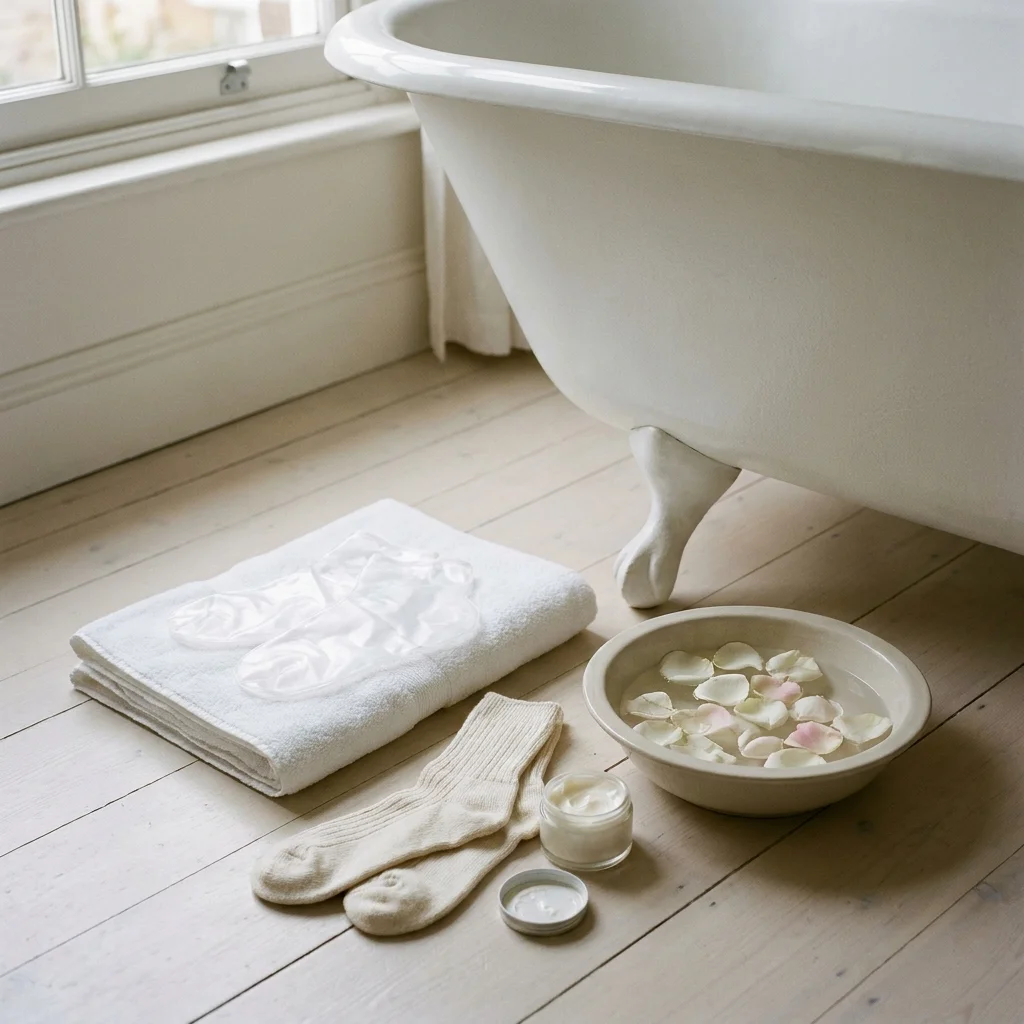
Japanese Foot Peel: What Really Happens, Day by Day
A Japanese foot peel turns rough heels soft — after a week of shedding like a snake. How it works, the day-by-day timeline, and the heel care that makes it last.
Few beauty products come with a story you end up telling friends. A foot peel does. You wear a pair of plastic booties for an hour, nothing happens for days, and then the soles of your feet start shedding in sheets.
The Japanese foot peel has been a drugstore curiosity for years, and it works on a simple principle. This guide explains how, what to expect day by day, who should skip it, and how to keep heels smooth once the peeling stops.
What a Japanese foot peel is
A foot peel is a gel of exfoliating acids — mainly fruit acids, or AHAs — sealed inside a pair of plastic booties. You slip your feet in, wear them for around an hour, then wash the gel off.
The acids loosen the bonds that hold dead skin cells together. Rather than dissolving hard skin on the spot, they set up a slow release: over the next week or so, the thickened outer layer detaches and sheds, revealing softer skin underneath. Baby Foot is the best-known brand, and its name tells you the intended result.
Foot peel timeline: what happens day by day
Everyone's feet are different, and thicker skin generally takes longer. This is a typical pattern.
| When | What you'll notice |
|---|---|
| Day 0 | Booties on for about an hour, then rinse. Feet look and feel normal. |
| Days 1–3 | Possibly a little tightness or dryness. Nothing visible yet — this is where people assume it hasn't worked. |
| Days 3–7 | Peeling starts, often between the toes and on the soles first. It can be dramatic. |
| Days 7–14 | The bulk of the shedding. Heels, usually the thickest skin, tend to finish last. |
| After 2 weeks | Mostly complete. Feet feel noticeably smoother. |
How to get the best result
Before:
- Read the instructions in the pack and follow them; timings vary between products.
- Many instructions ask you to remove nail polish first.
- A warm foot soak beforehand softens hard skin and helps the gel work evenly.
- Pull a pair of socks over the booties to keep them snug and stop you sliding on the floor.
During the peeling days:
- Do not pull the skin off. Tugging at a half-attached flake can tear into the healthy skin underneath. Let it come away on its own.
- Soaking your feet in warm water for a few minutes each day helps loose skin come away.
- Wear socks indoors. You will thank yourself when you look at the floor.
- Skip foot files during the peel.
Who should not use a foot peel
- Anyone with cuts, cracks that are open or bleeding, blisters, or broken skin on the feet.
- Anyone with inflamed or irritated skin on the feet, including active eczema or infection.
- People with diabetes or circulation problems should ask their doctor before using any foot peel — reduced sensation makes it harder to notice a problem.
- If you are pregnant, or have reacted badly to acids before, check with a doctor or pharmacist first.
Stop and rinse if you feel burning rather than mild tingling. If skin is sensitive in general, our sensitive skin guide is worth reading first.
Plan it around your calendar
Timing is everything. You do not want to be mid-peel at the beach, the gym changing room or a sandal-wearing wedding.
The sweet spot is about two weeks before you need your feet on show. Cooler months are ideal, when socks hide everything. And treat the new skin kindly — it is fresher and softer, so give it a little time before a long barefoot walk.
Daily heel care that keeps the results
A foot peel resets the skin, but hard skin rebuilds with pressure and friction. Daily care keeps it at bay.
- Urea creams. Japanese drugstores stock foot and heel creams with urea at a range of strengths. Urea draws in moisture and softens rough, thickened skin. Apply after bathing, when the skin is still slightly damp.
- Heel masks. Sock-style or wrap masks sit on the heel to soften it in a single session. Curél makes a heel-care mask built on its gentle, ceramide-focused approach.
- Overnight socks. Moisturise heavily, pull on cotton socks, sleep. Simple and effective.
- Gentle filing. Once a week, on dry skin, with a fine file. Over-filing encourages the skin to thicken back faster.
Yuskin A is a classic Japanese household cream for dry, rough skin — thick, yellow-tinted, and a natural partner for cracked heels and hands. For the rest of the body, see our guide to Japanese body lotions and body washes, and pair the routine with a warm soak using Japanese bath salts.
Foot peel vs file vs cream
| Method | How fast | How long it lasts | Effort |
|---|---|---|---|
| Foot peel | Results after 1–2 weeks | Weeks | One hour, then patience |
| Foot file | Immediate | Days | Weekly, easy to overdo |
| Urea cream and socks | Gradual | As long as you keep going | A minute a day |
The best results come from combining them: a peel to reset, cream to maintain.
Frequently asked questions
How long does a Japanese foot peel take to work? Peeling usually starts a few days after treatment and is mostly finished within two weeks.
Does a foot peel hurt? It shouldn't. Mild tingling can happen; burning or pain means rinse off immediately.
How often can you do a foot peel? Follow the instructions on your pack. Most brands advise waiting several weeks between treatments.
Can I use a foot peel on cracked heels? Not if the cracks are open or bleeding. Heal them first with cream and socks.
Can I use a foot peel on my hands? No. They are formulated for the thick skin of the soles.
Why hasn't my foot peel started peeling? Give it a week. Thicker skin often starts later, and daily warm soaks help.
Plan your peel two weeks ahead, let it shed on its own, then keep heels soft with daily cream. The full range is in our hand and foot care collection.