Shinrin-yoku Explained: The Japanese Art of Forest Bathing for Calm
Discover shinrin-yoku, the Japanese practice of forest bathing: its 1980s origins, the ideas behind it, and how to slow down among trees for a calmer life.
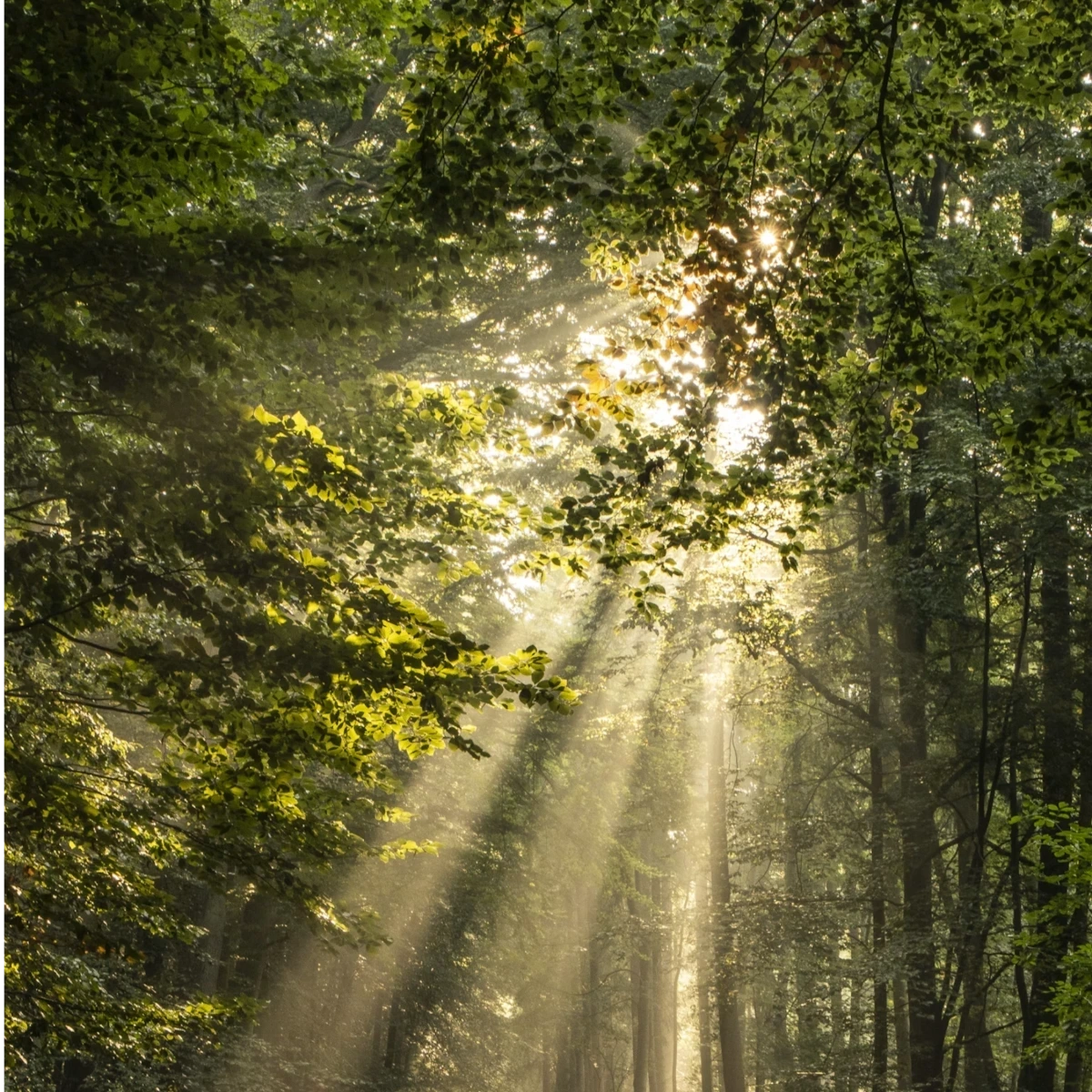
There is a particular quality of stillness that settles over you a few minutes into a wood, once the noise of the road has thinned and your own footsteps have grown quiet. The light comes down in pieces; the air smells of damp earth and green things. You are not going anywhere in particular, and for once that is the point. In Japan, this unhurried, sensory time among trees has a name: shinrin-yoku, literally "forest bathing" — not a swim, but an immersion of the senses in the atmosphere of the forest.
This guide covers where the idea came from, what forest bathing actually is (and what it is not), the thinking behind claims about its effect on stress, and a simple way to practise it yourself. It also looks at how to find something forest-like in a city, and how the whole habit folds into a slower, more attentive way of living. Throughout, health claims are kept gentle and hedged: forest bathing is a calming practice many people find restorative, not a treatment, and none of what follows is medical advice.
A short history
The term shinrin-yoku was coined in 1982 by the Japanese Forestry Agency, which began encouraging people to visit forests for their wellbeing. It arrived at a specific moment: Japan was deep in a period of rapid urbanisation and long working hours, and the phrase framed the country's abundant woodland as a public-health resource rather than only timber or scenery. The idea was disarmingly simple — that spending calm, deliberate time under trees might be good for people who spent most of their lives indoors and under strain.
From the 1990s onward, researchers began studying the practice more formally, measuring markers such as heart rate, blood pressure and stress hormones before and after time in the forest. A network of designated "forest therapy" trails grew across Japan. What started as a piece of gentle government advice slowly became a subject of research and, eventually, an export — today forest bathing is practised and guided in many countries under its Japanese name.
- A public-health origin. The phrase was official language before it was a wellness trend, tied to the idea of forests as a shared national resource.
- A response to modern life. It answered the pressures of city living, screen time and overwork, and that context still explains much of its appeal.
- From advice to study. Decades of research followed, though the findings are best read as suggestive rather than settled.
What it is, and what it isn't
Forest bathing is easy to misunderstand because it looks, from the outside, like a very slow walk. The difference is entirely in the intention. You are not covering distance, counting steps or reaching a summit. You are giving your attention to the forest and letting it hold you there. A session might cover only a few hundred metres in an hour, or none at all if you find a place to sit.
It helps to be clear about what it is not. It is not a hike, not cardio, not a hunt for wildlife, and not a mindfulness technique borrowed wholesale from elsewhere — though it shares a family resemblance with meditation. There is no performance in it and nothing to complete. The Japanese sense of ma, the meaningful pause or empty interval between things, is close to its spirit: the practice is largely about making room, letting the gaps stay open rather than filling them.
- It is slow. Movement is minimal and aimless by design, and stillness is welcome.
- It is sensory. The aim is to notice — light, sound, texture, scent — rather than to think your way through.
- It is unstructured. There is no route to finish and no goal to hit, which is precisely what makes it restful.
- It is not exercise. If you come back tired and sweating, you have probably been doing something else.
The ideas behind it
Two strands of thinking are usually offered to explain why forest bathing might affect how we feel. The first concerns phytoncides, the airborne compounds that many trees release — part of their own defence against insects and microbes, and part of what gives a coniferous wood its clean, resinous smell. Some studies suggest that breathing this forest air is associated with changes in stress markers and immune activity. It is an appealing idea, and worth holding loosely: much of the research involves small groups and short-term measures, so the current understanding points to a plausible effect rather than a proven mechanism.
The second strand is simpler and, to many, more convincing: attention. A forest asks almost nothing of you. It offers soft, undemanding things to look at and listen to, and this gentle input seems to let the effortful, over-worked part of the mind rest. Whether the benefit comes chiefly from the air, from the attention a wood invites, or from simply being unreachable for an hour, the honest answer is probably all of these at once, and individual results vary.
Think of forest bathing as something that complements the ordinary care you take of yourself, not a replacement for it. If you live with anxiety, low mood or a medical condition, a walk among trees may be a kind and useful part of your week, but it is not a treatment or a substitute for professional advice and support.
How to practise it
The practice resists instruction, because instruction is rather the opposite of its mood. Still, a light structure helps the first few times, until slowness stops feeling like something you have to remember.
- Arrive and pause. At the edge of the trees, stop. Take a few slow breaths and let the pace of getting here fall away before you go any further.
- Put the phone away. Switch it to silent and out of sight. The absence of the screen is not a minor detail; it is much of the point.
- Walk slower than feels natural. Half your usual pace, then half again. Let your feet wander without a destination, and stop whenever something holds you.
- Open the senses one by one. Notice what you see, then close your eyes and listen; feel the air and the ground; catch the scent of the place. Move through the senses without hurrying.
- Find a spot to sit. Stay in one place for ten or twenty minutes. Watch how the light shifts and how the sounds arrange themselves once you stop moving.
- Leave slowly. Notice the threshold as you go, and carry a little of the quiet back with you rather than snapping straight into the next thing.
None of these steps is a rule. If you spend the whole hour sitting against one trunk, you have done it perfectly. The measure is not what you achieve but how completely you are there.
Where and when
Almost any wood will do; the practice is generous about its settings. A dense conifer forest, a broadleaf wood in leaf, a quiet stretch of national park, even a large arboretum can all hold a session. What matters more than grandeur is quiet — a place you can move through slowly without dodging crowds.
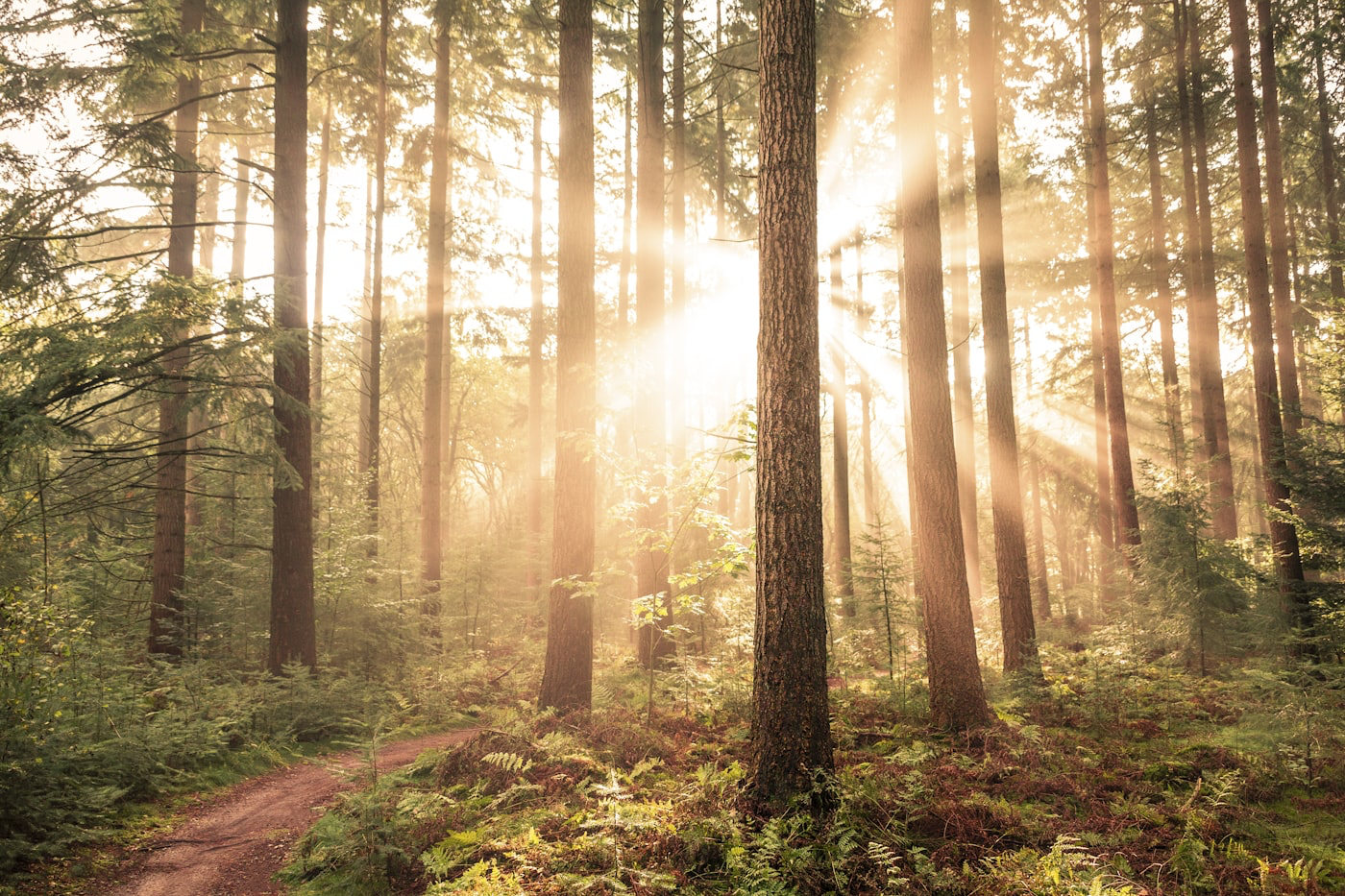
Timing shapes the experience more than most people expect. Early morning brings birdsong and low, angled light, and tends to be the emptiest hour. Rain, so often treated as a reason to stay in, transforms a wood entirely — the sound softens, the colours deepen, and the air smells its richest. There is no wrong season, only different ones.
- Choose quiet over spectacular. A modest local wood you can reach easily beats a famous forest you visit once.
- Go early if you can. Fewer people and gentler light make it easier to settle.
- Return to the same place. Familiarity deepens the practice; you begin to notice small changes rather than taking in the whole.
Forest bathing in the city
Most of us do not have a forest at the end of the street, and the practice does not require one. Its principles — slowness, attention, the senses, the absent phone — travel well into more ordinary green spaces. A city park with mature trees, a botanic garden, a tree-lined river path, even a single generous garden can carry much of the same quiet if you meet it in the right frame of mind.
Forest bathing without a forest
The trick in a city is to shrink your frame of attention until the surroundings fall away. Choose the greenest, quietest corner you can find and stay small within it. Sit beneath one large tree rather than trying to take in the whole park. Follow the light through a single canopy, listen for birds under the traffic, notice the moss on a wall or the way a breeze moves one branch. Done this way, ten minutes under an urban tree on the way home can do more for you than an hour spent thinking about how you ought to visit a forest sometime.
Making it a habit
The gap between a lovely one-off and a genuine practice is almost always frequency. A short session you actually repeat will do more than an ambitious day out you manage twice a year. The aim is to lower the barrier until forest bathing becomes something you slip into rather than something you plan.
- Keep it small and regular. Fifteen honest minutes each week beats a rare grand expedition.
- Anchor it to something you already do. A slow loop through the park on the way home, or a Sunday-morning ritual before the day begins.
- Lower the bar on purpose. No special kit, no long journey; the easier it is to start, the more often you will.
- Let it stay unproductive. Resist turning it into a step count or a photo opportunity; its value lies in being one thing you do that has no output.
Over weeks, the practice tends to seep outward. You start walking a little slower elsewhere, noticing the sky between meetings, leaving the phone face-down at dinner. Forest bathing is not really about the forest in the end; it is a way of remembering how to be somewhere fully — a habit worth carrying wherever the trees happen to be.
Frequently asked questions
What exactly is shinrin-yoku?
Shinrin-yoku means "forest bathing" in Japanese, a term coined in 1982. It refers to spending slow, unhurried, sensory time in a forest — soaking in the atmosphere rather than exercising or sightseeing. The emphasis is on noticing your surroundings through all five senses and letting the pace of ordinary life fall away.
Is it the same as hiking?
No. Hiking is about movement, distance and often a destination. Forest bathing is deliberately slow and largely aimless; you might cover only a few hundred metres in an hour, or simply sit. If you finish out of breath, you have been hiking, not forest bathing.
How long should a session last?
There is no fixed length. Many guided sessions run to a couple of hours, but a focused ten or twenty minutes is plenty. What matters is the quality of attention rather than the duration.
Can I do it in a city?
Yes. A park with mature trees, a botanic garden or a quiet green corner all work if you narrow your attention and go slowly. The setting matters less than the intention you bring to it.
Do I need a guide?
Not at all, though trained guides can help you settle the first time and are common where forest therapy is formalised. For most people the practice is best approached simply and alone: slow down, put the phone away, and let the senses lead.
Related reading: Japanese bathing rituals and the benefits of matcha