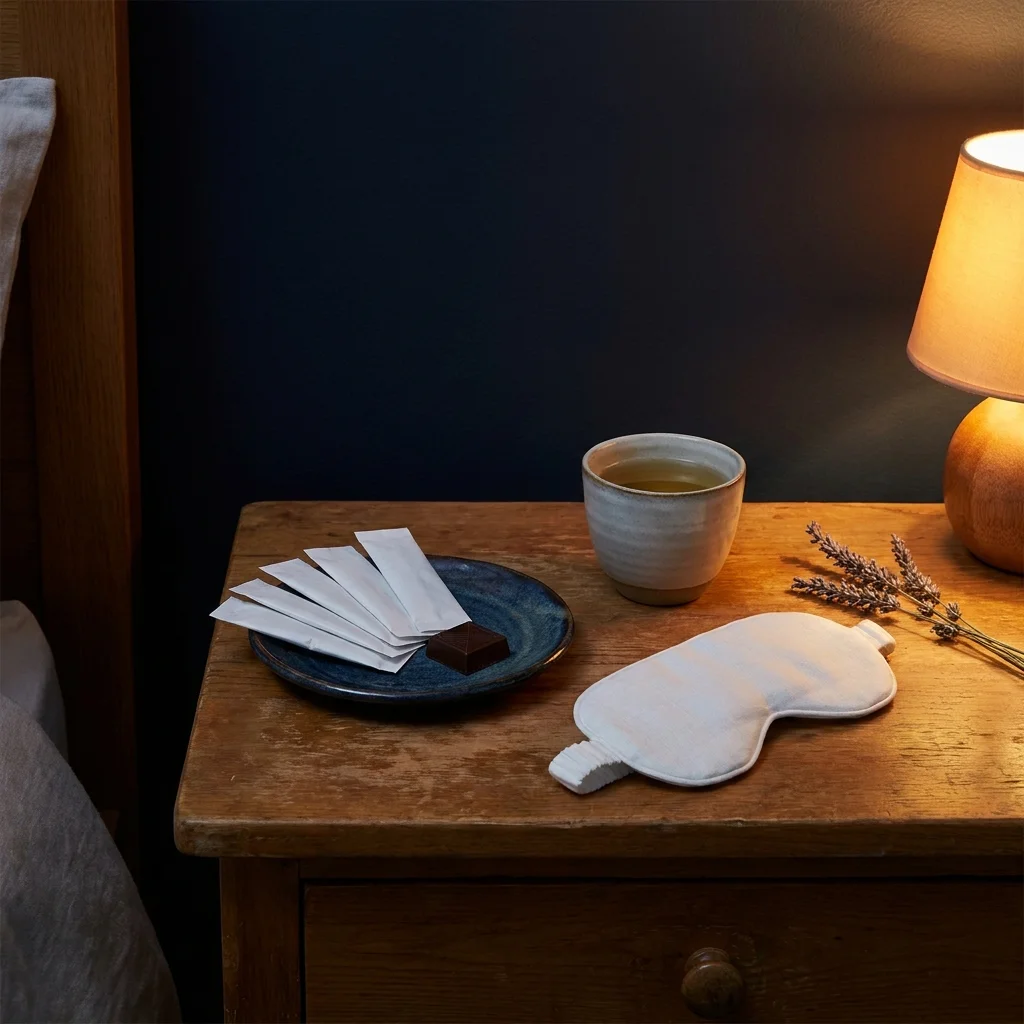
Japanese Sleep Supplements: Glycine, GABA and Theanine Explained
Japan's sleep aisle runs on amino acids, not melatonin. How Japanese sleep supplements with glycine, GABA and L-theanine are labelled, taken and best used.
Look for melatonin in a Japanese drugstore and you will not find it. In Japan, melatonin is regulated as a medicine, not sold as a food supplement. So the Japanese sleep aisle took a different route: amino acids and tea compounds, most of them sold under the country's Foods with Function Claims system.
The result is a shelf of Japanese sleep supplements built on glycine, L-theanine and GABA — plus one fermented milk drink that sold out nationwide. This guide explains each ingredient, how the products are labelled, how people take them, and the habits Japan pairs them with.
Why there is no melatonin on the shelf
Japanese law divides products into medicines and foods. Melatonin falls on the medicine side, so a supplement company cannot sell it as a food. Ingredients that are ordinary food components — amino acids found in meat, fish and tea — can be sold as foods, and if a company files the evidence, it can describe what they do.
That is why most Japanese sleep products are Foods with Function Claims (機能性表示食品). Their wording is careful: they are registered with claims relating to sleep quality in healthy adults, not to treating insomnia. How that system works is explained in Foods with Function Claims and FOSHU explained.
Glycine, L-theanine and GABA: the main ingredients
Glycine: the 3 g stick before bed
Glycine is the simplest amino acid, found in meat, fish and gelatin. Ajinomoto turned it into a sleep product called Glyna: a small stick of slightly sweet powder, around 3 g of glycine, taken before bed.
Glyna is registered with claims relating to sleep quality — the sense of sleeping deeply and waking refreshed. The powder dissolves on the tongue or in water and tastes faintly sweet, which makes it one of the easier habits to keep.
L-theanine: the calm in green tea
L-theanine is the amino acid that gives green tea its rounded, savoury taste, and it is especially concentrated in shade-grown teas like matcha and gyokuro. In supplement form it is sold as capsules or tablets, often around 200 mg per serving.
Products registered with theanine claims usually relate to sleep quality — feeling less tired on waking — and to relaxation. Unlike tea, a theanine supplement comes without the caffeine.
GABA: the stress chocolate
GABA (gamma-aminobutyric acid) is best known in Japan through Ezaki Glico's GABA chocolate, a small boxed chocolate that has sat in convenience stores for years. It is registered with claims relating to reducing temporary mental stress from desk work. Some other GABA products relate to sleep quality instead; the label will say which.
It is chocolate, so it comes with sugar and a little caffeine from the cocoa. Treat it as an afternoon product rather than a bedtime one. If you would rather skip the sugar, GABA is also sold as plain capsules.
Yakult 1000: the drink that sold out
In 2022, a fermented milk drink became one of Japan's most talked-about products. Yakult 1000 contains a high concentration of Yakult's own Shirota strain and is registered with claims relating to easing temporary stress and improving sleep quality. Demand outstripped supply for months, and supermarkets rationed it.
It is a chilled product with a short shelf life, so it cannot travel. But it shows how seriously Japan takes everyday sleep support — and why the probiotics aisle and the sleep aisle overlap there.
Japanese sleep supplements at a glance
| Ingredient | Typical form | What the claims relate to | Notes |
|---|---|---|---|
| Glycine | Powder stick, around 3 g | Sleep quality, waking refreshed | Taken before bed; slightly sweet |
| L-theanine | Capsule or tablet | Sleep quality, relaxation | Caffeine-free, unlike tea |
| GABA | Chocolate, tablets | Temporary stress; some products sleep quality | Check which claim the label makes |
| Shirota strain (Yakult 1000) | Chilled drink | Stress and sleep quality | Not shippable |
The habits Japan pairs them with
Supplements are the small part. The routines popular in Japan matter more, and cost nothing:
- A bath about ninety minutes before bed. Widely repeated advice in Japan: a warm soak, then time for the body to cool before sleep. Our Japanese bath salts guide covers the soak itself.
- A warm steam eye mask. Ten minutes of moist warmth as a wind-down cue — see the MegRhythm steam eye mask guide.
- Caffeine-free evening drinks. Barley tea and hojicha replace green tea after dinner, explained in Japan's evening teas.
Safety notes
These are foods, not sleep medication. They are designed for healthy adults and are not aimed at children or people who are pregnant or breastfeeding. If you take prescription medicine — particularly for sleep, mood or blood pressure — or have a medical condition, talk to a doctor or pharmacist first. Persistent sleep problems deserve a proper medical conversation, not a stronger supplement.
Follow the daily intake guide (1日摂取目安量) and do not combine several products to get a bigger dose. Some supplement ingredients also face import rules in certain countries; check our delivery information before ordering.
Frequently asked questions
Is melatonin sold in Japan? Not as a supplement. Melatonin is regulated as a medicine in Japan, which is why the Japanese sleep shelf uses amino acids instead.
How much glycine do people take for sleep? Japanese products such as Glyna use around 3 g, taken before bed. Follow the pack's guidance.
When should I take L-theanine? Products registered for sleep quality are usually taken in the evening. The label lists the timing and serving.
Is GABA chocolate a sleep aid? No. Glico's GABA chocolate is registered with claims relating to temporary stress from desk work, not sleep.
Can I combine glycine, theanine and GABA? Many people use one at a time. If you want to combine them, ask a pharmacist, especially if you take other medication.
Pick one ingredient, take it consistently for a few weeks alongside a better evening routine, and judge from there. The full range is in our sleep and stress collection.