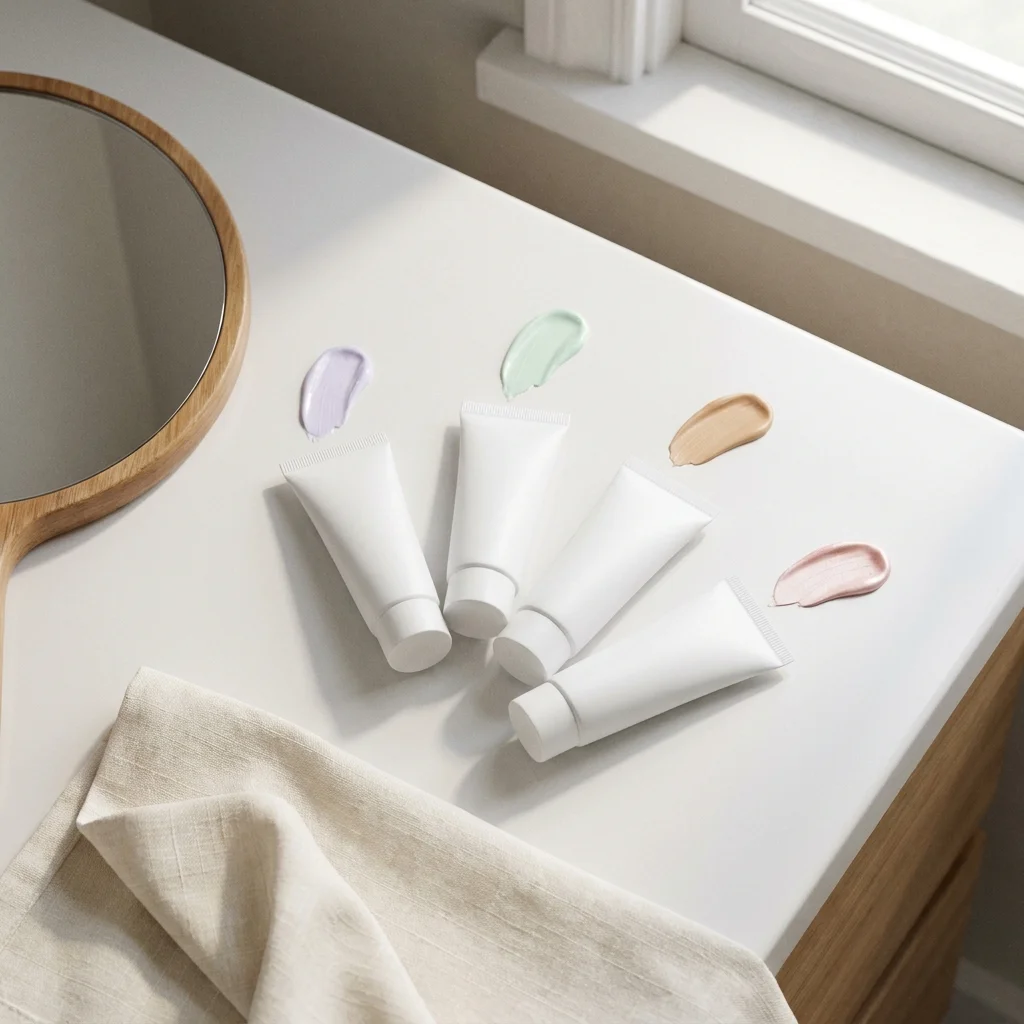
Skin Aqua Tone Up UV Essence: Which Shade Is Right for You?
Skin Aqua Tone Up UV Essence is a sunscreen and colour corrector in one tube. Lavender, Mint Green, Latte Beige or Happiness Aura — here's how to choose yours.
Somewhere along the way, Japanese drugstores decided that sunscreen could also do a colour corrector's job. The result is an entire shelf of "tone-up" sunscreens, and the most recognisable of them is Rohto's Skin Aqua Tone Up UV Essence — the lavender tube that has travelled far beyond Japan.
It now comes in several shades, and choosing the wrong one is the most common reason people give up on it. Here is what tone-up actually does, which shade suits which skin, and how to apply it so it looks like good skin rather than a pastel film.
What "tone up" means — and what it doesn't
Tōn appu (トーンアップ) describes a product that visibly brightens and evens the skin on contact, using a soft tint and fine light-reflecting particles. It is colour theory, borrowed from makeup: lavender cancels yellow, green cancels red.
Two things it is not:
- It is not whitening. The effect is cosmetic and temporary. It sits on the surface and washes off at night like any base product.
- It is not foundation. Coverage is sheer. It evens tone and adds radiance; it does not hide blemishes.
Underneath the tint, it is a full sunscreen with SPF50+ and PA++++, the top ratings on Japanese labels. Our Japanese sunscreen guide explains what those numbers mean.
The four shades, compared
| Shade | What it corrects | Usually suits | Watch out for |
|---|---|---|---|
| Lavender | Sallowness, yellow dullness | Fair to medium skin with yellow or olive undertones | Can look ashy or grey on deeper skin if applied heavily |
| Mint Green | Redness — around the nose, cheeks, post-blemish marks | Skin prone to flushing or visible redness | Can look pale or flat on cool, fair skin |
| Latte Beige | General unevenness, for a natural finish | Most medium tones; the safest first purchase | Subtle — if you want visible brightening, it may feel too quiet |
| Happiness Aura | Dull, tired-looking skin | Anyone after a rosy, lit-from-within glow | The pearl can read as shine on an oily T-zone |
If you are torn, the rule of thumb is simple: choose for your main concern, not your skin colour. Redness goes green. Yellowness goes lavender. Neither in particular goes Latte Beige or Happiness Aura.
Lavender is the original and still the best-known, and on fair to medium skin with a yellow cast it gives that slightly cooler, brighter look the range is famous for.
Mint Green is the specialist. If your face is evenly toned apart from redness around the nose and cheeks, it does more for you than any of the others.
How to apply it for a natural finish
Tinted products tempt people into applying a thin, careful layer — which is good for the colour and bad for the sun protection. The way round it:
- Dot, don't smear. Place small dots across the forehead, cheeks, nose and chin, then blend outward with fingertips.
- Feather the edges at the hairline and jaw so there is no visible line where the tint stops.
- Build in two thin layers instead of one thick one. Thin layers stay natural; two of them get you closer to a protective amount.
- Set the T-zone with a little powder if you are oily, especially with Happiness Aura.
- Use it as a primer on makeup days. Foundation goes on top once it has set.
If you only ever use a sheer amount for the colour, wear a clear sunscreen underneath for the protection and let the tone-up do the cosmetic work.
Tone-up sunscreen on deeper skin tones
Colour correctors were largely designed around lighter skin, and it shows. On deeper tones, lavender in particular can sit as a visible grey cast.
- Test along the jaw in daylight, not under bathroom lighting.
- Use it selectively — on the high points of the face or areas of redness — over a clear sunscreen, rather than all over.
- Don't mix it with moisturiser to sheer it out. Diluting a sunscreen dilutes the protection along with the colour.
If none of the shades sits naturally, a clear formula is the better daily choice, and the tone-up can stay a special-occasion product.
Skin Aqua Tone Up vs Bioré UV Aqua Rich
These are the two Japanese sunscreens people most often weigh against each other.
| Skin Aqua Tone Up UV Essence | Bioré UV Aqua Rich Watery Essence | |
|---|---|---|
| Colour | Tinted, light-reflecting | Clear |
| Finish | Brightened, lightly luminous | Natural, fresh |
| Best for | Evening tone without foundation | Invisible everyday protection |
| Skin tones | Depends on shade | All |
Plenty of people own both: clear for weekdays, tone-up for days without makeup. Our Bioré UV Aqua Rich review covers the clear option in detail.
Where it fits in your routine
Tone-up sunscreen is the last skincare step in the morning, after moisturiser. If you wear base makeup, think of it as the bridge between skincare and makeup — it can replace a separate primer and, on good days, the foundation too. For pairing with lightweight bases, see our cushion foundation guide.
At night, remove it like makeup: a thorough cleanse rather than a quick splash.
Frequently asked questions
Is Skin Aqua Tone Up UV Essence a whitening product? No. It brightens the look of skin temporarily with tint and light reflection, and washes off completely.
Mint green or lavender — which should I choose? Mint green if redness is your main concern; lavender if your skin looks sallow or yellow. If neither applies, start with Latte Beige.
Can I wear it without makeup? Yes — that is how many people use it in Japan. It evens tone enough to wear alone.
Does it leave a white cast? It leaves a tint by design. On deeper skin tones, lavender can look ashy; test it first and apply thinly over a clear sunscreen.
Can men use tone-up sunscreen? Yes. Latte Beige and Mint Green are the subtlest options if you want the evening effect without an obvious glow.
Is it suitable for sensitive skin? Patch test along the jaw for a day or two first, as with any new sunscreen.
Start with the shade that matches your main concern, apply it in two thin layers, and judge it in daylight. For more options, browse our Japanese sunscreen guide.