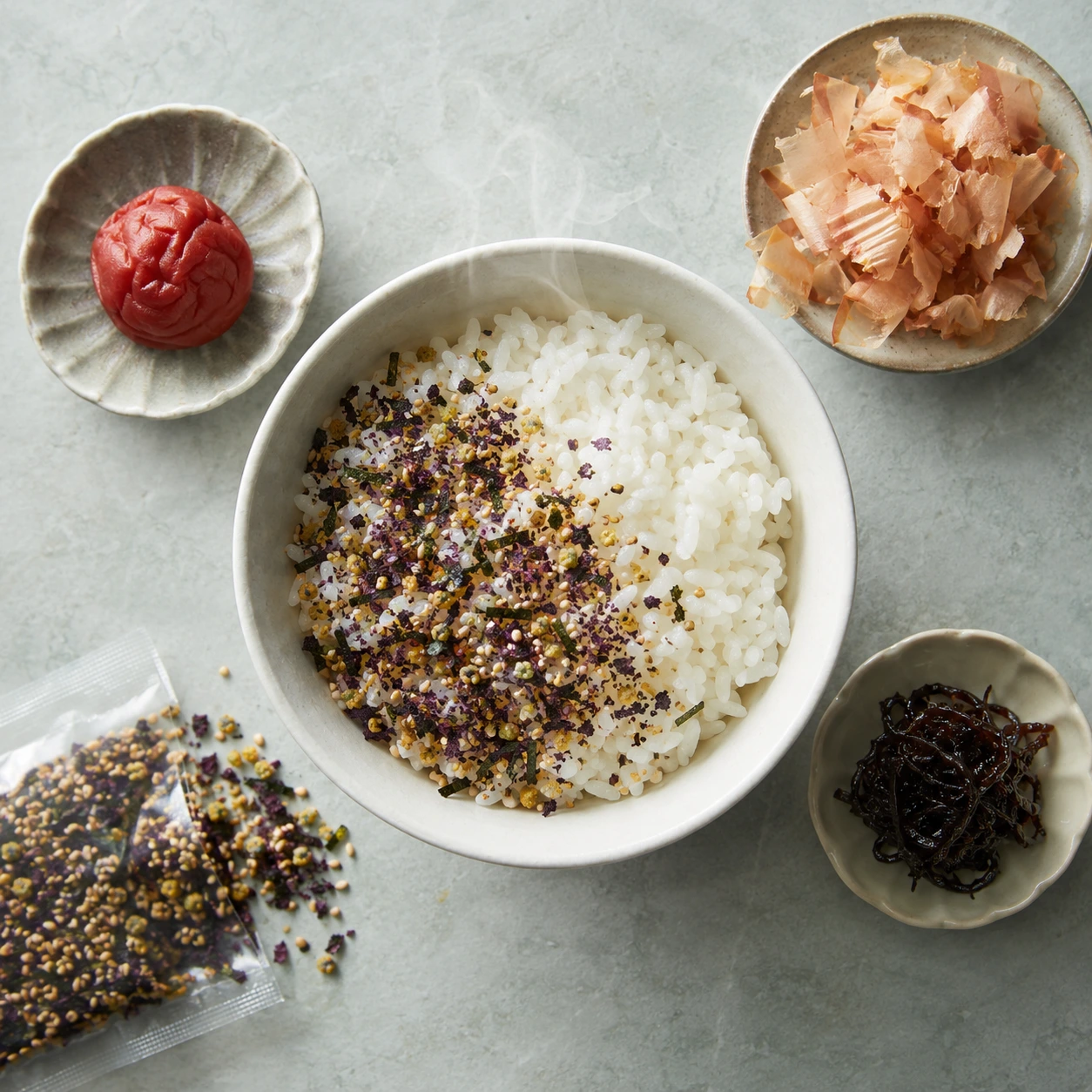
Furikake, Ochazuke and Umeboshi: What Japan Puts on Rice
A bowl of plain rice becomes a meal with one sachet. The rice toppings every Japanese kitchen keeps, what each one is for, and how to use them properly.
The most common meal in Japan is not sushi or ramen. It is a bowl of hot rice with something scattered on it — and the shelf of things designed to be scattered is one of the most useful discoveries available to anyone who cooks rice regularly.
These are not condiments in the Western sense. They are complete flavour systems in a sachet: salt, umami, texture and aroma balanced to work against plain rice and nothing else. One packet turns three minutes of cooking into a meal.
Furikake: the dry topping
Furikake means "sprinkle over". It is a dry mix, typically built from sesame, dried fish, nori, salt, sugar and MSG, with dried egg, shiso or vegetable flakes depending on variety.
It began as nutrition rather than seasoning: an early-20th-century pharmacist ground fish bones into a powder to address calcium deficiency, mixed it with sesame and seaweed to make it palatable, and unintentionally created a category.
The "grown-up" line is the one to start with — a variety pack of individually sealed sachets in flavours like wasabi, bonito, salmon and nori-and-egg. Individual sachets matter more than they look: furikake goes stale fast once air reaches it, and a multipack lets you find your flavour before committing to a jar.
Yukari is the single most distinctive furikake and deserves its own paragraph. It is dried red shiso leaf — the herb that colours pickled plums — ground with salt into a purple powder that is sharply sour, herbal and faintly minty. It is extraordinary on rice, and better still on cucumber, potatoes, popcorn or grilled chicken.
How to use it: onto hot rice, at the table, immediately before eating. Furikake stirred into a batch of rice in advance goes soggy and loses its point.
Ochazuke: rice, topping, hot liquid
Ochazuke is rice with tea or dashi poured over it, and it is Japan's answer to the late-night snack. The instant version is a sachet of seasoning, nori strips and rice-cracker pieces; you scatter it and pour hot water or green tea straight into the bowl.
The nori variety has been on shelves since the 1950s and is a genuine cultural fixture. It is the correct thing to eat after a long day, after drinking, or when there is one bowl of leftover rice in the fridge and no ambition in the kitchen.
Three upgrades that cost nothing:
- Use hot green tea instead of water — this is the original method and it adds tannin and aroma.
- Add a piece of grilled salmon, or leftover sashimi, before pouring.
- Drop in an umeboshi, which is the classic pairing.
Ochazuke also solves a specific problem: refrigerated rice that has gone hard. Hot liquid restores it in a way reheating does not.
Umeboshi and pickles
Umeboshi are salt-pickled ume — a fruit closer to an apricot than a plum, despite the usual translation. Traditional ones are ferociously sour and salty. The honey-cured type is the modern, milder version and the sensible entry point: still sour, but approachable rather than confrontational.
The classic presentation is one plum in the centre of a bed of white rice — the hinomaru bento, named for its resemblance to the flag. Beyond the aesthetics, the salt and acidity have a practical function: they inhibit bacterial growth, which is why umeboshi appear in lunchboxes that will sit at room temperature until midday. See our bento guide for the rest of that logic.
Tsukemono — pickles — are the other permanent fixture. Soy-pickled cucumber is the most-eaten version: crunchy, sweet-salty, and served in small quantities alongside rice at almost every traditional meal. A few slices reset the palate between richer mouthfuls, which is precisely their job.
Kombu, bonito and the savoury tier
Shio kombu is kelp simmered in soy and dried with salt — intensely savoury strands that season rice by themselves. It is also the fastest side dish in the repertoire: shredded cabbage or cucumber, a pinch of shio kombu, a few drops of sesame oil, done.
Single-serve bonito flakes are worth keeping for the same reason. Scattered on hot rice with a splash of soy sauce, they make neko manma — literally "cat's rice", the most basic comfort food in the country. They also make instant dashi when you need stock and have no time.
Tsukudani — anything simmered down in soy and mirin until dark and intense, usually kombu, small fish or nori — belongs to the same family. A teaspoon on rice is enough; it is closer to a preserve than a topping.
Building a rice-topping shelf
If you want the whole system in five purchases:
| Item | Job |
|---|---|
| Furikake assortment | Everyday variety, no thinking required |
| Yukari (shiso) | Sour, herbal, works far beyond rice |
| Ochazuke sachets | Instant meal from leftover rice |
| Shio kombu | Savoury seasoning + instant side dishes |
| Umeboshi | Sourness, preservation, and the classic bento centre |
Total cost is modest, everything keeps for months, and between them they cover breakfast, a light lunch, and the meal you make when you cannot face making a meal.
Frequently asked questions
Does furikake contain fish? Usually yes — bonito, salmon or dried fish powder is standard. Vegetarian and vegan varieties exist (shiso, sesame, vegetable) but must be checked individually.
Is it high in sodium? Yes, though the portion size is small — around 2–3 g per serving. Umeboshi are the salt-heavy outlier: traditional ones can be 15–20% salt.
Can I use furikake on things other than rice? It is excellent on avocado toast, roasted vegetables, popcorn, boiled eggs and pasta. Yukari in particular behaves like a sour salt.
How long does it keep? Sealed sachets, many months. Once open, a jar loses aroma within weeks — which is the argument for individual packets.
Are umeboshi actually plums? No. Ume is a distinct species usually rendered as "Japanese apricot". They are inedible raw and are always pickled, dried or made into syrup or liqueur.
What is the difference between furikake and ochazuke seasoning? Furikake is eaten dry on rice. Ochazuke mix is designed to dissolve into hot liquid — it contains more salt and includes cracker pieces that soften in the broth.
Buy a furikake assortment and a box of ochazuke. Between them they turn a rice cooker into a kitchen — and if the rice underneath deserves upgrading too, start here.