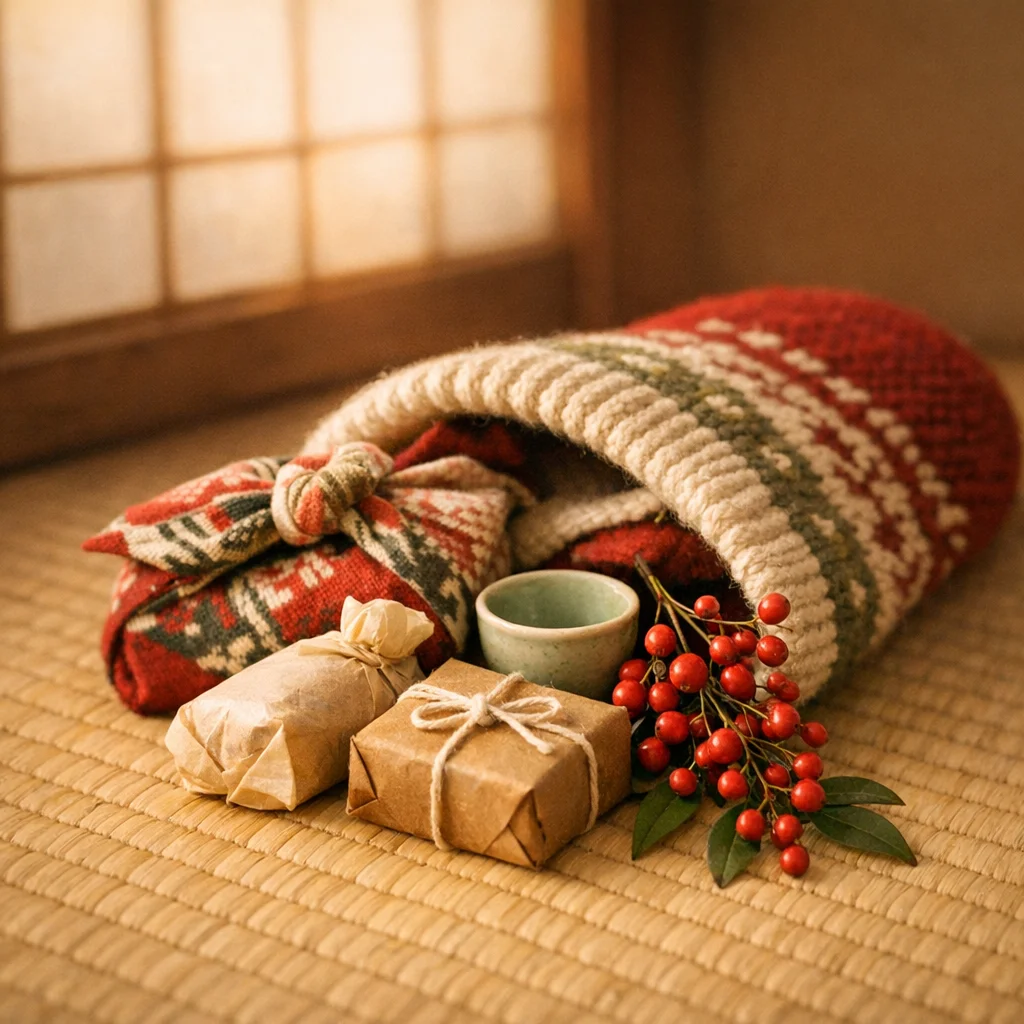
20 Japanese Stocking Stuffers People Actually Use
Twenty Japanese stocking stuffers that get used, not shelved: heat packs, steam eye masks, lip balm, snacks, matcha sticks and furoshiki, grouped by recipient.
The best Japanese stocking stuffers are small, consumable and slightly clever: a heat pack that warms for hours, a steam eye mask that turns ten minutes into a ritual, a lip balm that lives in a coat pocket all winter. They are cheap enough to give in multiples, light enough to ship easily, and they get used rather than put on a shelf.
Below are twenty ideas grouped by the kind of person you are buying for, with a note on why each one works. There is also a short section on wrapping, because Japan has a reusable answer to that too.
What makes a good Japanese stocking stuffer?
A good stocking filler passes three tests. It fits in a sock, it gets used within a few weeks, and it is something the recipient would not quite buy for themselves. Japanese drugstores and snack aisles are full of items that pass all three, mostly because they are designed for daily, small pleasures rather than for display.
Consumables also solve the duplicate problem. Nobody minds receiving a second box of heat packs. Plenty of people mind receiving a second novelty mug.
For the person who is always cold
- Non-adhesive heat pack. The classic Japanese 使い捨てカイロ (tsukaisute kairo), a disposable pouch that warms by itself once the wrapper comes off. It goes in a pocket or a glove and gives steady heat for hours. Our guide to Japanese heat packs explains how they work and how to use them safely.
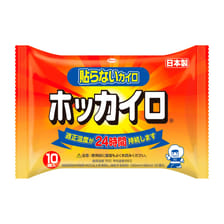
Hokkairo
Hokkairo Non-Adhesive Disposable Hand Warmer
A disposable hand warmer that keeps you comfortably warm during winter commutes, school days, or outings. This non-adhesive type can be carried in your pocket rather than stuck to clothing.
From 7 USD
- Adhesive heat pack. The version Japan actually wears, stuck to the inside of a vest or shirt over the lower back. Always on clothing, never directly on skin.
- Azuki-bean neck pad. Kobayashi's あずきのチカラ (azuki no chikara) is a cloth pad filled with azuki beans that you warm in the microwave. The beans release a gentle, moist warmth, and the pad is reusable, which makes it a good gift for someone who works at a desk.
- Bath salt sampler. Japanese bath powders come in single-use sachets, often in assorted onsen-style scents. A handful of packets is an easy filler. Carbonated tablets fizz, onsen-style powders turn the water milky or coloured, and both are used once and gone.
For the skincare lover
- Steam eye mask. Kao's MegRhythm masks warm up when opened and sit on closed eyes at around 40°C for about ten minutes. Each one is individually wrapped, so a few loose ones make a neat stocking filler. Read more in our MegRhythm steam eye mask guide.
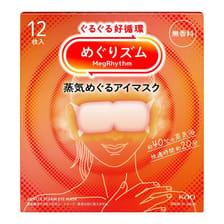
MegRhythm
MegRhythm Steam Eye Mask Unscented 12 pcs
An eye mask that warms the eye area with comfortable steam. A comfortable temperature of about 40°C lasts for about 20 minutes. Unscented type, designed to be easy to use in various situations.
From 21 USD
- DHC Lip Cream. A small, unfussy lip balm that has been a Japanese bestseller for decades. Its plain tube suits anyone, which is what makes it such a safe gift. Our Japanese lip balm guide compares it with the rest of the aisle.
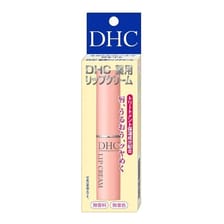
DHC
DHC Medicated Lip Cream
A medicated lip cream enriched with virgin olive oil and other moisturizing and protective ingredients. Delivers superior hydration to prevent dryness and gently guides lips to a soft, glossy finish. Fragrance-free, colorant-free, paraben-free, and formulated with natural ingredients.
From 13 USD
- Sheet masks. Single-sheet hydrating masks, or a small pack, feel like a treat without needing any skill to use. Choose plain moisturising types rather than strong active formulas.
- Hand cream. A 50-gram tube fits in a stocking and a handbag. Ceramide formulas such as Curél's are a safe pick for dry winter hands.
- Oil blotting paper. Kyoto's Yojiya is famous for あぶらとり紙 (aburatori-gami), fine paper sheets that lift shine without disturbing makeup. The booklet is tiny, light and very Japanese.
For the snack fan
- Pocky. Thin biscuit sticks dipped in chocolate, made by Glico since the 1960s. The individually sealed inner bags make them easy to share.
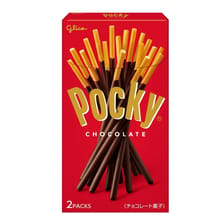
Glico
Glico Pocky Chocolate (2 Bags)
Classic Pocky sticks featuring the perfect balance of fragrant, rich chocolate and crunchy pretzels. With a crispy texture and rich chocolate flavor, they are perfect for everyday snacks and relaxing breaks.
From 8 USD
- Hi-Chew. Morinaga's soft, chewy fruit candy. An assorted bag covers several flavours at once.
- Kinoko no Yama. Meiji's chocolate-capped biscuit "mushrooms". In Japan they have a friendly rivalry with Takenoko no Sato, the bamboo-shoot version, and everyone has a side.
- Umeboshi candy in a tin. Eitaro, a Tokyo confectioner founded in the Edo period, makes 梅ぼ志飴 (umeboshi ame). Despite the name it is not sour: the hard sugar candy is pinched into shape, and the wrinkles reminded people of a pickled plum. The tin is the gift.
The Japanese snack aisle guide has more ideas if you want to build a small assortment.
For the tea and coffee drinker
- Matcha sticks. Single-serve sticks of powdered matcha that dissolve in hot water or milk. No whisk, no tin to open and go stale.
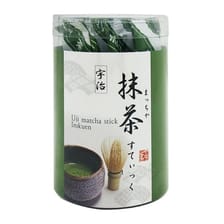
Kyoto Chanokura
Kyoto Chanokura Uji Matcha Sticks 2g x 10 pcs
Uji matcha sticks from Kyoto Chanokura, a traditional teahouse founded in 1818. The convenient individually wrapped sticks make it easy to enjoy authentic matcha anytime, anywhere.
From 19 USD
- Drip coffee bags. Japan's single-serve paper filters hook over the edge of a cup. A small pack of five is the right size for a stocking.
- Instant hojicha. Roasted green tea in a powder that dissolves in seconds. Low in bitterness, with a toasty flavour that suits winter evenings.
For kids
- Nerunerunerune. Kracie's do-it-yourself candy: you mix the powders with water in a little tray, and the mixture changes colour and fluffs up as you stir. Part sweet, part science experiment.
- Popin' Cookin'. Another Kracie kit, this time for making tiny candy versions of real food, such as sushi, from powders and water. Better for older children who enjoy a project.
For the person who has everything
- Furoshiki. A square of cloth used to wrap and carry almost anything. It doubles as the wrapping for another gift, then becomes a bag, a scarf or a lunch wrap. Water-repellent versions also work as a small bag for a damp umbrella.

Musubi
Musubi 100 Aqua Drop Re-Free Furoshiki, Adeline Klam Peony Orange
A 100 cm furoshiki featuring an environmentally friendly, fluorine-free (PFAS-free) water-repellent finish. The thin and lightweight fabric securely repels water, making it widely useful as an eco-bag or a cover for sudden rain.
From 77 USD
- Incense coils. A small box of coil incense from one of Kyoto's old incense houses. Each coil burns for a long, quiet stretch. Choose a mild scent for a first gift.
Quick picks by recipient
| Recipient | Easy pick | Why it works |
|---|---|---|
| Commuter | Heat packs | Used every cold morning |
| Desk worker | Azuki-bean pad, steam eye mask | Reusable warmth, a ten-minute break |
| Teenager | Pocky, Hi-Chew, lip balm | Shareable and pocket-sized |
| Tea drinker | Matcha sticks, hojicha | No equipment needed |
| Host or coworker | Umeboshi candy tin, furoshiki | Looks considered, costs little |
| Child | Nerunerunerune | A sweet and an activity |
How do you wrap a stocking the Japanese way?
Japan has a strong habit of thoughtful wrapping, and a furoshiki is the easy route in. To wrap a small box:
- Lay the cloth flat as a diamond and place the gift in the centre.
- Fold the bottom corner over the gift, then the top corner over that.
- Bring the left and right corners up and tie them in a square knot on top.
- Tuck the loose ends in, or leave them standing as "ears".
The cloth becomes part of the present, and nothing goes in the bin on Christmas morning.
If you are ordering from outside Japan, check our Christmas shipping from Japan guide for sensible order-by dates.
Frequently asked questions
What are good Japanese stocking stuffers for adults? Heat packs, steam eye masks, lip balm, hand cream, matcha sticks and drip coffee bags. They are small, useful and get finished, so they never become clutter.
Are Japanese snacks okay to ship as gifts? Most packaged snacks travel well because they are sealed and shelf-stable. Chocolate can soften in warm weather, which is rarely a problem in a northern-hemisphere December.
Can you put heat packs in a stocking for kids? Give them to an adult to manage. Heat packs need a layer of clothing between them and the skin, and children should not sleep with one.
What is a furoshiki used for? It is a square wrapping cloth. People use it to wrap gifts, carry lunch boxes and bottles, or as a reusable bag.
What is a good Japanese gift for a coworker? Something small and shareable that suits any taste: a tin of traditional candy, a pack of drip coffee bags or a few steam eye masks.
For more small gift ideas, browse our warming and cooling sheets and the candy and gummies shelf.