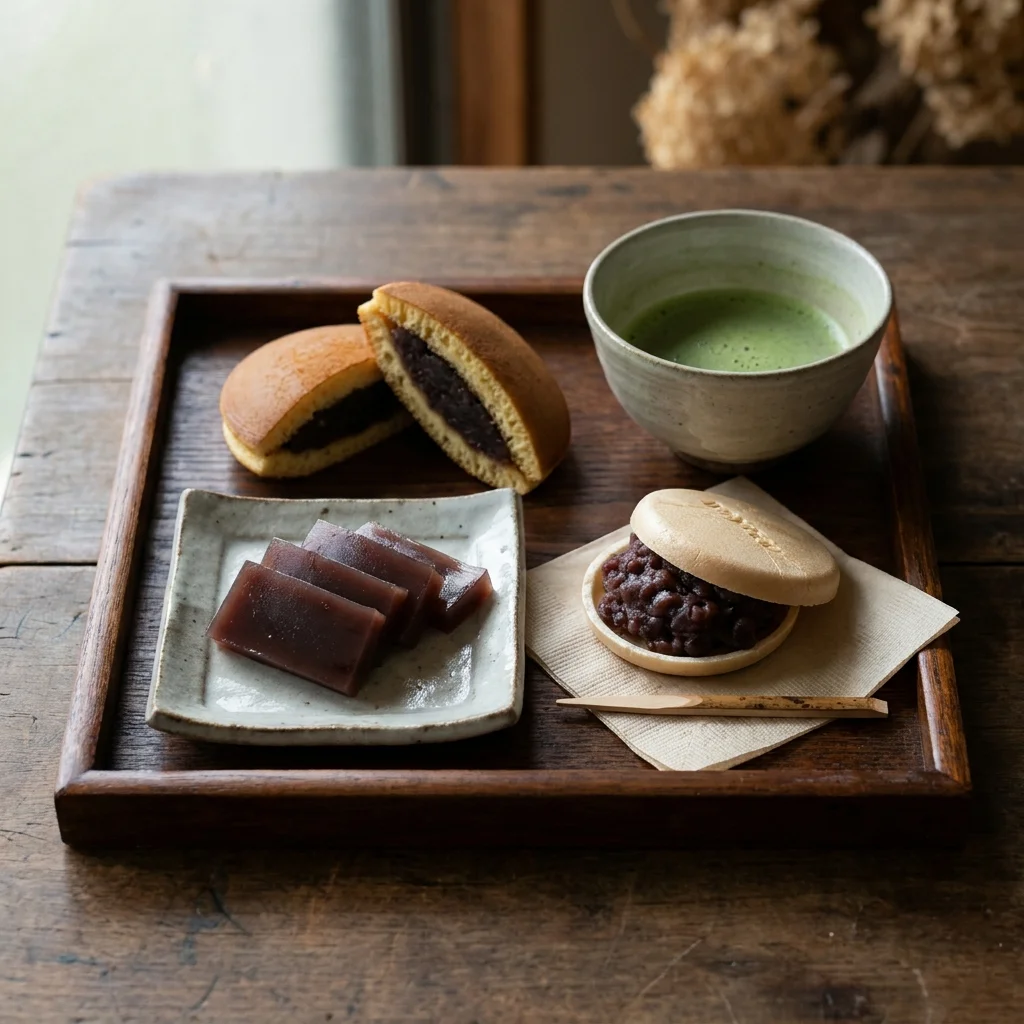
Wagashi: A Beginner's Guide to Japanese Traditional Sweets
Wagashi are Japanese sweets built from beans, rice and sugar, and timed to the seasons. What yokan, dorayaki and monaka are, and which ones travel well from Japan.
A slab of yōkan looks like nothing much: a dark, glossy block wrapped in paper. Slice it thinly, eat it with a cup of bitter green tea, and it starts to make sense. Japanese confectionery is built on a different idea of sweetness from Western baking, and once you get it, it is hard to go back.
This guide to wagashi covers the bean paste that sits at the centre of almost everything, the main types you will meet, how the seasons shape them, and which ones are practical to buy from abroad.
What is wagashi?
Wagashi (和菓子) means "Japanese confectionery". The word came into use to separate traditional sweets from yōgashi (洋菓子), the Western-style cakes, cookies and chocolate that arrived in Japan from the late 19th century.
Traditional wagashi are made mainly from plant ingredients: beans, rice and rice flour, sugar, agar, sweet potato, chestnut and sesame. Butter and cream play little part. The result is lighter and less rich than most Western desserts, and it is designed to be eaten alongside tea rather than instead of it.
Anko: the bean paste behind almost everything
Anko (餡子) is sweetened bean paste, most often made from red azuki beans cooked slowly with sugar. It is in or on most wagashi, and the first decision is texture.
- Tsubuan (粒あん) is chunky. The beans are left partly whole, skins and all, for a rustic bite.
- Koshian (こしあん) is smooth. The paste is pushed through a sieve to remove the skins, leaving something silky and refined.
- Shiroan (白あん) is made from white beans. It is milder and often coloured or flavoured for seasonal sweets.
Which is better is a long-running and good-natured Japanese argument. If you are new to anko, koshian is the easier introduction; tsubuan tastes more of the bean.
The main types of wagashi
| Type | What it is | Texture | Keeps | Best with |
|---|---|---|---|---|
| Yōkan | Bean paste set with agar | Dense, smooth | Months, sealed | Matcha, sencha |
| Dorayaki | Two small pancakes with anko | Soft, spongy | Days | Hojicha, milk |
| Monaka | Crisp rice wafer shells with anko | Crisp then soft | Weeks, unassembled | Sencha |
| Daifuku | Soft mochi wrapped round anko | Chewy, pillowy | A day or two | Green tea |
| Dango | Rice dumplings on a skewer | Chewy | Same day | Sencha |
| Namagashi | Fresh, hand-shaped seasonal sweets | Soft, delicate | Same day | Matcha |
| Higashi | Dry sweets, such as pressed sugar rakugan | Melts on the tongue | Weeks | Matcha |
The split that matters is between namagashi, fresh sweets made to be eaten that day, and the longer-keeping types. Namagashi are the sculpted works of art you see in Kyoto shop windows; yōkan, monaka and higashi are the ones that travel.
Yōkan: the one that travels
Yōkan (羊羹) is bean paste and sugar set firm with agar, sliced and eaten in thin pieces. The standard version, neri yōkan, is dense and keeps for a long time while sealed, which is why it has long been a gift and why it is the most practical wagashi to order from abroad. Mizu yōkan, a softer, more watery version, is a summer sweet served chilled.
Toraya, a confectioner founded in Kyoto and in business for centuries, is the name most associated with fine yōkan.
Everyday yōkan is also sold in small single-serve bars, which are easier to try and to carry.
Slice it thinly, a centimetre or less. Yōkan is intensely sweet by design, and the bitterness of tea is the counterweight.
Dorayaki and monaka
Dorayaki (どら焼き) are two small, honey-tinted pancakes sandwiching a layer of anko. They are the most approachable wagashi for Western palates, and famously the favourite food of the cartoon cat Doraemon.
Monaka (最中) are thin, crisp wafer shells made from mochi rice, filled with bean paste. The shell softens quickly once filled, so the best versions come with the shells and anko packed separately for you to assemble just before eating.
Wagashi and the seasons
Seasonality is the soul of wagashi. Fresh namagashi change with the calendar, shaped and coloured as plum blossom, hydrangea, maple leaves or snow, and many sweets are tied to a particular moment in the year.
- Spring: sakura mochi, pink rice wrapped in a salted cherry leaf.
- Early May: kashiwa mochi, wrapped in an oak leaf for Children's Day on 5 May.
- Summer: chilled mizu yōkan and clear agar jellies.
- Autumn: chestnut sweets and tsukimi dango for moon viewing.
- New Year: sweets shaped as auspicious symbols, and fresh mochi everywhere.
Our rice and mochi guide covers the mochi side of the table.
How to eat wagashi
Wagashi are almost always eaten with tea. In the tea ceremony the sweet comes first, so the bitterness of the matcha that follows is softened by the sugar left on the palate. At home the rule is the same. See how to choose and whisk matcha at home for the other half of the pairing.
Portions are small. A slice of yōkan or a single dorayaki is a serving, cut with a small wooden pick (kuromoji) rather than eaten in one bite. For the modern, matcha-flavoured end of the aisle, see Japanese matcha drinks and sweets.
Frequently asked questions
What does wagashi taste like? Sweet but clean, with the flavour of beans, rice, chestnut or matcha rather than butter and cream. Textures range from dense and smooth to chewy and crisp.
Are wagashi vegan? Many are plant-based, made from beans, rice, sugar and agar. Some contain egg or dairy, dorayaki and castella included, so check the label.
What is the difference between tsubuan and koshian? Tsubuan is chunky bean paste with the skins left in. Koshian is sieved smooth. Same beans, different texture.
How long does yōkan last? Sealed neri yōkan keeps for months; check the date on the pack. Once opened, wrap it tightly and eat within a few days.
What is the difference between mochi and daifuku? Mochi is the pounded sticky rice itself. Daifuku is mochi wrapped around a filling, usually anko.
Start with a bar of yōkan and a pot of green tea. For more of the sweet aisle, browse our wagashi section or the Japanese candy and gummies guide.