Japanese Food Gifts for Foodies: Pantry Boxes, Snacks and Tea
Japanese food gifts that travel well: six build-your-own gift box ideas, from pantry staples and tea to senbei and yokan, plus what to avoid sending abroad.
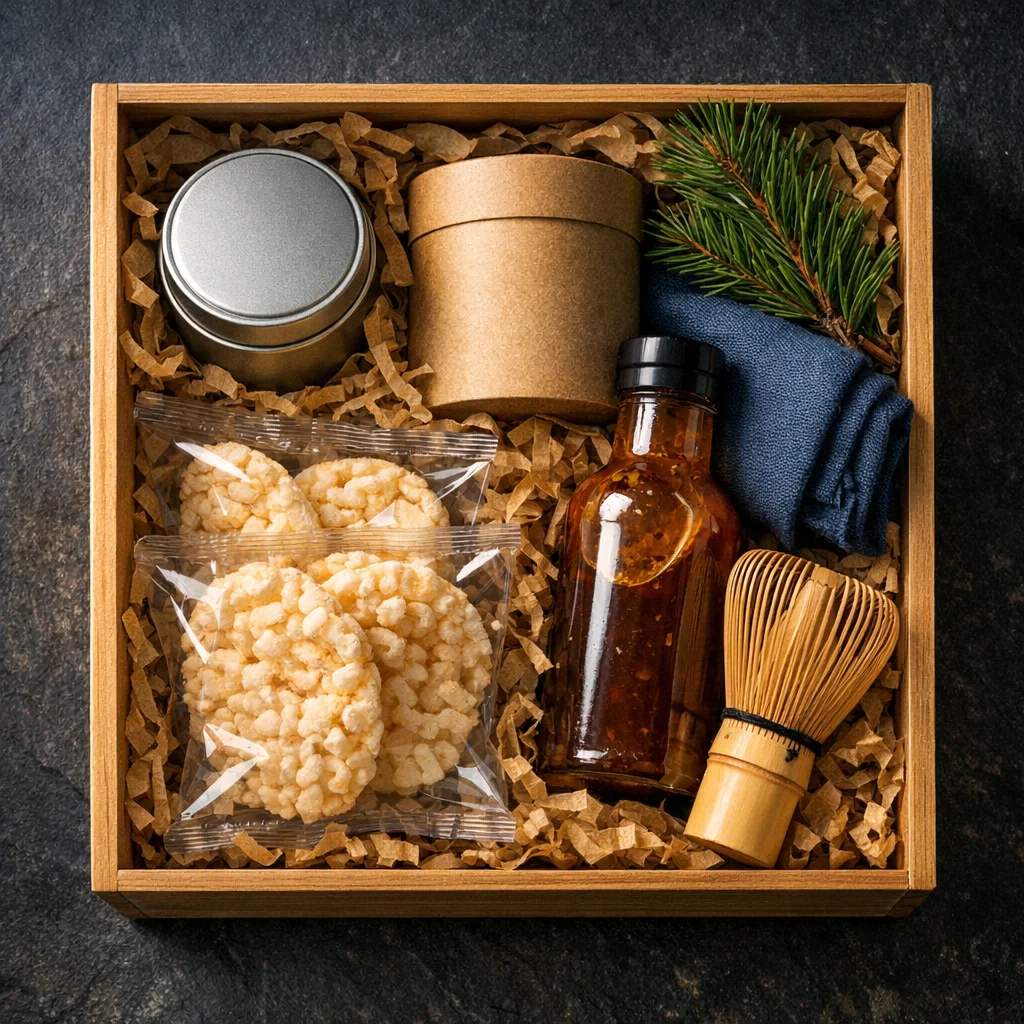
The best Japanese food gifts for a foodie are shelf-stable things they would actually cook or eat with: a good bottle of soy sauce, a tin of seven-spice, high-grade green tea, senbei rice crackers, a long-keeping yokan. Grouped into a small themed box, a few well-chosen items feel more personal than any ready-made hamper, and sealed dry goods travel far better than fresh treats.
This guide gives six build-your-own gift box ideas, explains how to choose items that survive a long journey, and lists what is best left out. Each box works at almost any size: start with two or three items and add from there.
What makes a good Japanese food gift?
A good food gift is something the person will use and enjoy, not something that sits in a cupboard because nobody knows what it is. Three qualities matter most:
- Shelf-stable. Sealed, dry or vacuum-packed foods that keep at room temperature for months.
- Explainable. A short note saying what it is and how to use it turns an unfamiliar product into a pleasure.
- A little better than everyday. A premium version of something familiar beats a novelty nobody wants to open.
Japan's own gift culture fits this well. お土産 (omiyage), the souvenirs people bring back for friends and colleagues, are usually individually wrapped, long-keeping sweets or snacks made to be shared.
Box 1: The Japanese pantry box
For the friend who cooks Japanese food at home, or wants to start. Our Japanese pantry starter kit explains each staple in detail.
- A bottle of good soy sauce, such as a whole-soybean brew
- Hon mirin, the real sweet rice seasoning
- Dashi granules or bonito flakes
- A tin of shichimi tōgarashi, the seven-spice chilli blend
- Furikake for rice
The tin of shichimi is the small item that makes this box feel like a gift. Yawataya Isogoro, a spice maker beside Zenkō-ji temple in Nagano, has sold its blend since the Edo period, and its little tin is a classic present in Japan.
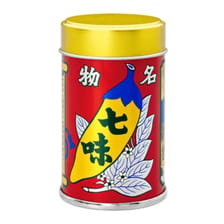
Yawataya Isogoro
Yawataya Isogoro Shichimi Togarashi Tin 14g
Yawataya Isogoro's Shichimi Togarashi, widely loved as a specialty of Shinshu Zenko-ji. With a secret blend using a unique manufacturing method, the spiciness stands out within its rich aroma. A convenient tin type for everyday use.
From 95,000 UZS
Box 2: The tea lover's box
For someone who already drinks tea, a Japanese tea box can show the range beyond sencha. Our guide to Japanese green tea types has more detail.
- Hojicha, roasted green tea with a toasty, low-bitterness flavour that suits evenings.
- Genmaicha, green tea blended with roasted brown rice.
- Matcha, either a usucha grade for whisking or a sweetened version for lattes.
- A bamboo whisk (茶筅, chasen) if the matcha is the whisking kind.
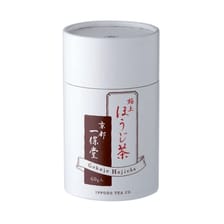
Ippodo Tea
Ippodo Tea Hojicha
A highly aromatic hojicha from Ippodo Tea, a long-established tea shop in Kyoto. It features a rich roasted aroma from carefully roasted tea leaves and a refreshing taste. Enjoy it on various occasions, from daily meals to relaxing moments.
From 189,000 UZS
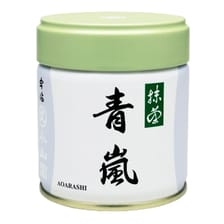
Marukyu Koyamaen
Marukyu Koyamaen Matcha Aoarashi
Uji matcha with a refreshing taste. Recommended for making usucha (thin tea), as well as sweets combined with milk and cream.
From 339,000 UZS
Choose small sealed packs rather than one large bag, because tea fades within weeks of opening.
Box 3: The snack aisle box
For anyone curious about Japanese snacks, mix textures and flavours: something salty, something sweet, something unusual.
- Kaki no tane, small crescent-shaped rice crackers mixed with peanuts, a classic drinking snack.
- Senbei, larger rice crackers, from soy-glazed to sugar-dusted. Our guide to senbei, okaki and arare explains the families.
- Chocolate biscuits, such as Meiji's Kinoko no Yama or Bourbon's Alfort.
- A seasonal KitKat, for the fun of it.
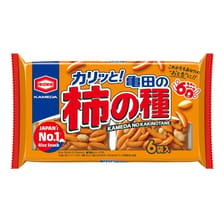
Kameda Seika
Kameda Seika Kameda no Kaki no Tane Rice Crackers with Peanuts 6-Pack 180g
Kameda Seika's long-selling rice crackers celebrating their 60th anniversary. Enjoy the perfect balance of slightly spicy Kaki no Tane and roasted peanuts. This convenient 6-pack is great for sharing with family or enjoying as a snack with drinks.
From 108,000 UZS
Box 4: The noodle night box
Instant noodles make a surprisingly good gift when they are the good ones. Combine two or three styles so the box tells a story:
- A premium bagged ramen, such as Nissin's Raoh, with noodles closer to a restaurant bowl.
- A classic, such as Sapporo Ichiban's miso or shio ramen, the taste of many Japanese childhoods.
- A regional style, such as Marutai's thin, straight Kyushu-style stick ramen.
- A pack of nori to lay on top, and the shichimi from Box 1.
Add a note on how Japanese people upgrade an instant bowl: a soft-boiled egg, spring onion and a sheet of nori.
Box 5: The curry night box
Japanese curry is comfort food for most of the country, and everything you need is shelf-stable:
- A box of curry roux blocks, in mild or medium heat
- A couple of retort curry pouches for quick meals
- Microwavable ready rice packs
S&B Golden Curry and House Vermont Curry are the two roux blocks most Japanese households know, and Otsuka's Bon Curry is the pouch that started the retort category. Include a recipe card: onion, carrot, potato and meat, simmered until tender, then the roux stirred in off the heat and cooked a few minutes more until glossy.
Box 6: The sweets and wagashi box
Traditional Japanese sweets are hard to send fresh, but several long-keeping kinds travel very well. Our wagashi guide covers the categories.
- Yokan (羊羹, yōkan). A firm, sliceable sweet bean jelly. Imuraya's Eiyoukan is sold as an emergency food and made to keep for around five years, in small bars that are easy to share.
- Rusks and butter cookies. Gateau Festa Harada's Goûter de Roi rusks and Yoku Moku's rolled Cigare cookies are both popular gift tins in Japan.
- Karintō, crunchy, brown-sugar coated dough sticks.
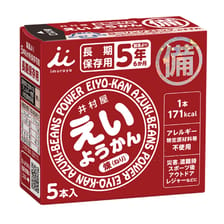
Imuraya
Imuraya Eiyoukan
A sweet bean jelly (yokan) ideal for long-term storage and stockpiling, perfect for easily replenishing calories. Leveraging years of manufacturing expertise, it has a long shelf life of 5 years and 6 months. It has a moderately soft texture and a clean sweetness, and can be eaten as is without water. Suitable for calorie intake during outdoor activities and sports.
From 126,000 UZS
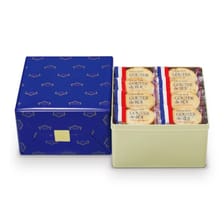
Gateau Festa Harada
Gateau Festa Harada Gouter de Roi Large Tin 2 Slices x 40 Bags (80 Slices)
Enjoy the crispy texture and the rich aroma of butter with GATEAU FESTA HARADA's classic gateau rusk, GOUTER de ROI. Finished with a rich flavor using only clarified high-quality butter. The large can, containing 40 bags of 2 slices, is perfect for family gatherings or as a thoughtful gift.
From 655,000 UZS
Which Japanese foods travel well?
| Travels well | Use care | Best avoided |
|---|---|---|
| Tea leaves and powders in sealed packs | Chocolate in warm weather | Fresh mochi and daifuku |
| Rice crackers and senbei | Large glass bottles (heavy, fragile) | Anything chilled or frozen |
| Yokan and rusks | Soft cakes with short dates | Fresh fruit, eggs and dairy |
| Spices, furikake, dashi | Liquids that could leak | Items your destination restricts |
| Instant noodles and curry roux | Very large boxes of light items |
Two practical points are worth knowing before you build a box:
- Check what your destination allows. Many countries restrict foods that contain meat, and some extend that to soups, broths or curry made with meat extract. Rules differ by country, so check before sending a box abroad.
- Check the dates when it arrives. Japanese foods carry a 賞味期限 (shōmi kigen), a best-before date, printed as year, month and day. Snacks are usually dated months ahead, yokan and rusks much longer.
If you are sending a box for the holidays, our Christmas shipping from Japan guide has conservative order-by dates.
How do you present a Japanese food gift box?
Presentation is half the pleasure. A few simple ideas:
- Wrap the box in a furoshiki, a square of cloth tied at the top, which the recipient can keep and reuse.
- Write a short guide. One line per item: what it is, how to use it, and one serving idea.
- Group by meal. A "Sunday ramen" or "curry night" theme is easier to enjoy than a random assortment.
- Add one non-food item, such as a pair of chopsticks, a small dish or a bamboo whisk.
- Keep it light. Tea, senbei, spices and furikake weigh very little, which keeps more shipping options open. Limit heavy glass bottles to one or two per box.
Frequently asked questions
What is a good Japanese food gift for someone who loves to cook? A pantry box with good soy sauce, hon mirin, dashi, shichimi and furikake. These are the bottles behind most Japanese home cooking.
What Japanese snacks make good gifts? Senbei rice crackers, kaki no tane, chocolate biscuits such as Kinoko no Yama, and seasonal KitKats. Individually wrapped snacks are easy to share.
Which Japanese sweets last the longest? Yokan keeps for a long time, and some emergency-food versions are made to keep for years. Rusks and hard candies also keep well.
Is Japanese tea a good gift? Yes, especially hojicha, genmaicha and matcha in small sealed packs. Include a note on water temperature and steeping time.
Can I send Japanese food abroad as a gift? Most sealed, shelf-stable foods travel well, but import rules differ. Many countries restrict meat-containing products, so check your destination's rules before sending.