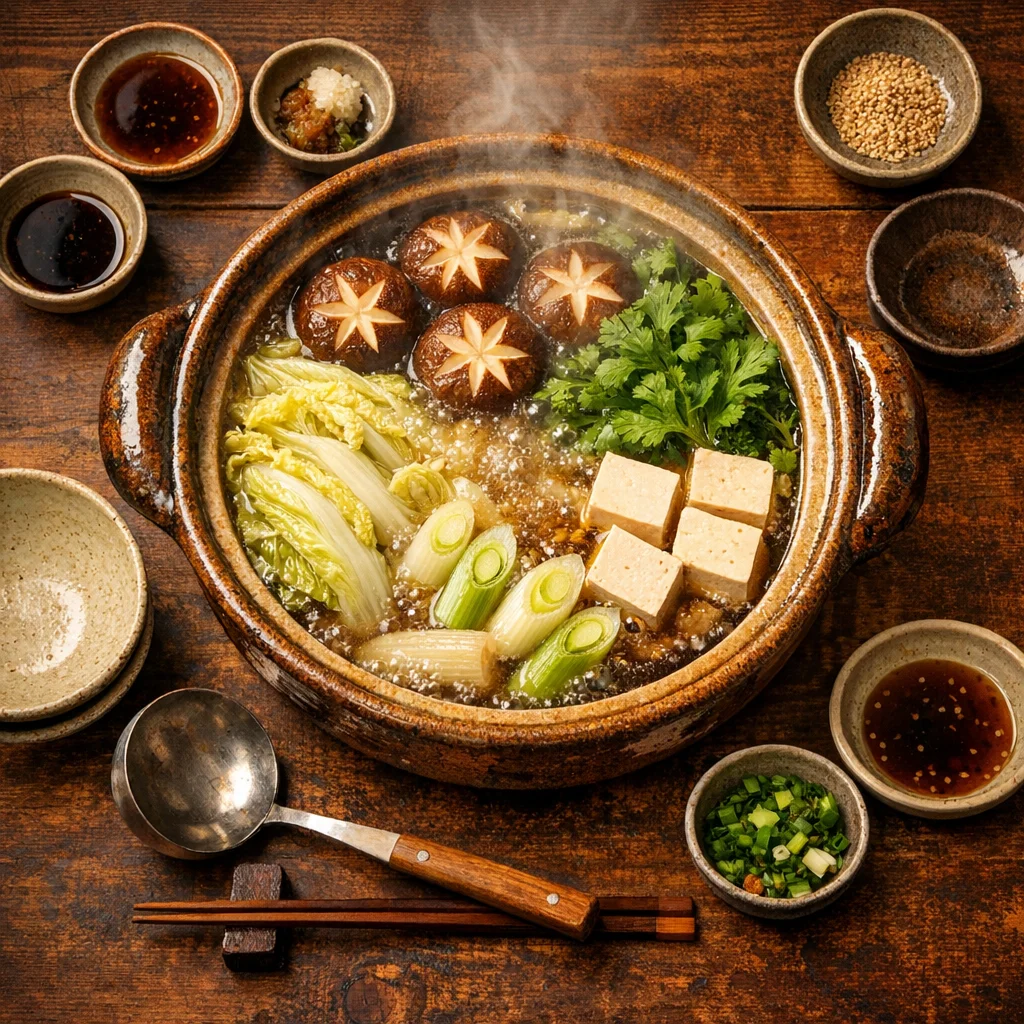
Japanese Hot Pot: 8 Nabe Styles to Cook This Winter
A Japanese hot pot guide: eight nabe styles from yosenabe and mizutaki to chanko and motsunabe, the broth bases, soup packs and the shime that ends the meal.
A Japanese hot pot, or 鍋 (nabe), is a pot of broth set on the table and cooked as you eat, with everyone adding vegetables, tofu, meat or seafood and taking what is ready. Most styles start from dashi, chicken stock, miso or soy milk, finish with a "shime" of rice or noodles cooked in the leftover broth, and need little more than a portable burner and a good pot.
This guide introduces eight nabe styles worth cooking at home this winter, explains the broth bases and the ready-made soup packs Japanese households use, and covers the shime, the part of the meal many people look forward to most.
What is nabe, and how is it eaten?
Nabe simply means pot, and 鍋料理 (nabe ryōri) is the whole family of dishes cooked in one at the table. A tabletop gas or induction burner keeps the broth at a simmer while people add ingredients in batches. Dense vegetables go in first, delicate leaves and seafood last, and diners serve themselves into small bowls, often with a dipping sauce or condiment.
A clay donabe holds heat beautifully and is the traditional choice; our donabe guide explains how to season and care for one. Any wide, heavy pot works too.
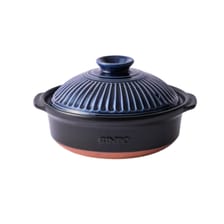
GINPO
GINPO Kikka Deep Earthenware Pot
A deep earthenware pot designed for easy everyday use from the GINPO 'Kikka' series. It features excellent heat retention, making it versatile for hot pots and stews. Compatible with open flame, microwaves, and ovens.
From 59 USD
Sukiyaki and shabu-shabu are the best-known Japanese hot pots abroad, and they have their own guide: sukiyaki and shabu-shabu at home. The eight below are the everyday nabe of Japanese homes.
1. Yosenabe: the everything pot
寄せ鍋 (yosenabe) means "gathered pot", and it is the default home nabe. Chicken, fish, prawns, clams, tofu, napa cabbage, leeks, mushrooms and greens all go into a light dashi seasoned with soy sauce, mirin and a little salt. There is no fixed list: you use what is in the fridge.
It is the easiest place to start, and it is also where nabe soup packs earn their keep. Ebara's Puchitto Nabe comes as single-portion concentrates, so you dilute one portion per person and make exactly as much broth as you need.
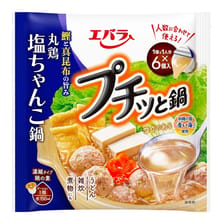
Ebara
Ebara Puchitto Nabe Yosenabe 23g x 6 pcs
A portion-type concentrated hot pot base where one piece serves one person, allowing you to use exactly what you need. Featuring a light soy sauce base, it is finished with the savory umami of bonito and kelp, plus a subtle hint of ginger.
From 9 USD
If you would rather make the broth yourself, our guide to dashi covers the stock.
2. Mizutaki: Hakata's chicken pot
水炊き (mizutaki) comes from Hakata in Fukuoka. Bone-in chicken is simmered until the broth turns rich and, in the Hakata style, cloudy white. Diners often drink a little of the plain broth first, then add cabbage, leeks, tofu and mushrooms, and dip each piece in ponzu, the citrus soy sauce. The broth itself is barely seasoned; the flavour comes from the dipping sauce at the table.
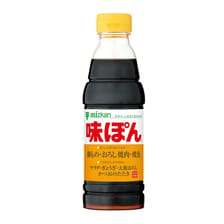
Mizkan
Mizkan Ajipon
A uniquely flavored seasoning blending citrus juice, brewed vinegar, and soy sauce. Widely versatile, it is perfect for hot pot dishes, yakiniku with grated radish, grilled fish, gyoza, and chilled tofu.
From 5 USD
Our guide to Japan's table sauces explains ponzu and its relatives.
3. Chanko nabe: the sumo wrestler's pot
ちゃんこ鍋 (chanko nabe) is the hearty hot pot associated with sumo stables, where it is cooked in quantity for wrestlers. There is no single recipe: chanko can be soy, salt or miso based, packed with chicken meatballs, vegetables, tofu and fried tofu. A popular story says chicken is favoured because a bird stands on two legs, like a wrestler who stays on his feet. Tokyo's Ryōgoku district, home of the national sumo arena, has many chanko restaurants.
4. Kimchi nabe: the spicy one
キムチ鍋 (kimuchi nabe) is a Korean-influenced hot pot that has become a Japanese home favourite. Pork belly, napa cabbage, tofu, leeks and kimchi simmer in a spicy, savoury broth. It is a good choice for people who find classic nabe too gentle, and ready-made kimchi nabe soup is a fixture of Japanese supermarket shelves every winter.
5. Tonyu nabe: soy milk hot pot
豆乳鍋 (tōnyū nabe) uses unsweetened soy milk, usually blended with dashi, for a pale, creamy broth that is mild and slightly sweet. Pork, chicken, tofu and leafy vegetables all suit it.
One rule matters: do not let it boil hard. Soy milk forms a skin and can separate at a rolling boil, so keep it at a gentle simmer. The skin that does form is yuba, which many people lift off and eat.
6. Miso nabe: Ishikari and dote
Miso gives a nabe depth and warmth, and two regional styles show it off:
- Ishikari nabe (石狩鍋). A Hokkaido pot of salmon, cabbage, potato, onion and tofu in a miso broth, named after the Ishikari area of Hokkaido.
- Dote nabe (土手鍋). A Hiroshima oyster pot where miso is spread around the inside rim of the pot like a riverbank, the meaning of dote. As it slowly melts into the broth, the flavour deepens through the meal.
Add the miso near the end of cooking if you are making a simple miso nabe, as boiling it for a long time dulls its aroma.
7. Motsunabe: Fukuoka's offal pot
もつ鍋 (motsunabe) is another Fukuoka favourite. Beef or pork offal, cleaned and blanched, simmers with heaps of cabbage, garlic chives, sliced garlic and chilli in a soy or miso broth. The fat from the offal enriches the soup, which is why it ends so well with noodles. It is a casual, sociable dish often eaten with a cold drink.
8. Oden: the slow-simmered cousin
おでん (oden) is not always counted as nabe, because it is simmered ahead rather than cooked at the table, but it belongs to the same winter family. Daikon, eggs, konnyaku and fish cakes soak in light dashi for hours. Our guide on how to make oden at home covers the method.
The eight styles at a glance
| Style | Broth | Region | Typical shime |
|---|---|---|---|
| Yosenabe | Dashi with soy and mirin | Everywhere | Zōsui (rice) or udon |
| Mizutaki | Rich chicken stock | Fukuoka | Zōsui |
| Chanko | Soy, salt or miso | Sumo stables, Tokyo | Udon or rice |
| Kimchi | Spicy kimchi and pork | Everywhere | Ramen, or rice with cheese |
| Tonyu | Soy milk and dashi | Everywhere | Rice or ramen |
| Ishikari | Miso with salmon | Hokkaido | Rice or udon |
| Motsunabe | Soy or miso, garlic | Fukuoka | Champon noodles |
| Oden | Light dashi | Everywhere | Udon the next day |
What is shime, and how do you make it?
締め (shime) is the finale. When the ingredients are gone, the broth left in the pot is full of flavour from everything that cooked in it, and it becomes the base for one last dish:
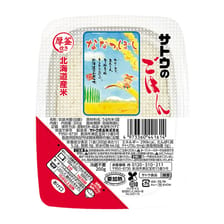
- Zōsui (雑炊). Skim the broth, add cooked rice, simmer for a few minutes, then pour in a beaten egg and turn off the heat. Scatter with chopped spring onion. Ready rice packs make this effortless.
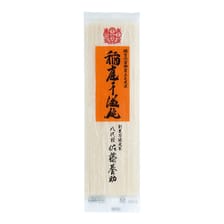
- Udon. Add cooked or dried udon to the simmering broth and heat through. Thin, smooth Inaniwa udon from Akita is especially good here.
- Ramen or champon. Best after kimchi nabe and motsunabe, where the broth is rich enough to stand up to noodles.
Sato Yosuke
Sato Yosuke Inaniwa Dried Udon Noodles for Home Use, 140g
A home-use pack of Akita's specialty, Inaniwa Dried Udon. It features the standard length and thickness, portioned for about two servings. Enjoy its smooth texture and firm bite.
From 10 USD
Sato Foods
Sato Foods Sato no Gohan Hokkaido Nanatsuboshi
Made with "Hokkaido Nanatsuboshi", a well-balanced rice variety with moderate stickiness and sweetness. This packaged rice is cooked fluffy and delicious using a unique thick-pot cooking method. Simply heat it in the microwave or hot water to enjoy the taste of freshly cooked rice anytime.
From 6 USD
Top up the broth with a little water if it has reduced and tastes too strong.
Condiments for the table
A few small additions change each bowl:
- Ponzu for dipping, especially with mizutaki and plain-broth pots.
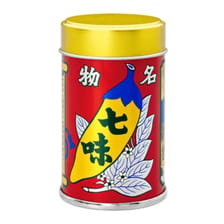
- Shichimi tōgarashi, the seven-spice chilli blend, for heat.
- Yuzu kosho, a salty paste of citrus peel and chilli, for brightness.
- Grated daikon and spring onion to stir into ponzu.
Yawataya Isogoro
Yawataya Isogoro Shichimi Togarashi Tin 14g
Yawataya Isogoro's Shichimi Togarashi, widely loved as a specialty of Shinshu Zenko-ji. With a secret blend using a unique manufacturing method, the spiciness stands out within its rich aroma. A convenient tin type for everyday use.
From 8 USD
Frequently asked questions
What is the most popular Japanese hot pot? Yosenabe is the everyday home favourite, while kimchi nabe and soy milk nabe are popular modern flavours. Sukiyaki and shabu-shabu are the best-known abroad.
What do you need to make nabe at home? A wide, heavy pot, ideally a donabe, and a portable burner so it can simmer on the table. A soup pack or homemade dashi covers the broth.
What is shime in Japanese hot pot? The final dish made in the leftover broth, usually rice porridge (zōsui), udon or ramen.
Can you use nabe soup packs instead of making broth? Yes. Japanese households use them all winter. Single-portion concentrates are handy because you make exactly as much broth as you need.
What is the difference between nabe and shabu-shabu? Shabu-shabu is one kind of nabe, in which thin slices of meat are swished briefly through simmering broth. Most nabe simmer their ingredients for longer.
Find broth concentrates, ponzu and dipping sauces on our sauces and tare shelf.