How to Make Oden at Home: Japan's Winter Konbini Hot Pot
How to make oden at home: a light dashi broth, daikon, eggs, konnyaku and fish cakes added in the right order, plus regional styles and the karashi on the side.
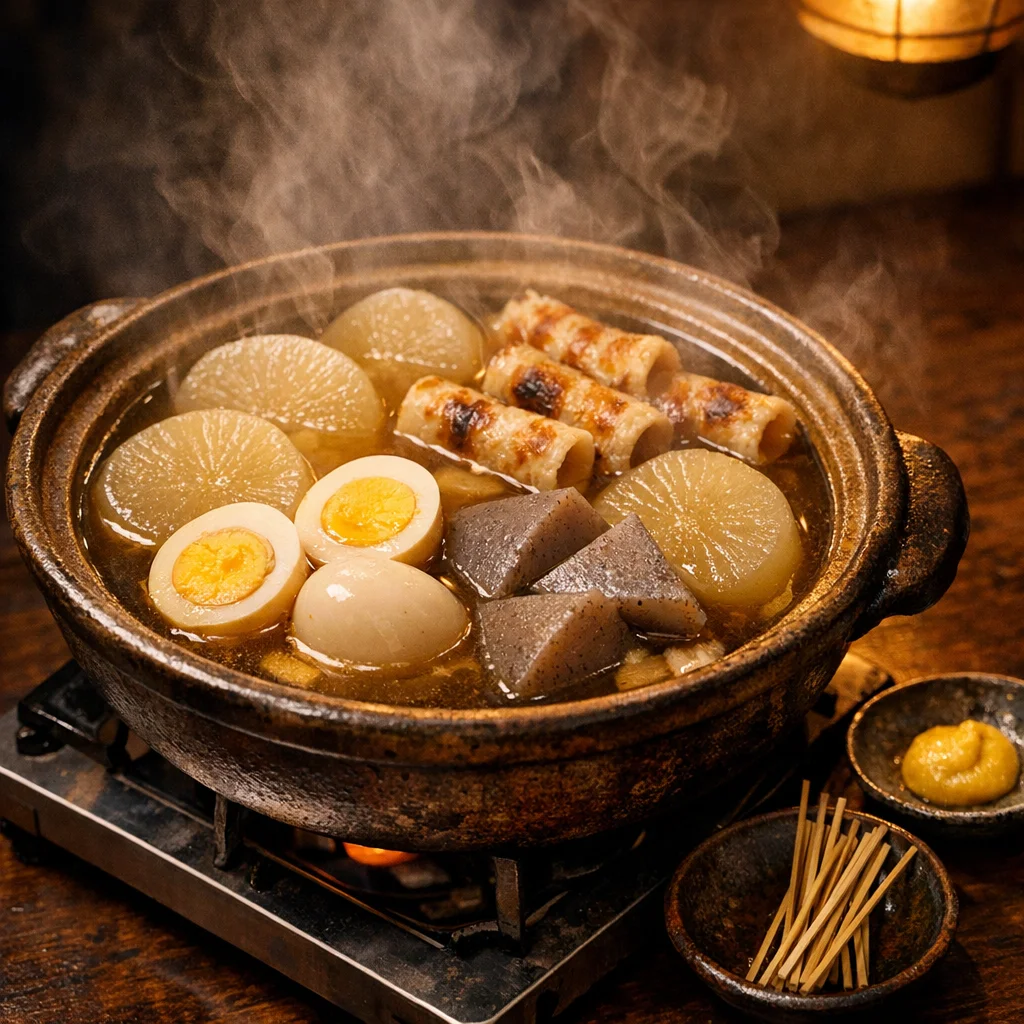
To make oden at home, you simmer daikon, boiled eggs, konnyaku and fish cakes slowly in a light dashi seasoned with soy sauce and mirin, adding each ingredient in order of how long it needs, then let the pot rest so the broth soaks in. Serve it from the pot with a dab of hot Japanese mustard. It is one of the easiest Japanese winter dishes to cook, and it tastes better on the second day.
This guide covers what oden is, how to make the broth, which ingredients to use and how to prepare them, the simmering order, the main regional styles, and what to do with the leftovers.
What is oden?
おでん (oden) is a pot of ingredients slowly simmered in a clear, savoury broth. It started as 田楽 (dengaku), skewered tofu grilled with miso, and the name is a shortened, polite form of that word. By the Edo period, cooks in Edo (now Tokyo) were simmering the skewers in soy-seasoned stock instead, and the dish we know today grew from there.
In modern Japan it is the classic convenience-store winter food. Seven-Eleven began selling oden from a heated counter tray in 1979, and through autumn and winter you can still pick your own pieces from the steaming compartments by the till. At home, it is a relaxed weeknight pot that sits on the stove all evening.
How do you make oden broth?
Oden broth is a lightly seasoned dashi, closer to a soup than a sauce. You want it pale gold, gently salty and sweet, because the ingredients will sit in it for hours.
For a pot that serves four:
| Ingredient | Amount |
|---|---|
| Dashi (kombu and bonito) | 1.5 litres |
| Light soy sauce (usukuchi) | 2 tablespoons |
| Regular soy sauce | 1 tablespoon |
| Mirin | 3 tablespoons |
| Sake | 2 tablespoons |
| Salt | About 1 teaspoon, to taste |
Make the dashi from kombu and bonito flakes, or use granules if you are short of time. Our guide to dashi explains both methods.
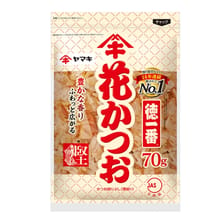
Yamaki
Yamaki Toku Ichiban Hanakatsuo Bonito Flakes 70g
Thinly shaved domestically produced bonito flakes, sealed to retain their rich aroma. Widely used for making dashi broth or as a topping for dishes like okonomiyaki.
From 12 USD
The shortcut many Japanese home cooks use is 白だし (shiro dashi), a concentrated, pale bottled stock made from bonito, kombu and light soy sauce. Dilute it with water according to the bottle's directions for simmered dishes and the broth is done. It keeps the colour light, which matters for daikon and egg.
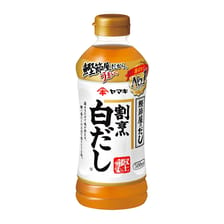
Yamaki
Yamaki Kappo Shiro Dashi 500ml
A white dashi characterized by the rich aroma and refined umami of first-brew bonito broth. Simply dilute it to perfectly season your food. It is ideal for a wide range of dishes, including udon, simmered dishes, and tamagoyaki. A versatile seasoning that elevates your everyday meals.
From 11 USD
If you are building the seasoning from scratch, our soy sauce, mirin and rice vinegar guide explains why light soy sauce matters here: it is saltier but paler than regular soy, so the broth seasons without turning dark.
What goes in oden?
There is no fixed list, but most pots draw on the same families of ingredients:
- Daikon. The heart of oden. Thick rounds of white radish that turn soft and translucent and soak up the broth.
- Boiled eggs. Peeled, then simmered until the whites turn light brown.
- Konnyaku. A firm, springy jelly made from konjac yam, usually cut into triangles. It has almost no flavour of its own and is there for texture.
- Fish cakes (練り物, nerimono). Chikuwa (grilled tubes), satsuma-age (fried patties), hanpen (soft, white and airy), and rolled versions with burdock or squid inside.
- Tofu. Atsuage (thick fried tofu) and ganmodoki (fried tofu fritters with vegetables).
- Kombu knots. The kombu from the dashi, tied into small knots and returned to the pot.
- Something rich. Beef tendon on skewers, chicken meatballs or sausages.
- Mochi kinchaku. A pouch of fried tofu stuffed with a piece of mochi and tied shut. The mochi melts into a soft, stretchy centre.
Fresh fish cakes and konnyaku are usually found frozen or chilled at Asian grocers, often as ready-assembled oden sets. Shelf-stable cut mochi from Japan works perfectly in the pouches; our Japanese rice and mochi guide has more on kirimochi.
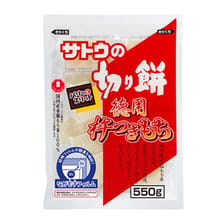
Sato Foods
Sato Foods Sato no Kirimochi Tokuyo Kinetsuki Mochi
Kirimochi (cut mochi) made from 100% domestic Japanese glutinous paddy rice. Featuring unique "Pari-tto Slit" cuts, they can be easily broken by hand and bake beautifully.
From 9 USD
How to prepare the ingredients
A little preparation makes the difference between a good pot and a great one.
- Daikon. Peel thickly, cut into 3 cm rounds and bevel the edges with a knife so they do not crumble (面取り, mentori). Score a shallow cross on one side. Boil in water with a spoonful of uncooked rice for 20 to 30 minutes until a skewer slides in, then rinse. This removes bitterness and lets the broth in.
- Eggs. Boil for about ten minutes, cool and peel.
- Konnyaku. Score both sides in a fine crosshatch, cut into triangles, and blanch for two or three minutes to remove the alkaline smell.
- Fried items. Pour boiling water over fried tofu and fried fish cakes to rinse off excess oil, so the broth stays clean.
- Mochi kinchaku. Cut a fried tofu pouch in half, open it, slip in a piece of mochi and close it with a toothpick or a strip of blanched kanpyō.
What order do you add oden ingredients?
Oden is about time, and different ingredients need very different amounts of it. Long simmering makes daikon better and fish cakes worse: they swell, go spongy and give their flavour away.
- First: daikon, eggs, konnyaku, kombu knots and beef tendon. Bring the broth to a bare simmer, add these, and cook gently for about an hour.
- Next: fried tofu, ganmodoki and the denser fish cakes, for the last 20 to 30 minutes.
- Last: mochi kinchaku for around 10 minutes, and hanpen for just a few minutes before serving. Hanpen puffs up and turns soft almost immediately.
Two rules matter more than any recipe. Never let the pot boil hard, which clouds the broth and toughens the eggs. And if you can, turn off the heat and let the pot cool for an hour or more before reheating: Japanese cooks say the flavour 染みる (shimiru), soaks in, as it cools.
A heavy pot that holds a steady low heat suits oden well. A clay donabe is traditional at the table; our donabe guide covers how to season and use one.
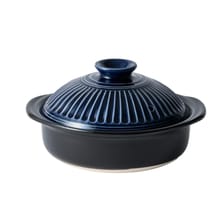
GINPO
GINPO Kikka Clay Pot Size 6
A lightweight clay pot for 1 person featuring traditional Japanese colors. Odor and stain-resistant, compatible with open flame, microwaves, and ovens.
From 53 USD
Regional oden styles
Oden changes noticeably across Japan:
| Region | Broth | Signature touches |
|---|---|---|
| Kanto (Tokyo) | Soy-forward, a little darker | Chikuwabu (a chewy wheat tube), hanpen |
| Kansai (Osaka, Kyoto) | Lighter, kombu-led, light soy | Beef tendon; often called kantodaki |
| Shizuoka | Dark, rich beef-based broth | Black hanpen made from sardine or mackerel, topped with fish powder and aonori |
| Nagoya | Simmered in or topped with red miso | Hatcho miso, a dark soybean miso |
| Kanazawa | Clear and delicate | Seasonal crab in winter, wheat gluten rings |
| Himeji | Standard broth | Eaten with ginger soy sauce |
None of these is the correct one. Start with a light Kanto or Kansai style and adjust from there.
How do you serve oden?
Ladle a few pieces into a shallow bowl with some broth and put からし (karashi), hot Japanese mustard, on the side. Karashi is sharper than Western mustard and is used in tiny amounts, dabbed on each bite. Yuzu kosho, a salty paste of citrus peel and chilli, is a good alternative if you prefer a brighter heat.

Takahashi Shoten
Takahashi Shoten Yuzusco Liquid Yuzu Kosho 75g
A new type of liquid yuzu kosho born from Kyushu's famous yuzu kosho. Made only with yuzu peel, vinegar, chili pepper, and salt, it features a rich aroma and refreshing spiciness. An excellent accent for a wide range of dishes, from Japanese cuisine to Western foods like pizza.
From 27 USD
Oden is usually eaten with plain rice and pickles, or on its own with a drink. The pot can stay on the table over a burner, as with sukiyaki and shabu-shabu, so everyone picks what they want.
The next day, the broth makes an excellent base for udon or a simple rice porridge. Top it up with water and a little more seasoning if it has reduced, add fresh daikon, and the pot carries on.
Frequently asked questions
How long does oden take to make? About two hours, including preparing the daikon and around an hour of gentle simmering. It is better if it then rests for an hour before reheating.
Can I make oden broth without dashi? Dashi is what makes oden taste like oden. Granules or concentrated shiro dashi both work well if you do not want to make stock from scratch.
What can I use if I cannot find fish cakes? Use more daikon, eggs, fried tofu, potatoes, cabbage rolls or sausages. Plenty of home pots in Japan include these.
How long does oden keep? Cool it quickly, then refrigerate and eat within two days, reheating gently each time. Take out the fish cakes and hanpen if you plan to keep the broth longer.
Why did my oden broth go cloudy? It boiled too hard. Keep it at a bare simmer, with only a few small bubbles breaking the surface.
What mustard is served with oden? Karashi, a hot Japanese mustard. Use only a small dab per bite.
Find dashi, shiro dashi and bonito flakes for your broth on our miso and dashi shelf.