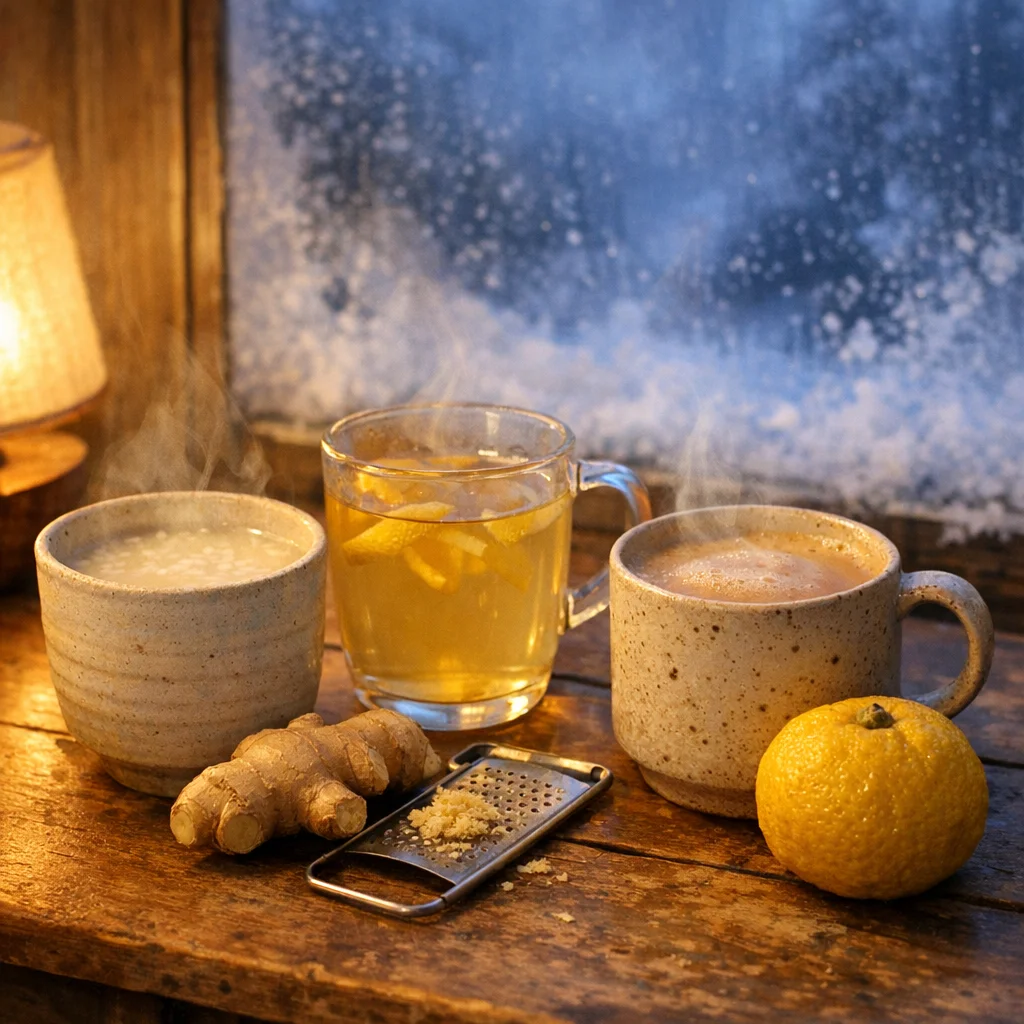
Japanese Winter Drinks: Amazake, Yuzu Tea, Hojicha Lattes and Ginger
Japanese winter drinks explained: amazake, yuzu tea, hojicha lattes, ginger shogayu, kuzuyu and vending-machine cans, with simple ways to make each at home.
Japanese winter drinks are mostly hot, sweet and gentle: amazake made from rice koji, yuzu tea from citrus preserved in honey or sugar, hojicha lattes, ginger drinks such as shōgayu, and the cans of hot tea, coffee and soup sold from vending machines on every street. Almost all of them are easy to make at home with a few ingredients.
This guide explains what each drink is, when Japanese people reach for it, and how to make it in your own kitchen, with a short tour of the vending machine's winter menu at the end.
What does Japan drink in winter?
| Drink | Japanese | What it tastes like | Caffeine |
|---|---|---|---|
| Amazake | 甘酒 | Sweet, creamy rice, like thin porridge | None (koji type) |
| Yuzu tea | ゆず茶 | Bright citrus marmalade in hot water | None |
| Hojicha latte | ほうじ茶ラテ | Toasty, nutty tea with milk | Some |
| Shōgayu | 生姜湯 | Spicy ginger with honey | None |
| Kuzuyu | 葛湯 | Thick, smooth and lightly sweet | None |
| Oshiruko | お汁粉 | Sweet red bean soup with mochi | None |
| Milk cocoa | ココア | Mild, milky chocolate | A little |
Most of these are drunk at home, often around the kotatsu, the heated table at the centre of a Japanese winter living room; our guide to the kotatsu explains why so much of Japan's winter happens there.
Amazake: the sweet rice drink
Amazake (甘酒, "sweet sake") comes in two quite different forms, and the label tells you which:
- Koji amazake (米麹甘酒) is made from rice and rice koji, the mould-cultured rice used in miso and sake. The koji's enzymes break the rice starch down into sugars, so the drink tastes sweet without added sugar, and it contains no alcohol.
- Sake-kasu amazake (酒粕甘酒) is made by dissolving sake kasu, the lees left over from sake brewing, in hot water with sugar. It has a stronger, boozy aroma and can contain a little alcohol.
Amazake has an unexpected history. In the Edo period it was sold on the street as a summer drink, and it still appears as a summer season word in haiku. Today it is firmly associated with winter, and many shrines serve cups of it to visitors at New Year. Our guide to Japanese New Year food covers the rest of that season's table.
Ready-made koji amazake is the easiest way to try it. Warm it gently in a pan or microwave without boiling, or drink it chilled.
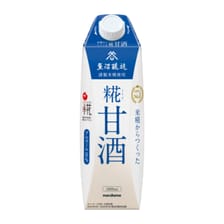
Marukome
Marukome Plus Koji Non-alcoholic Rice Koji Amazake 1000ml
A straight-type amazake made from rice and rice koji, featuring a naturally sweet taste. With 0% alcohol and no added sugar, this drink is easy to incorporate into your daily diet. Delicious whether chilled or warmed.
From 30.6 USD
To make sake-kasu amazake at home:
- Tear about 50 g of sake kasu into small pieces and soak it in 100 ml of hot water until soft.
- Add another 300 ml of water and warm it in a pan, whisking until smooth.
- Sweeten with 2 to 3 tablespoons of sugar and add a pinch of salt.
- Simmer for a few minutes and serve with a little grated ginger.
Simmering reduces the alcohol but does not remove it entirely, so this version is not for children, during pregnancy or before driving. Making koji amazake from scratch is also possible, but it means holding cooked rice and koji at about 60 °C for several hours, usually in a rice cooker on its keep-warm setting.
Yuzu tea: citrus in a jar
Yuzu (柚子) is a fragrant Japanese citrus with knobbly skin and a sharp, floral aroma. It is at its best in late autumn and winter, which is when it appears in drinks, hotpots and even baths.
Yuzu tea, yuzu-cha (ゆず茶), is not tea at all. It is yuzu peel and flesh preserved in honey or sugar, sold in jars, and stirred into hot water. Korea's well-known yuja-cha is made from the same fruit, and you will find both styles on Japanese shelves.
To make your own:
- Wash two or three yuzu, then slice them thinly, peel and all, and remove the seeds.
- Layer the slices in a clean jar with an equal weight of sugar or honey.
- Refrigerate for a few days, shaking the jar now and then, until the sugar has dissolved into a thick syrup.
- Stir one or two spoonfuls into a mug of hot water.
Hojicha latte: roasted tea with milk
Hojicha (ほうじ茶) is green tea roasted until it turns reddish brown. It loses much of green tea's grassiness and gains a toasty, nutty flavour that works very well with milk, which is why hojicha lattes appear on café menus all over Japan in the colder months.
At home:
- Brew strong hojicha: about two tablespoons of leaves in 100 ml of boiling water for two to three minutes, then strain.
- Heat 150 ml of milk or a plant milk until steaming, and froth it if you like.
- Combine and sweeten with a little sugar or honey.
For a faster version, instant hojicha powder dissolves straight into hot milk.
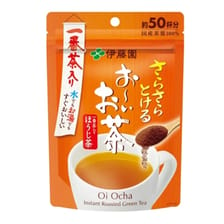
Ito En
Ito En Sarasara Tokeru Oi Ocha Hojicha
An instant hojicha (roasted green tea) that dissolves quickly in both hot and cold water. Made with 100% domestic tea leaves, it offers a natural taste and roasted aroma just like tea brewed in a teapot. Enjoy it easily with your daily meals or during relaxing moments.
From 9 USD
Hojicha does contain caffeine, though many people find it gentler in the evening than sencha or coffee. Our guide to Japanese evening teas covers it alongside truly caffeine-free options such as barley tea.
Ginger drinks: shōgayu and kuzuyu
Two of the most traditional Japanese winter drinks are home remedies in spirit: the cup someone makes you when you are cold, tired or feeling under the weather.
Shōgayu (生姜湯) is simply hot water with grated ginger and honey or sugar. Kuzuyu (葛湯) is made with kuzu, a starch from the kudzu root, which turns hot water into a smooth, translucent drink that coats the mouth. The two are often combined.
- Mix one teaspoon of kuzu (or potato starch) with a little cold water until smooth.
- Add 200 ml of water and a teaspoon or two of sugar, then heat, stirring constantly.
- When it turns clear and slightly thick, take it off the heat.
- Stir in a teaspoon of freshly grated ginger and a little honey.
The ginger gives a spicy, warming sensation in the mouth, and the kuzu makes the drink stay hot longer in the cup.
What hot drinks come out of a vending machine?
Japan's vending machines change their menus for winter. Some slots switch to hot drinks, marked with a red label reading attaka~i (あったか〜い, "warm"), while the cold ones keep their blue tsumeta~i (つめた〜い) label.
The winter line-up typically includes canned coffee, bottled green tea and milk tea, hot lemon, cocoa, corn potage soup and oshiruko, the sweet red bean soup. Convenience stores keep heated cabinets by the till for bottled tea and coffee too. Our guide to Japanese drinks covers the year-round favourites.
More cosy cups: cocoa and royal milk tea
Two pantry drinks round out the Japanese winter. Milk cocoa, a lighter, milkier style of hot chocolate, has been a Japanese household staple for generations.
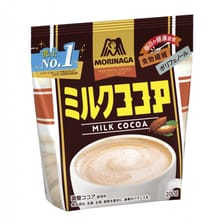
Morinaga
Morinaga Milk Cocoa 200g
A classic milk cocoa with an exquisite balance of cocoa and milk. Its gentle sweetness is perfect for daily relaxation and cozy breaks.
From 8.1 USD
Royal milk tea is the Japanese name for strong black tea made rich with plenty of milk. Instant versions make a quick cup.
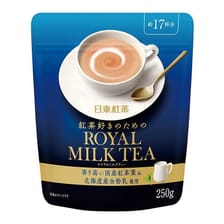
Nittoh Tea
Nitto Kocha Royal Milk Tea
An aromatic instant Royal Milk Tea made with carefully selected domestic black tea leaves and whole milk powder from Hokkaido. Easily enjoy a cup that perfectly balances the gorgeous aroma of black tea with the mild, rich taste of milk. Simply dissolve in hot water for an authentic tea time anytime.
From 13.5 USD
Pair any of them with a heat pack in your coat pocket for the full Japanese winter routine; our kairo guide explains how to use one safely.
Frequently asked questions
Is amazake alcoholic? Koji amazake, made from rice and rice koji, contains no alcohol. Amazake made from sake lees can contain a little, so check the label.
What does amazake taste like? Koji amazake tastes like sweet, creamy rice, a little like thin rice pudding. Sake-lees amazake is less sweet, with a fragrant, sake-like aroma.
Is yuzu tea the same as Korean citron tea? They are very similar. Both are made from the same fruit, Citrus junos, preserved in honey or sugar and stirred into hot water.
Does a hojicha latte have caffeine? Yes. Hojicha is roasted green tea, so it contains caffeine, though many people find it gentler than coffee.
What hot drinks are sold in Japanese vending machines in winter? Canned coffee, green tea, milk tea, cocoa, hot lemon, corn soup and sweet red bean soup are common. Look for the red "warm" labels.
Browse our amazake and Japanese drinks or the milk tea and latte shelf.