Japanese New Year Food: What Osechi, Soba and Mochi Mean
Japanese New Year food is edible symbolism: soba for long life, black beans for health, mochi for luck. What each dish means and how to bring Shōgatsu home.
New Year is the biggest holiday in Japan, and almost everything eaten during it carries a meaning. Noodles for a long life, black beans for good health, golden chestnuts for wealth, prawns for living long enough to stoop. Japanese New Year food is a menu written in puns and wishes.
This guide explains what is eaten from New Year's Eve into the first days of January, what each dish means, the rituals that go with them, and how to make a simple version at home with shelf-stable ingredients.
Shōgatsu: how Japan celebrates New Year
Shōgatsu (正月) is the New Year period, centred on the first three days of January, when offices close, families gather and a large part of the country travels home. It is closer in feel to a Western Christmas than to a party night: quiet, domestic and built around food.
The food runs in a fixed order. Soba on New Year's Eve, osechi and ozōni from the morning of 1 January, and a ceremonial rice cake broken open later in the month.
Toshikoshi soba: New Year's Eve noodles
On 31 December, Ōmisoka (大晦日), households eat toshikoshi soba (年越しそば), "year-crossing noodles". Two meanings are usually given: long noodles stand for a long life, and because soba cuts easily, eating it cuts away the hardships of the year that is ending.
It is kept simple: hot soba in dashi broth with spring onion, sometimes with a prawn tempura on top, eaten in the evening as temples prepare to ring their bells 108 times around midnight (joya no kane).
For two bowls, heat 600 ml of dashi with 3 tablespoons each of soy sauce and mirin. Boil dried soba as the packet directs, rinse it briefly, then warm it through in the broth and top with sliced spring onion.
Osechi ryōri: what each dish means
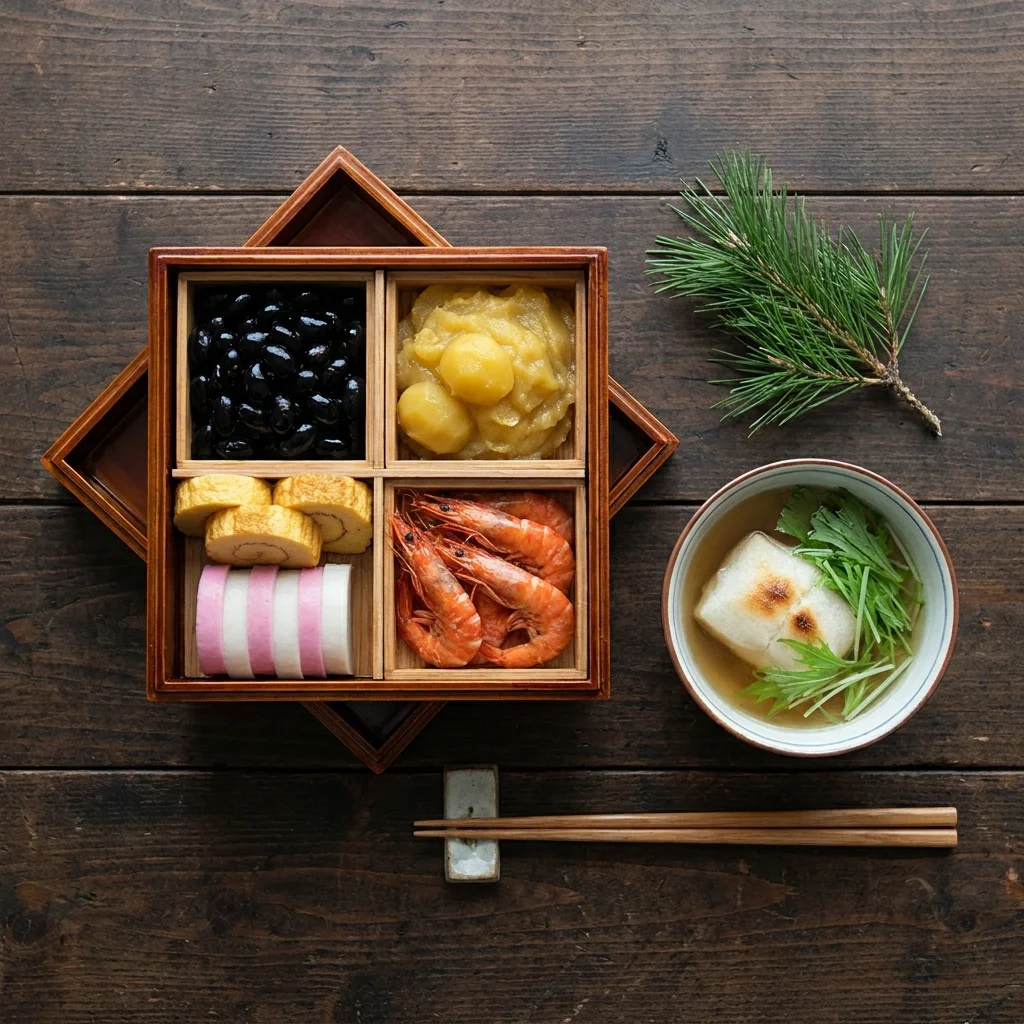
Osechi ryōri (おせち料理) is the New Year feast, packed into stacked lacquered boxes called jūbako (重箱). The stacking is itself a wish: good fortune piled on good fortune. Osechi was traditionally cooked before the year ended so nobody had to cook during the first days of January, which is why so many of the dishes are sweet, salty or vinegared — they keep.
| Dish | What it is | What it means |
|---|---|---|
| Kuromame (黒豆) | Sweet simmered black soybeans | Health and hard work — mame also means diligent |
| Kazunoko (数の子) | Herring roe | Many children and a thriving family |
| Tazukuri (田作り) | Candied small dried sardines | A good harvest; the fish were once used as rice-field fertiliser |
| Kuri kinton (栗きんとん) | Sweet potato and chestnut mash | Wealth — the golden colour suggests gold |
| Datemaki (伊達巻) | Rolled sweet omelette | Learning and culture, from its resemblance to a scroll |
| Kōhaku kamaboko (紅白かまぼこ) | Red and white fish cake | Celebration; red and white are festive colours |
| Ebi (海老) | Prawns | Long life — bent like an elderly person's back |
| Kombu (昆布) | Kelp rolls | Joy, from yorokobu, "to rejoice" |
Most families now buy some or all of their osechi — department stores and convenience stores take pre-orders from the autumn — and make one or two favourite dishes themselves.
Ozōni and the regional mochi divide
Ozōni (お雑煮) is the soup eaten on New Year's morning, and every region, almost every family, has its own. The big split is east and west:
- Kantō style: clear dashi broth seasoned with soy, with square mochi grilled first.
- Kansai style: white miso broth with round mochi, simmered rather than grilled.
Beyond that, the fillings shift with the region: chicken, fish, root vegetables, greens, a curl of citrus peel. "What goes in your ozōni?" is a standard January conversation, and the answers rarely match. More on the rice cake itself in our rice and mochi guide, and on white and red miso in the miso guide.
Kagami mochi, hatsumōde and fukubukuro
Kagami mochi (鏡餅) is two round rice cakes stacked with a small bitter orange (daidai) on top, set out in the home over New Year. Around 11 January, at kagami biraki, it is broken into pieces with a mallet — never cut with a knife — and eaten, often in sweet red bean soup or ozōni.
Hatsumōde (初詣) is the first shrine or temple visit of the year. People buy new charms, draw fortunes and return last year's lucky items, which is when many daruma dolls are retired and replaced; our guide to daruma and maneki-neko explains why.
Fukubukuro (福袋), "lucky bags", are the New Year sales: sealed bags of goods at a discount, contents unknown, sold from the first days of January. The popular ones draw queues before the doors open.
Eat mochi safely
Mochi is dense and sticky, and every New Year Japanese authorities repeat their warnings about choking, especially among older people.
- Cut mochi into small, bite-sized pieces.
- Eat slowly, chew well and keep a drink to hand.
- Take particular care with elderly people and anyone who has difficulty swallowing.
- Do not give mochi to small children.
How to make Japanese New Year food at home
You do not need a three-tier box to mark the day.
Kantō-style ozōni for two:
- Heat 600 ml of dashi — granules dissolved in water are fine — with 1 tablespoon of light soy sauce and a pinch of salt.
- Add 100 g of diced chicken thigh and simmer for 5 minutes, then add a handful of spinach or komatsuna and a few slices of kamaboko.
- Toast 4 pieces of kiri mochi in a toaster oven or under the grill for 5–8 minutes, until puffed and golden.
- Put the mochi in bowls, ladle the soup over, and finish with a strip of citrus peel or a few leaves of mitsuba.
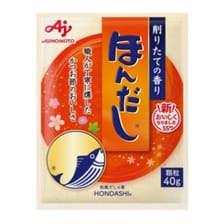
Ajinomoto
Ajinomoto Hondashi
A Japanese-style soup stock made with three types of bonito flakes, each excelling in aroma, richness, and taste. Simply add it to easily and deliciously season a variety of Japanese dishes. Comes in an easy-to-use, moisture-resistant granular type.
From 6 USD
Shelf-stable kiri mochi — individually wrapped rectangles of cut rice cake — is how most Japanese homes buy it, and it keeps for months.
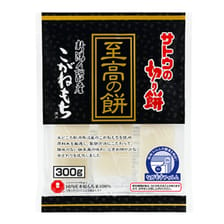
Sato Foods
Sato Foods Sato's Kiri-mochi Supreme Mochi Uonuma Niigata Koganemochi
Cut mochi from Sato Foods made with "Koganemochi" sticky rice from Uonuma, Niigata. Through a unique and careful manufacturing process, we have achieved a fine, silky texture and an authentic flavor. Perfect for daily meals or special occasions like New Year's.
From 10 USD
For a homemade osechi touch, datemaki is a close cousin of tamagoyaki: the same sweet egg, blended with fish paste, baked as one thick sheet and rolled in a ridged bamboo mat. Add a bowl of sweet black beans and a few prawns, and you have the heart of the box.
Frequently asked questions
What do Japanese people eat on New Year's Day? Osechi ryōri from lacquered boxes, and ozōni, a soup with mochi. Toshikoshi soba is eaten the night before.
What does osechi mean? Each dish carries a wish for the year: black beans for health, herring roe for children, golden chestnut mash for wealth, prawns for long life.
Why do Japanese people eat soba on New Year's Eve? Toshikoshi soba stands for a long life, and because it breaks easily it symbolises cutting away the hardships of the old year.
What is the difference between Kantō and Kansai ozōni? Kantō uses a clear soy-and-dashi broth with grilled square mochi; Kansai uses white miso with simmered round mochi.
When do you break kagami mochi? Around 11 January, at kagami biraki. It is broken with a mallet rather than cut, and then eaten.
Is mochi dangerous? It can be a choking hazard. Cut it small, chew thoroughly, take care with elderly people, and do not give it to small children.
Start with toshikoshi soba on 31 December and a bowl of ozōni on the 1st; between them they take about twenty minutes. For the broth underneath both, see Japanese dashi, explained.