What Is a Kotatsu? How Japan Stays Warm Without Central Heating
What is a kotatsu? A low heated table under a quilt. Its history, how it works, safe use, and the Japanese winter habits around it, from mikan to yuzu baths.
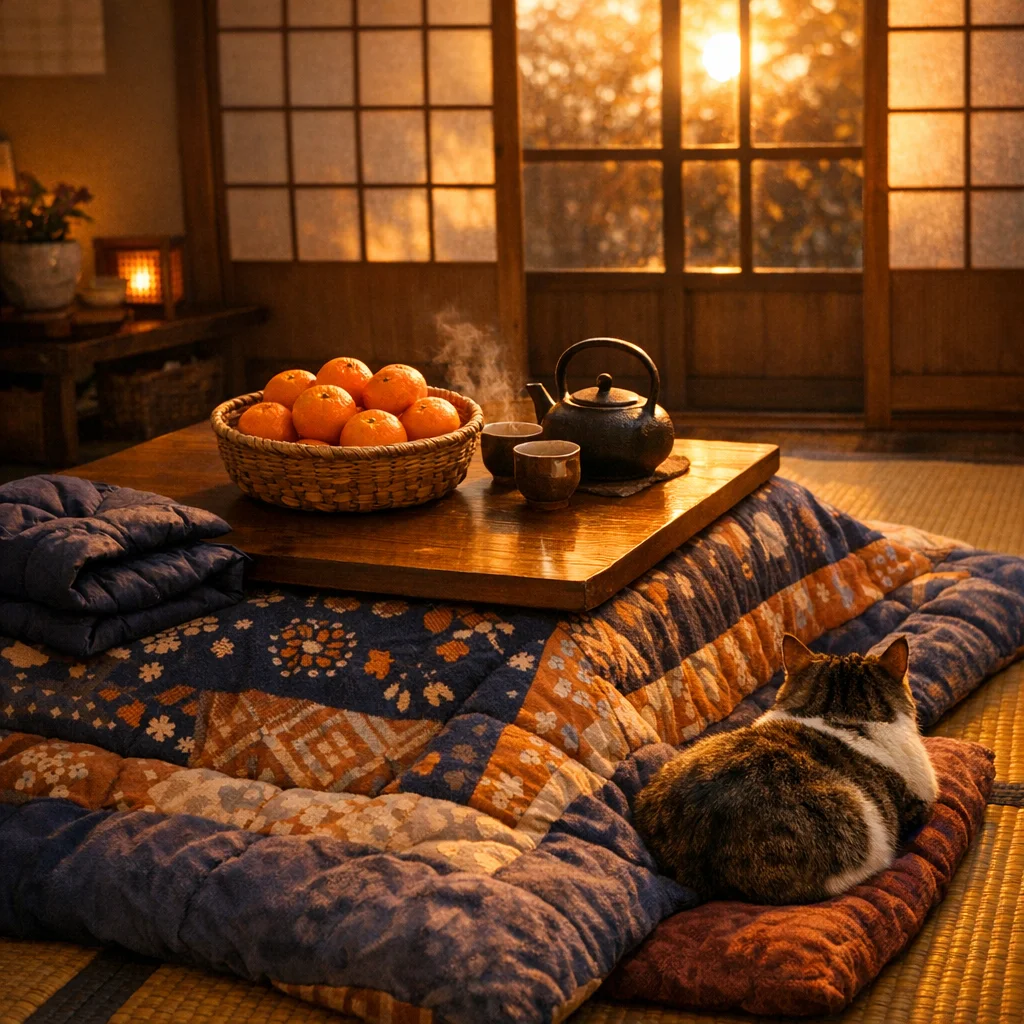
What is a kotatsu? It is a low Japanese table with a small electric heater fixed underneath and a thick quilt sandwiched between the frame and the tabletop. You sit on the floor, slide your legs under the quilt, and the trapped warmth heats you rather than the room. In homes that have often had little insulation and no central heating, it has been the centre of winter life for centuries.
This article explains what a kotatsu is and where it came from, how it works and how to use it safely, and the small winter rituals that grew up around it, from mandarin oranges and padded jackets to heat packs and the evening bath.
What is a kotatsu?
The word こたつ (kotatsu, also written 炬燵) refers to the whole set-up:
- The frame (やぐら, yagura). A low table, usually square or rectangular, with a heating unit fixed to the underside of the top.
- The quilt (こたつ布団, kotatsu-buton). A large, thick blanket draped over the frame so it falls to the floor on every side.
- The tabletop (天板, tenban). A separate board laid on top of the quilt, so the table can be used for meals, homework or cards.
In summer, the quilt comes off and the kotatsu becomes an ordinary low table. That double life is part of its appeal in small Japanese homes.
How does a kotatsu work?
A kotatsu does not try to heat a room. It heats a small, enclosed space, and the quilt keeps that warmth around your legs and lower body. Because warm legs and feet make the whole body feel warmer, a kotatsu can feel cosy even when the rest of the room is cool.
Modern kotatsu use an electric heating element under the tabletop, often with a dial or thermostat to adjust the temperature. Older electric models glowed red; many newer ones are quieter, less visible heaters. Because it warms such a small space, a kotatsu generally uses much less energy than heating a whole room.
A few practical details make the experience:
- A thick rug or mat underneath stops cold rising from the floor.
- A zabuton (floor cushion) or low chair makes sitting comfortable for longer.
- The quilt should touch the floor all round, so warmth does not leak out.
Where did the kotatsu come from?
The kotatsu grew out of the 囲炉裏 (irori), the sunken hearth found in traditional Japanese houses. By the Muromachi period, from the 14th to the 16th century, people were placing a frame over the embers and draping cloth over it to hold in the heat.
Two forms developed:
- Hori-gotatsu (掘りごたつ). A pit dug into the floor beneath the table, so you sit with your legs hanging down as if on a chair. Today it is common in restaurants and izakaya, where it is often simply a comfortable way to sit at a low table.
- Oki-gotatsu (置きごたつ). A movable version. When tatami floors spread, the open hearth gave way to a charcoal brazier placed inside the frame, and the kotatsu could be moved from room to room.
Electric kotatsu appeared in the 1950s, replacing charcoal with a much safer, adjustable heater. They spread quickly, and the low table under a quilt became the standard image of a Japanese family winter.
Why do Japanese homes rely on kotatsu?
Many Japanese houses, especially older wooden ones, were built for humid summers rather than cold winters: open, airy and lightly insulated. Central heating is still unusual. Instead, households heat the person and the room they are in:
| Method | What it warms |
|---|---|
| Kotatsu | Legs and lower body at the table |
| Air conditioner on heat mode, or a kerosene heater | One room at a time |
| Hot carpet (electric rug) | The floor where you sit |
| Heat packs (kairo) | One spot on the body, for hours |
| The evening bath | The whole body, before bed |
| Padded clothing | Everything, all day |
The result is a habit of local, personal warmth that many people outside Japan find surprisingly comfortable once they try it.
The winter rituals around the kotatsu
A kotatsu is less a piece of furniture than the centre of a season. These habits tend to come with it.
Mikan on the table
A basket of みかん (mikan), small, easy-peel mandarin oranges, sitting on the kotatsu is one of the most familiar images of a Japanese winter. Peeling one after another while watching television is a national pastime, and some people joke that their fingertips turn orange by January.
Hanten and dotera
半纏 (hanten) and どてら (dotera) are padded jackets worn indoors over everyday clothes. Hanten are shorter and lighter; dotera are longer and heavier. Together with a kotatsu, they make an unheated room perfectly liveable.
Cats, and the song about them
Japanese cats are famous for disappearing under the kotatsu quilt. The children's song 雪 (Yuki, "Snow") has a line every Japanese child knows: dogs run happily around the garden, and the cat curls up in the kotatsu.
Hot pots at the table
Winter dinners often happen at the kotatsu itself, around a portable burner and a pot. Our guide to Japanese nabe hot pot styles covers eight to try, and oden is the slow-simmered pot that sits on the stove all evening.
Heat packs for going out
When it is time to leave the kotatsu, many people stick a disposable heat pack inside a layer of clothing. Our guide to kairo heat packs explains how they work and where to put them. Reusable warmers, such as azuki-bean pads warmed in the microwave, are popular for the neck and shoulders at home.
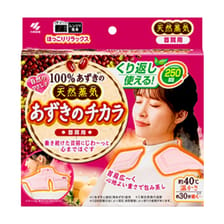
Kobayashi
Kobayashi Pharmaceutical Azuki no Chikara Neck and Shoulder Heating Pad 1 pc
A microwavable heating pad for the neck and shoulders. The natural steam from azuki beans wraps broadly around the neck and shoulders, providing gentle warmth. Reusable for about 200 times, it is recommended for daily relaxation.
From 316,000 UZS
The evening bath
The other half of Japanese winter warmth is the お風呂 (ofuro), the deep evening soak. Many people warm through in the bath, then go straight to bed or back under the kotatsu. Our guide to Japanese bathing rituals explains the routine. On 冬至 (tōji), the winter solstice, many households float whole yuzu citrus in the bath, a custom called yuzu-yu. Yuzu-scented bath tablets are an easy way to bring the scent home on any winter night.
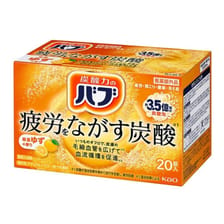
Bub
Bub Yuzu Scent 20 Tablets
A carbonated bath additive with a carefully selected yuzu scent. Fine carbonated bubbles dissolve into the water, making your daily bath time comfortable. Mildly acidic, just like bare skin, it can also be used when bathing with babies.
From 158,000 UZS
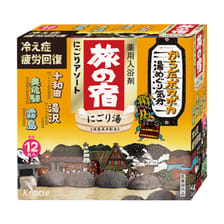
Kracie
Kracie Tabi no Yado Nigori Assorted Bath Salts 25g x 12 Packets
An assortment of powder-type bath salts featuring 4 types of scents (Towada, Yuzawa, Okuhida, Kirishima), with 3 packets each. Formulated with hot spring minerals, moisturizing ingredients, and fragrance components to let you easily enjoy a hot spring experience at home. The calming scents and elegant cloudy water enrich your daily bath time.
From 103,000 UZS
How do you use a kotatsu safely?
A kotatsu is gentle, but Japanese safety advice is consistent on a few points:
- Do not sleep in it. Dozing off for hours with your legs under the heater can leave you overheated and dehydrated, and long contact with warm surfaces can cause low-temperature burns. It is a well-known trap, because a kotatsu makes you sleepy.
- Keep the quilt and anything flammable off the heating element. Check that nothing is pressed against it.
- Watch children and pets. They may not notice when they are getting too hot.
- Turn it off when you leave the room or go to bed.
- Drink water. Hours at the kotatsu, often with a heater on in the room, are drying.
If you buy a kotatsu made for Japan, check its voltage and plug. Japanese mains electricity runs at 100 volts, so appliances designed for it may need a transformer, or may not be suitable, elsewhere.
Frequently asked questions
What is a kotatsu in simple terms? A low table with a heater underneath and a thick quilt between the frame and the tabletop. You sit on the floor with your legs under the quilt, and the trapped heat keeps you warm.
Is a kotatsu energy efficient? It warms a small, enclosed space instead of a whole room, so it generally uses much less energy than heating the room.
Is it safe to sleep in a kotatsu? Japanese safety advice says no. Long periods under the heater can lead to dehydration and low-temperature burns.
What do Japanese people eat at the kotatsu? Mikan mandarin oranges are the classic snack, and many families eat hot pot dinners at the kotatsu in winter.
How old is the kotatsu? It developed from the sunken irori hearth by around the Muromachi period, between the 14th and 16th centuries. Electric kotatsu arrived in the 1950s.
For more ways to stay warm the Japanese way, browse our warming and cooling sheets and bath additives.