Hara Hachi Bu: The Japanese Habit of Eating Until 80% Full
Hara hachi bu means stopping when you are 80% full. Where the Japanese saying comes from, why it is tied to Okinawa, and the table habits that make it easy.
There is a phrase older Okinawans are often reported to say before a meal: hara hachi bu. It is not a prayer or a grace. It is a reminder to stop eating when you are about 80% full.
The idea has travelled far beyond Japan, usually attached to big claims. This guide sticks to what hara hachi bu actually means, where it comes from, and the ordinary Japanese table habits that make eating to 80% feel natural rather than like willpower.
What does hara hachi bu mean?
Hara hachi bu (腹八分目) translates as "belly, eight parts out of ten". Hara is the stomach, hachi is eight, and bu is a tenth. Eat until your stomach is eight-tenths full, then stop.
It is usually quoted as part of a longer proverb: hara hachi bu ni isha irazu, "eight parts full, no need for a doctor". Like "an apple a day", it is folk wisdom about moderation rather than a medical rule, and it is understood that way in Japan.
Where the idea comes from
Moderation at the table is an old theme in Japanese writing on health and daily life. The best-known source is Yōjōkun (養生訓), a guide to looking after yourself written by the scholar Kaibara Ekiken and published in 1713. Among much practical advice, it counsels restraint in eating and drinking and warns against eating to the point of fullness.
The phrase is most closely associated with Okinawa, Japan's southern island prefecture, which has long been known for its number of elderly residents. Okinawa's traditional way of eating, built on vegetables, sweet potato, tofu, seaweed and small amounts of pork and fish, drew international attention, and hara hachi bu came along with it. It is one habit among many, and diets in Okinawa have changed considerably over recent generations.
Why 80%? The logic of stopping early
The practical sense of hara hachi bu is easy to recognise. The feeling of fullness tends to arrive some time after you have actually eaten enough. If you eat until you feel completely full, you have usually gone past the point of comfort.
Stopping at "no longer hungry, could eat a little more" leaves room for that lag. Ten minutes later, most people feel pleasantly satisfied rather than heavy. There is no counting and no scale: it is a matter of noticing.
How the Japanese table makes it easier
Hara hachi bu is less about discipline than about how meals are set up. Several everyday Japanese habits do much of the work.
| Habit | What it looks like | Why it helps |
|---|---|---|
| Ichijū sansai (一汁三菜) | Rice, one soup and three small dishes | Variety in small portions rather than one large plate |
| Individual dishes | Each person's food served in small bowls | You see the whole meal at once and finish it |
| Smaller bowls | A rice bowl is modest in size | Portions are set before you start |
| Chopsticks | Food picked up a little at a time | Naturally slower eating |
| Soup first | Warm miso soup early in the meal | A calm, unhurried start |
| Itadakimasu and gochisōsama | Words said before and after eating | Marks a clear beginning and end |
| Green tea to finish | A cup of tea after the meal | A pause that closes the meal |
The chopsticks matter more than you might expect. It is hard to shovel food with them, and setting them down on a rest between mouthfuls slows the pace without effort. Our guide to Japanese chopsticks covers how to use them comfortably. The bowls matter too: Japanese tableware is scaled for small servings, as the Japanese pottery styles guide shows.
A traditional Japanese breakfast, step by step
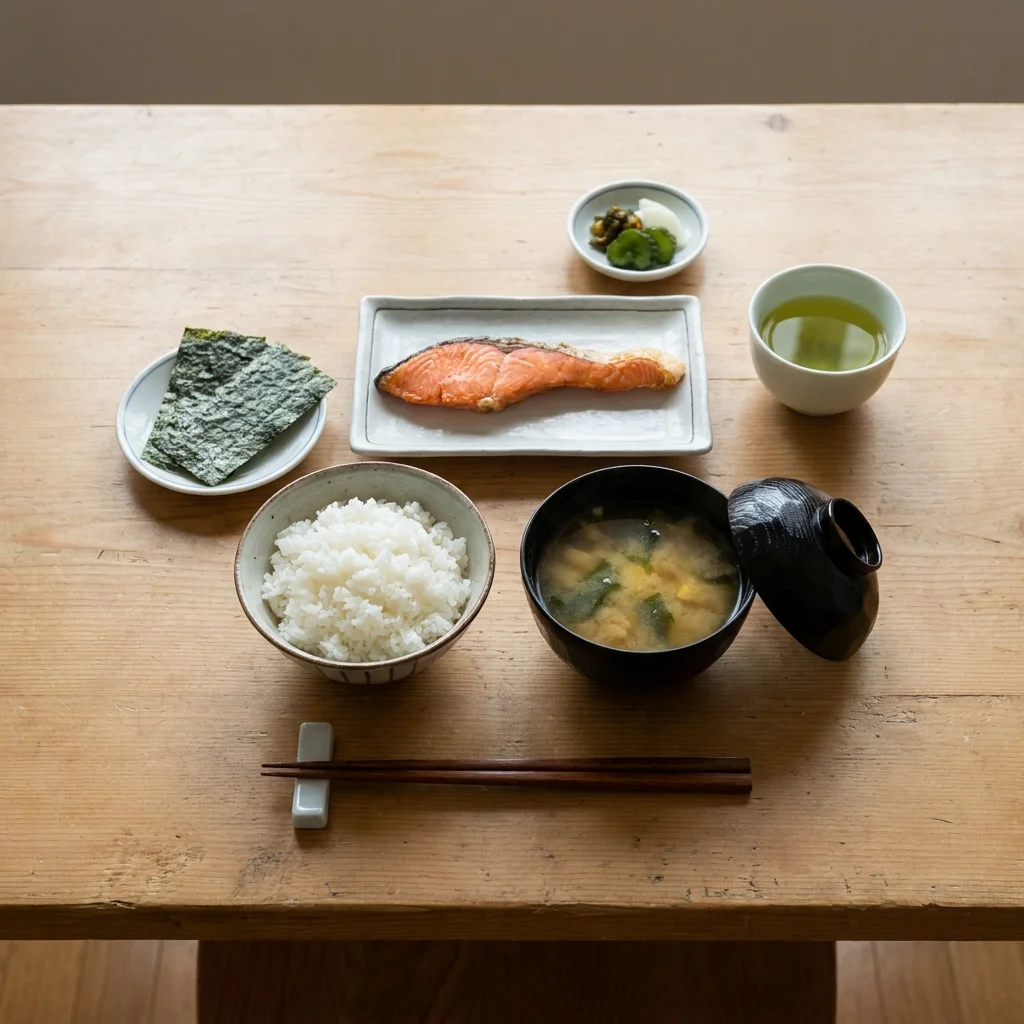
The traditional breakfast is ichijū sansai in miniature, and one of the easiest ways to try the habit at home.
- Rice. A small bowl of plain short-grain rice.
- Miso soup. Made with dashi, a spoonful of miso, tofu and wakame, or from an instant sachet on busy mornings.
- Something grilled. A small piece of salted salmon or mackerel, or a rolled omelette.
- Pickles. A few slices of tsukemono for sharpness and crunch.
- Nori. Seasoned sheets to wrap around mouthfuls of rice.
- Green tea to finish.
None of it needs to take long. A microwave pack turns the rice into a two-minute job.
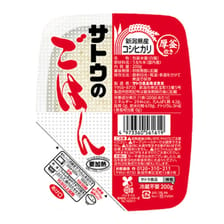
Sato Foods
Sato no Gohan Niigata Prefecture Koshihikari Rice
Pre-cooked rice packed using Koshihikari, the signature variety from the rice-producing region of Niigata. Cooked deliciously fluffy through a unique thick-pot cooking method. Simply heat in the microwave to easily enjoy the taste of freshly cooked rice anytime.
From 8 USD
Instant miso sachets cover busy mornings; our Japanese miso guide explains the styles of paste when you want to make it properly.
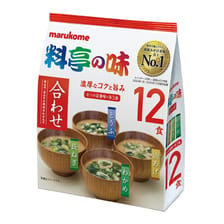
Marukome
Marukome Ryotei no Aji Awase 12 Servings
A flavorful instant miso soup blending red rice miso and soybean miso. Contains 4 types of garnishes (wakame seaweed, fried tofu, green onion, and tofu) with 3 servings each, allowing you to easily enjoy various flavors.
From 10 USD
Seasoned nori is the easiest side of all: open the pack and wrap.
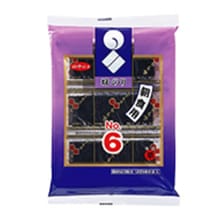
Shirako Nori
Shirako Nori Seasoned Nori Seaweed No. 6, 6 packs
Familiar seasoned seaweed for your daily dining table. Bite-sized seaweed in individual packaging, perfect for breakfast or as a side for rice.
From 8 USD
If you make soup from scratch, instant dashi granules save the most time. Japanese dashi explained covers the options.
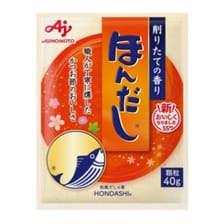
Ajinomoto
Ajinomoto Hondashi
A Japanese-style soup stock made with three types of bonito flakes, each excelling in aroma, richness, and taste. Simply add it to easily and deliciously season a variety of Japanese dishes. Comes in an easy-to-use, moisture-resistant granular type.
From 6 USD
Bringing hara hachi bu home
- Serve on smaller plates and bowls, and plate the meal once. Leave serving dishes in the kitchen.
- Start with soup. A warm, light start sets the pace.
- Put your chopsticks or fork down between bites.
- Check in partway through. Are you still hungry, or just still eating?
- Finish with green tea. The ritual marks the end of the meal. Our guide to Japanese green teas has plenty of options.
What hara hachi bu is not
Hara hachi bu is not a diet plan, a calorie target or a fasting rule. It does not promise weight loss, and it is not a reason to under-eat. Growing children, athletes, people who are pregnant and anyone with specific nutritional needs should eat what they need, and follow professional advice where it applies.
At its best, it is simply a way of paying attention: eating well, eating slowly, and stopping when the meal has done its job.
Frequently asked questions
What does hara hachi bu mean? "Eat until you are eight parts out of ten full." It is a Japanese saying about stopping before you are completely full.
Is hara hachi bu a diet? No. It is a traditional habit of moderation, not a plan with rules, targets or promised results.
How do you know when you are 80% full? When you are no longer hungry but could still eat a little more. That is the point to stop, and the feeling usually settles into comfortable fullness shortly afterwards.
What is ichijū sansai? "One soup, three dishes": the classic structure of a Japanese meal, with rice, a soup, a main dish and two small sides.
Where does hara hachi bu come from? It is a long-standing Japanese proverb, echoed in Kaibara Ekiken's 1713 book Yōjōkun, and especially associated with Okinawa.
Start with one Japanese breakfast a week, served in small bowls and eaten slowly. For the soup at the heart of it, see our Japanese miso guide.