How to Cook Japanese Rice in a Pot (No Rice Cooker Needed)
How to cook Japanese rice without a rice cooker: washing, soaking, the water ratio, heat steps, resting, the right pot and how to rescue rice that goes wrong.
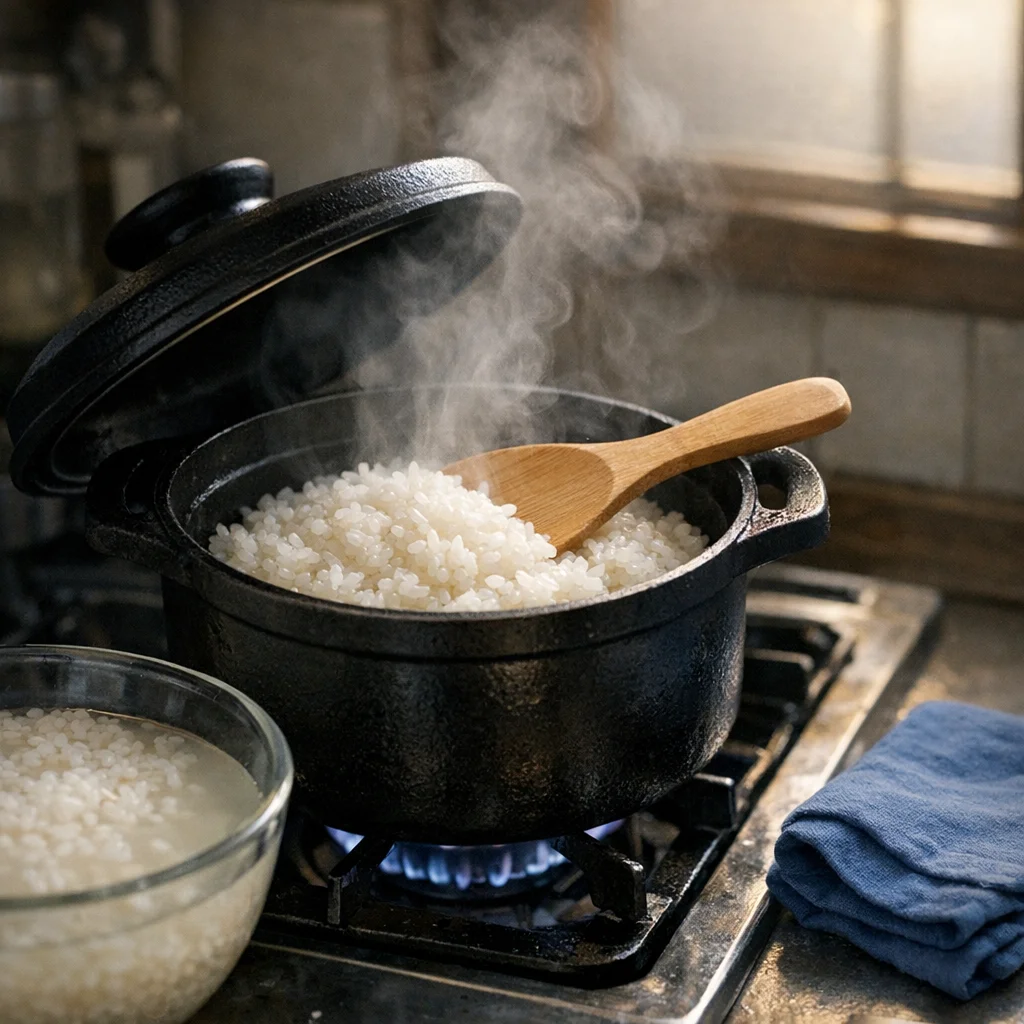
To cook Japanese rice without a rice cooker, rinse it until the water is only slightly cloudy, soak it for 30 minutes, then cook it in a heavy lidded pot with about 1.1 times its volume of water: medium-high heat until it boils, the lowest heat for 12 minutes, then off the heat with the lid on for 10 more. That is the whole method, and it works in an ordinary saucepan.
This guide goes step by step through measuring, washing and soaking, gives the water amounts for one to three cups, explains the heat stages and why the rest matters, compares pots, and shows how to rescue rice that comes out too hard, too soft or scorched.
What do you need?
Very little. The method relies on a tight lid and steady low heat, not on special equipment.
- Japanese short-grain rice. Varieties such as Koshihikari are sticky and glossy when cooked. Our guide to Japanese rice explains the varieties.
- A heavy pot with a well-fitting lid. A thick-based saucepan, an enamelled cast iron pot or a clay donabe all work. Choose one that the rice and water fill to no more than a third, so it has room to bubble up.
- A measuring cup, a large bowl and a fine sieve.
- A rice paddle or flat spatula for fluffing.
How much water for Japanese rice in a pot?
Japanese recipes measure rice in gō (合), the cup that comes with every rice cooker. One gō is 180 ml, about 150 g of uncooked rice, and makes roughly two rice bowls once cooked.
| Uncooked rice | Water | Serves |
|---|---|---|
| 1 gō (180 ml) | 200 ml | 1–2 |
| 2 gō (360 ml) | 400 ml | 2–3 |
| 3 gō (540 ml) | 600 ml | 3–4 |
That is about 1.1 parts water to 1 part rice by volume, less than many Western instructions suggest. Adjust from there:
- Shinmai (新米), new-season rice, sold in autumn, holds more moisture. Use slightly less water.
- Older rice or rice that has been open for months may need a little more.
- Musenmai (無洗米), no-rinse rice, needs about a tablespoon of extra water per gō, because it is not washed and absorbs nothing beforehand.
How do you wash Japanese rice?
Washing removes loose bran and surface starch. Skip it and the rice can be gummy, with a slightly dusty smell. In Japanese this step is togu (研ぐ), and it is gentler than the word suggests.
- First water: fast. Put the rice in a bowl, pour in water, swirl it two or three times and drain at once. Dry rice absorbs the first water quickly, so you do not want it soaking in the bran.
- Wash with your fingertips. With the rice just damp, move your hand through it in circles, like a loose claw, about 20 times. Do not grind or press hard; modern rice breaks easily.
- Rinse and drain. Add water, swirl and drain.
- Repeat two or three times until the water is translucent. It does not need to run perfectly clear.
How long should you soak Japanese rice?
Soaking lets water reach the centre of each grain before heat sets the outside, which is what prevents a hard core. Japanese home cooks use a simple rule: about 30 minutes in summer and an hour in winter, because cold water is absorbed more slowly.
You can tell when it is ready: the grains turn from translucent to an even, opaque white. The easiest way to soak is in the pot itself, in the measured cooking water, so the ratio stays exact. Soaking for up to a couple of hours does no harm.
Step by step: cooking rice in a saucepan
- Lid on, medium-high heat. Bring the pot to a boil. For two gō this usually takes 5 to 8 minutes. You will hear bubbling and see steam escaping from under the lid.
- Turn the heat right down. Use the lowest setting and cook for 12 minutes (13 for three gō). Do not lift the lid; the steam is doing the cooking.
- Listen at the end. When the water is absorbed, the bubbling stops and you may hear a faint crackle from the base. That is the sign it is done.
- Optional crisp layer. For okoge (おこげ), the toasty crust prized in Japan, turn the heat to high for 10 to 20 seconds just before switching off.
- Rest, off the heat, for 10 minutes. Keep the lid on. The grains finish absorbing moisture from the inside out, and the texture evens out from top to bottom.
- Fluff. Open the lid and cut through the rice with a paddle, folding it over from the bottom to release steam. This is shari o kiru (シャリを切る), "cutting the rice". Never stir in circles, which crushes the grains.
On an electric or induction hob that holds heat after switching off, move the pot to a cool burner for the rest so it does not keep cooking.
Which pot works best?
| Pot | Strength | Watch out for |
|---|---|---|
| Heavy saucepan | Already in most kitchens | Thin bases scorch; use the lowest heat |
| Enamelled cast iron | Even heat, heavy lid | Takes longer to boil, holds heat longer |
| Donabe (土鍋, clay pot) | Gentle, even cooking and good okoge | Must be seasoned and never heated dry |
| Cast iron rice pot | Thick walls and heavy lid, made for rice | Dry it fully to prevent rust |
A clay pot made specifically for rice usually has a double lid that holds steam in and stops boil-overs. Our donabe guide covers seasoning and care.
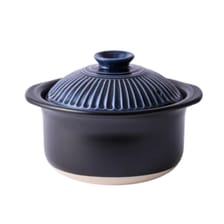
GINPO
GINPO Kikka Clay Rice Pot, 2-go
The GINPO Kikka clay pot makes it easy to cook delicious rice without adjusting the heat. Its double-lid structure prevents boiling over, cooking rice to be sweet and fluffy. This 2-go size is perfect for beginners and brings joy to your everyday dining table.
From 64.8 USD
Cast iron rice pots from Iwate apply the same idea with metal: thick walls, a heavy lid and very even heat. See our guide to Japanese pots and frying pans for how iron compares with other materials.
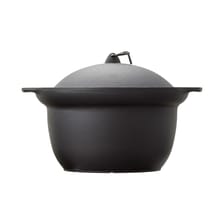
OIGEN
OIGEN Nanbu Iron Rice Pot
A Nanbu ironware rice cooker that cooks authentic, fluffy iron-pot rice in a short time. From heating to steaming, it takes only about 30 minutes to enjoy glossy rice with perfectly distinct grains. Its cute, rounded shape beautifully accents your dining table.
From 128.7 USD
How do you fix rice that went wrong?
| Problem | Likely cause | Rescue now | Next time |
|---|---|---|---|
| Hard centre | Too little water or soaking | Sprinkle 2–3 tbsp water, lid on, lowest heat 5 minutes, rest 5 | Soak longer, add a little water |
| Soft and mushy | Too much water | Spread on a tray for a few minutes to let steam escape | Reduce water slightly |
| Scorched base | Heat too high during the low stage | Scoop from the top; leave the burnt layer | Use the lowest heat or a heavier pot |
| Wet top, dry bottom | Lid lifted early or rest skipped | Fold gently and rest 5 more minutes | Keep the lid on for the full rest |
| Boiled over | Pot too small or heat too high | Wipe the hob; the rice is usually fine | Use a bigger pot, lower heat |
| Bran smell | Not washed enough | None; it is still safe to eat | Rinse one more time |
Storing leftover rice
Japanese households rarely keep cooked rice in the fridge, because it turns hard and dry there. Instead, portion it while still warm, wrap each portion flat in cling film and freeze it. A minute or two in the microwave brings it back close to fresh. Whatever you do, do not leave cooked rice sitting at room temperature for hours; cool it and store it promptly.
For days with no time to cook at all, ready-cooked pack rice from Japan is microwaved in its tray and tastes much better than most people expect.
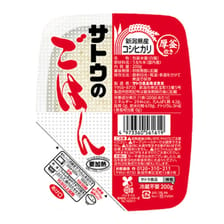
Sato Foods
Sato no Gohan Niigata Prefecture Koshihikari Rice
Pre-cooked rice packed using Koshihikari, the signature variety from the rice-producing region of Niigata. Cooked deliciously fluffy through a unique thick-pot cooking method. Simply heat in the microwave to easily enjoy the taste of freshly cooked rice anytime.
From 7.2 USD
Freshly cooked rice is the base for onigiri, and a sachet from our furikake and rice toppings guide turns a plain bowl into a meal.
Frequently asked questions
What is the water ratio for Japanese rice in a pot? About 1.1 parts water to 1 part rice by volume: 200 ml of water for each 180 ml cup. Use slightly less for new-season rice.
Do you have to soak Japanese rice before cooking? It makes a clear difference. Thirty minutes in summer and about an hour in winter lets the grains cook through evenly without a hard core.
Do you have to wash Japanese rice? Yes, unless the bag says musenmai (no-rinse). Washing removes bran and surface starch that make rice gummy.
Can I cook Japanese rice in a regular saucepan? Yes. A heavy base, a tight lid and the lowest possible simmering heat are what matter.
Why is my rice mushy? Usually too much water or too much stirring. Measure carefully, and fluff with a cutting motion instead of stirring.
Can I use this method for brown rice? Brown rice needs more water, a longer soak and a longer cook, so it is better to follow a brown-rice recipe.
Browse our Japanese pots and rice pots or the ready rice shelf for busy nights.