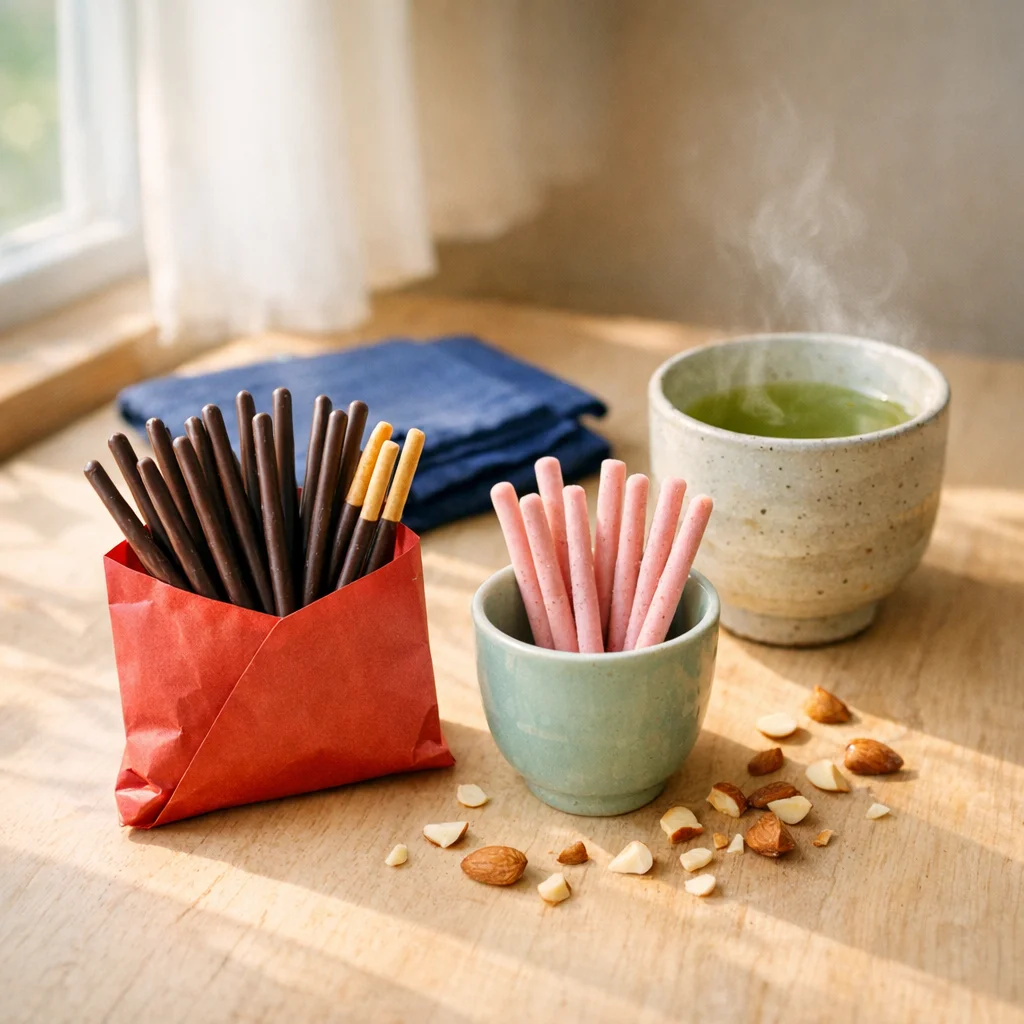
Pocky Flavors Guide: Every Glico Stick Worth Trying in Japan
Pocky flavors in Japan, explained: the original chocolate, strawberry, extra-fine, winter-only and regional boxes, plus Pretz and the story of Pocky Day.
Pocky flavors in Japan run from the original chocolate stick of 1966 to strawberry, almond, extra-fine and winter-only editions, plus regional souvenir boxes you can only find in one corner of the country. The everyday lineup is small and steady; most of the variety comes from seasonal and limited runs that appear and disappear through the year.
This guide covers where Pocky came from, the regulars worth knowing, the seasonal and regional editions, Pocky's savoury sibling Pretz, and why 11 November is Pocky Day. If you are building a first snack order, it will tell you which boxes to start with.
Where did Pocky come from?
Pocky is made by Ezaki Glico (江崎グリコ), an Osaka confectioner best known at home for its caramels and for the running-man sign in Dōtonbori. The stick came second. In 1963 Glico launched Butter Pretz, a baked snack stick inspired by German pretzels. Three years later, in 1966, the company coated a Pretz-style biscuit in chocolate and left a short bare section at one end, so you could hold it without getting chocolate on your fingers. That was Pocky.
The name comes from pokkin (ポッキン), the Japanese sound of something snapping cleanly. An almond version followed in 1971 and a strawberry coating a few years later, in the mid-1970s.
Pocky now sells in many countries, sometimes under other names. In much of Europe the same idea is sold as Mikado, made under licence, and in Malaysia it was called Rocky until 2014. Recipes and lineups vary by market, and the Japanese range is much wider than most export shelves.
The everyday Pocky lineup
These are the boxes you are likely to find in a Japanese supermarket or convenience store on an ordinary week. Most domestic boxes hold two sealed inner bags, so you can open one and keep the other fresh.
| Pocky | Japanese name | What it is | Try it if |
|---|---|---|---|
| Chocolate | ポッキーチョコレート | The red box: thin biscuit, milk chocolate coating | You want the reference point |
| Extra-fine | 極細 (gokuboso) | A much thinner stick, so the chocolate leads | You like more chocolate per bite |
| Strawberry | いちご (ichigo) | Pink strawberry-flavoured coating | You want sweet and fruity |
| Tsubu Tsubu Ichigo | つぶつぶいちご | Strawberry coating with dried strawberry pieces | You want more real fruit texture |
| Almond Crush | アーモンドクラッシュ | Chocolate studded with crushed almonds | You like a nutty crunch |
| Matcha | 抹茶 (matcha) | Green tea coating, often as a limited edition | You like bittersweet flavours |
The original chocolate is deliberately simple: a thin, crisp biscuit and a thin coat of milk chocolate. It is the one to taste first, because every other flavour is a variation on it.
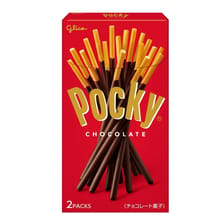
Glico
Glico Pocky Chocolate (2 Bags)
Classic Pocky sticks featuring the perfect balance of fragrant, rich chocolate and crunchy pretzels. With a crispy texture and rich chocolate flavor, they are perfect for everyday snacks and relaxing breaks.
From 7.2 USD
Strawberry is the oldest fruit flavour in the range. The coating is sweet, creamy and unmistakably pink, and the multi-bag boxes are made for sharing or packed lunches.
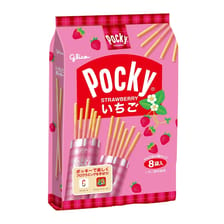
Glico
Glico Strawberry Pocky 8 Bags
Enjoy the gentle sweetness and aroma of strawberries with this Pocky. The exquisite combination of a pleasantly crisp pretzel and strawberry cream creates a delicious taste. Convenient small bags perfect for keeping stocked at home.
From 6.3 USD
Seasonal Pocky: the winter-only boxes
Japanese confectioners treat the cold months as a separate season, and Pocky is no exception. Each autumn, Glico brings back two winter editions:
- Fuyu no Kuchidoke (冬のくちどけ, "winter melt"): a richer, softer chocolate made to melt quickly in the mouth, which only works because it is sold when the weather is cool.
- Fuyu no Kirameki (冬のきらめき, "winter sparkle"): a caramel-leaning version of the winter chocolate.
Glico reworked both for the 2026 season, adding whole-wheat flour to the biscuit and increasing the cacao in the melt version and the caramel in the sparkle version. They are on shelves from autumn and gone by spring, so if one catches your eye, buy it while you can.
Beyond winter, limited flavours come and go all year: fruit coatings in spring and summer, matcha and roasted tea variants, and occasional collaborations. Expect each of them to last a season rather than a year.
Regional Pocky: souvenirs from one prefecture
Since 1994, Glico has made regional Pocky (ご当地ポッキー, gotōchi Pocky) for souvenir shops, stations and airports. These boxes use a flavour tied to one area and are sold mainly there, as omiyage (お土産), the small gifts Japanese travellers bring home for colleagues and family.
Many of them are Giant Pocky: thick sticks several times the size of the regular ones, often individually wrapped so a box can be handed round an office. Fruit is a common theme, from melons to citrus, and a giant mikan (mandarin) version has long been part of the Kyushu souvenir shelf. The range changes over time, so treat any list you see online as a snapshot.
Because these are made for local shops, you rarely see them in ordinary supermarkets, which is part of their charm.
Pretz: Pocky's savoury sibling
Pretz is the older brand, and in Japan it is just as familiar. The sticks are baked and uncoated, with the seasoning in the dough rather than poured over it. That makes them crunchier and drier than Pocky, and closer to a beer snack than a sweet.
Butter was the first flavour in 1963. Salad, a savoury vegetable-and-salt seasoning, followed in 1969, and the red-boxed Roast became the third classic. Since then the range has grown to include tomato, sweet potato and many seasonal flavours.
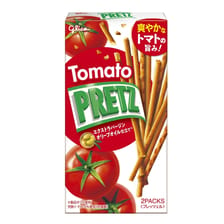
Glico
Glico Tomato Pretz
Crispy pretzels featuring the refreshing umami of tomatoes and the rich flavor of extra virgin olive oil. Comes in 2 packs, perfect for snacking.
From 7.2 USD
Roast Salt Butter is the one to try if you like the classic Roast but want a little more richness. Tomato tastes like a concentrated tomato soup in stick form.
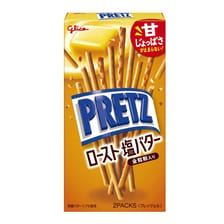
Glico
Glico Pretz Roast Salt Butter
Pretzels featuring a sweet and salty taste made with Hokkaido fermented butter. Enjoy the crispy and pleasant texture. Comes in 2 convenient packs.
From 7.2 USD
If you are not sure which you prefer, put one box of each side by side: sweet and coated on one side, salty and baked on the other.
Why is 11 November Pocky Day?
Line four sticks up and they look like 11/11. In 1999, the 11th year of the Heisei era, the date 11/11/11 gave six ones in a row, and Glico used the moment to establish Pocky & Pretz Day (ポッキー&プリッツの日), which the Japan Anniversary Association (日本記念日協会) certified.
It has since become a social event in Japan, with sharing campaigns, office treats and couples playing the "Pocky game", where two people eat from either end of one stick. South Korea marks the same date as Pepero Day, after a similar snack made by Lotte.
How to choose, store and send Pocky
A few practical points help Pocky arrive and stay at its best:
- Start with the classics. One box of chocolate and one of strawberry give you the baseline before you try limited editions.
- Add one texture. Almond Crush or Tsubu Tsubu Ichigo shows how much the range plays with crunch.
- Add one Pretz. Roast or tomato gives you the savoury side of the same idea.
- Store it cool. Chocolate-coated sticks soften in heat and can bloom (turn pale) if they warm up and cool again. A cupboard away from the stove is enough.
- Read the date. Japanese snacks carry a best-before date, explained in our guide to Japanese expiry dates.
Pocky and Pretz are light, which makes them easy to add to a snack order or a gift box. For other ideas in the same spirit, see our Japanese stocking stuffers list, the wider Japanese snack guide, our look at Japanese chocolate and biscuits, and the story of Japanese Kit Kat flavours, Pocky's great rival for limited editions.
Frequently asked questions
Which Pocky flavor should I try first? Start with the original chocolate, then strawberry. Between them they show you the biscuit, the coating style and how sweet the range is, which makes every limited edition easier to judge.
What is the difference between Pocky and Pretz? Pocky is a biscuit stick dipped in a sweet coating with a bare handle. Pretz is an uncoated baked stick with the seasoning in the dough, and it is usually savoury.
Why is it called Pocky? The name comes from pokkin, the Japanese sound of a clean snap, which is the noise the stick makes when you bite it.
When is Pocky Day? 11 November. Glico established Pocky & Pretz Day in 1999 because four sticks side by side look like the date 11/11.
Can you get regional Pocky outside its region? Rarely in ordinary shops. Regional and Giant Pocky are made for souvenir shops, stations and airports in their home area, and the flavours change over time.
Do Japanese Pocky contain common allergens? Yes. Wheat, milk and soy are typical, and some flavours add almonds. Japanese packs list the main allergens on the back, so check each box.
Browse the full Glico range or the rest of our Japanese chocolate shelf.